BUNIA, Congo – An escalating Ebola outbreak in the eastern Democratic Republic of the Congo is contributing to a sharp increase in maternal deaths as many pregnant women avoid hospitals because they fear infection or isolation, according to health officials and humanitarian organizations.
The outbreak, declared on May 15 in Ituri Province, has disrupted maternal healthcare services across affected communities. Health workers say many women are delaying prenatal care or choosing to give birth at home, increasing the risk of complications that could otherwise be treated.
Fear and Misinformation Keep Women Away From Clinics
Health officials say misinformation surrounding Ebola has discouraged many expectant mothers from seeking routine medical care.

Some women fear they will be placed in Ebola isolation if they develop common pregnancy-related symptoms such as fever, while others doubt official information about the outbreak.
Esther Lutula, a 26-year-old resident of Bunia, said she stopped attending prenatal appointments after authorities declared the outbreak. She said she plans to return only after the disease is no longer spreading.
Noemi Dalmonte, deputy country representative for the United Nations Population Fund (UNFPA) in Congo, said fear of healthcare facilities often increases during disease outbreaks, but misinformation about Ebola has made the situation significantly worse.
Another Bunia resident, Elodie Yabiri, who is heavily pregnant, said she has stayed away from hospitals because she believes anyone who feels sick is immediately placed in isolation. She said she intends to remain at home as long as she continues feeling her baby move.
Maternal Deaths Rise as Healthcare Access Declines
UNFPA data show maternal deaths in Ituri have nearly doubled since the outbreak began.
■ Related News




Weekly maternal deaths increased from an average of 3.1 before the outbreak to 5.8 between May 25 and July 19.
Deaths occurring outside healthcare facilities also rose from 9.1% to 17.4% during the same period.
Medical staff say those figures reflect a growing reluctance among pregnant women to seek professional care even when complications develop.
Ebola Response Stretches Healthcare System
The outbreak has placed additional strain on an already fragile healthcare system.
Health facilities across the affected provinces have redirected staff and medical supplies to Ebola treatment, leaving fewer resources available for routine maternal care.
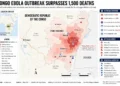
Authorities say more than 1,600 people have died during what they describe as the country’s fastest-growing Ebola outbreak.
The response has also been hampered by attacks on healthcare facilities and workforce shortages. Officials say at least 44 infected healthcare workers have died, while others have stopped working because of unpaid salaries.
Dr. Ghislain Maneba, an epidemiologist in Ituri’s Rwampara health zone, said medical teams continue educating communities despite limited resources and difficult working conditions.
At the Bénédicte Clinic in Bunia, monthly prenatal registrations have dropped from about 60 women to roughly 10 since the outbreak began, according to medical director Dr. Sonny Mwembo.
Congo Already Faces High Maternal Mortality
The Democratic Republic of the Congo already has one of the world’s highest maternal mortality rates.
United Nations data show nearly 19,000 women died from pregnancy-related complications in the country during 2023, placing Congo second only to Nigeria worldwide and tied with India.
Women in Congo also have an average of nearly six children, increasing the demand for maternal healthcare services.
Pregnant Women Face Greater Health Risks
Health experts warn that Ebola presents additional dangers during pregnancy.
The disease spreads through direct contact with infected bodily fluids and contaminated materials. Women often face greater exposure because many serve as caregivers for sick relatives or work in healthcare settings.
The U.S. Centers for Disease Control and Prevention says pregnant women infected with Ebola face a higher risk of severe complications, including miscarriage.
Dalmonte said improving public awareness is critical to restoring confidence in healthcare services.
She warned that women who delay treatment may die not only from Ebola but also from pregnancy complications that could have been prevented with timely medical care.
This report is based on reporting by The Associated Press.