WASHINGTON – The conflict between the United States and Iran intensified Wednesday after Saudi Arabia publicly joined military operations against Iran-backed militias. At the same time, diplomatic efforts showed little progress, increasing concerns that the fighting could spread across the Middle East.
The latest escalation followed several days of relative calm. As military operations resumed, officials in Washington and Tehran continued to give conflicting accounts about whether negotiations could restart.
President Donald Trump said diplomacy remained possible but warned that the United States was prepared to take additional military action if necessary.

Iran rejected suggestions that it had sought renewed negotiations. The country’s deputy foreign minister said Tuesday that Tehran had not requested new diplomatic talks for more than two weeks.
The latest developments highlight the uncertain direction of a conflict marked by repeated military escalation and stalled diplomacy.
Military Exchanges Renew Regional Tensions
The latest fighting followed what U.S. officials described as an attempted Iranian attack on American forces stationed in Jordan.
After U.S. forces thwarted the reported attack, Trump said the United States would respond while leaving open the possibility of a future agreement with Iran.
Hours later, the U.S. military announced that it had launched what it described as “a powerful response” to the attempted attacks. Officials did not immediately identify the targets.
■ Related News



Iran, meanwhile, said it fired ballistic missiles toward Jordan’s Muwaffaq Salti Air Base, which hosts U.S. forces. Trump said U.S. defenses intercepted the missiles.
Saudi Arabia then joined the United States in strikes targeting logistics and weapons facilities used by Iranian-backed militias in Iraq.
A U.S. official, speaking on condition of anonymity because of the sensitivity of the operations, said the joint U.S.-Saudi strikes were unrelated to separate drone attacks targeting Saudi Arabia.
Saudi Arabia’s participation marked a significant expansion of military coordination against Iranian-backed groups.
Saudi Arabia Supports Military Action While Calling for Diplomacy
Saudi Defense Minister Khalid bin Salman met separately Wednesday with Trump and Vice President JD Vance at the White House, according to two people familiar with the discussions who were not authorized to speak publicly.
One of those people said Khalid conveyed Crown Prince Mohammed bin Salman’s view that Iran’s influence had weakened in Syria and Lebanon. However, Tehran continues supporting the Houthi movement in Yemen and allied militias in Iraq, the person said.
Earlier in the week, the Iran-aligned Houthis said they launched ballistic missiles at a Saudi oil tanker after announcing what they described as a naval blockade against Saudi vessels in the Red Sea.
According to one of the officials, Saudi Arabia joined the strikes to demonstrate it would not tolerate attacks on its energy infrastructure or other strategic facilities.
Even so, Saudi officials continued urging de-escalation. They told Trump and Vance that Riyadh still wants Washington and Tehran to return to negotiations.
Regional concerns also increased after drone strikes ignited fires aboard two natural gas vessels at a port in Egypt. If investigators confirm Iran or one of its allies carried out the attack, The Associated Press reported it would represent another significant expansion of the conflict.
Israel and Washington Review the Next Phase
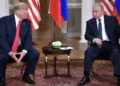
The latest U.S.-Saudi operation came only hours after Israeli Prime Minister Benjamin Netanyahu concluded his first White House meeting with Trump since military operations against Iran began on Feb. 28.
An Israeli official briefed on the meeting said Netanyahu wanted to reinforce that Washington—not Israel—was directing U.S. policy toward Iran amid reports of disagreements between the allies.
Another person familiar with Israeli government discussions said officials also believe Trump wants to avoid further escalation as the United States approaches the November midterm elections.
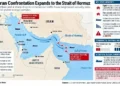
The same person said Israeli officials remain concerned about rising oil prices caused by disruptions in shipping through the Strait of Hormuz. They also worry about U.S. supplies of Patriot and THAAD missile-defense interceptors.
A recent analysis by the Center for Strategic and International Studies said the fighting has reduced U.S. inventories of those interceptor systems, potentially affecting the protection of American forces if hostilities intensify.
Another U.S. official said Chairman of the Joint Chiefs of Staff Gen. Dan Caine advised Trump that current munitions inventories could influence future military decisions involving Iran.
Diplomatic Prospects Remain Unclear
Despite occasional public discussion about negotiations, U.S. officials said no active diplomatic initiative is underway.
A senior U.S. official, speaking on condition of anonymity because of internal deliberations, said the administration is not pursuing renewed talks with Iran at this time, despite continued mediation efforts.
Analysts cited by The Associated Press said mistrust between Washington and Tehran has deepened since the collapse of an interim ceasefire proposal reached in mid-June.
Ali Vaez, Iran project director at the International Crisis Group, said senior Iranian officials had previously supported the memorandum of understanding negotiated with the United States. However, they no longer view Trump as a dependable negotiating partner.
Vaez said distrust now exists on both sides, with each government questioning whether the other would honor any future agreement.
The latest impasse reflects decades of strained relations between Washington and Tehran. Since Iran’s 1979 Islamic Revolution, negotiations have repeatedly broken down because of military confrontations, diplomatic disputes and disagreements over previous agreements.
The Associated Press noted that the 2015 nuclear agreement negotiated during the Obama administration was the first major accord between the two countries since the 1981 Algiers Accords. Relations deteriorated again after Trump withdrew the United States from the agreement in 2018, reinstated a policy of maximum economic pressure and authorized the 2020 strike that killed Iranian military commander Qassem Soleimani.
This report is based on reporting by The Associated Press.