The average rate on a 30-year fixed U.S. mortgage rose for a fourth straight week, reaching its highest level in a year and adding to the financial burden facing prospective homebuyers.
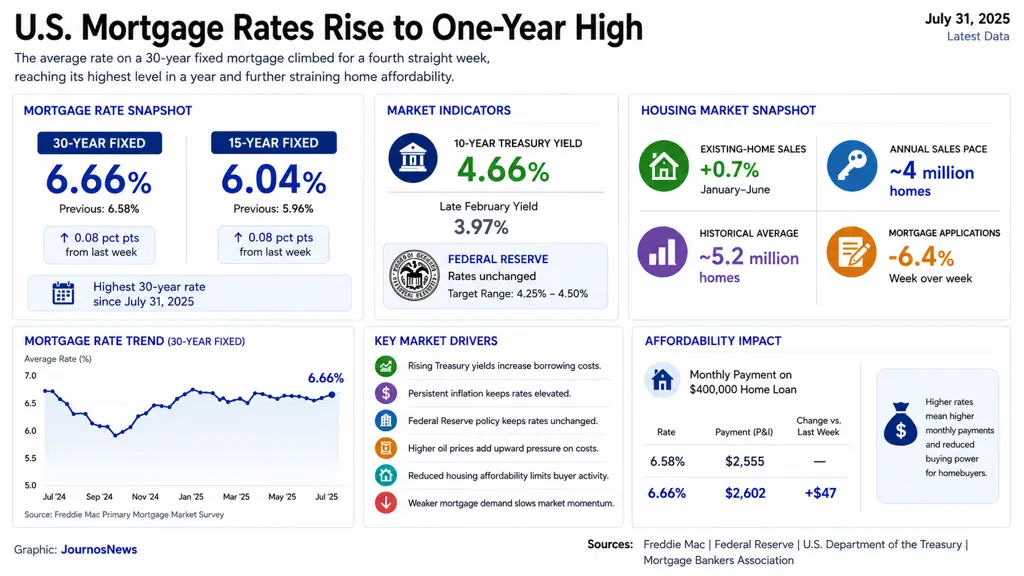
Freddie Mac said Thursday that the average rate increased to 6.66%, up from 6.58% the previous week. A year ago, the average stood at 6.72%.
The latest increase means higher monthly mortgage payments for many buyers and could further dampen demand in a housing market that has struggled to regain momentum.

The average rate on a 15-year fixed mortgage, a common option for homeowners refinancing existing loans, also climbed to 6.04% from 5.96% a week earlier. During the same week last year, the average was 5.85%, according to Freddie Mac.
Mortgage Rates Reach Highest Level in a Year
The average 30-year mortgage rate is now at its highest level since July 31, 2025, when it reached 6.72%.
Earlier this year, mortgage rates briefly fell below 6% for the first time since late 2022. That decline proved short-lived as borrowing costs resumed their upward trend.
Mortgage rates are not set directly by the Federal Reserve. Instead, they generally move with the yield on the 10-year U.S. Treasury note while also reflecting investor expectations for inflation and the broader economy.
The 10-year Treasury yield traded at 4.66% around midday Thursday, up from 3.97% in late February before fighting between the United States and Iran intensified, according to the supplied material.
■ Related News




Higher oil prices linked to the regional conflict have strengthened inflation concerns, pushing Treasury yields and mortgage rates higher.
Federal Reserve Outlook Shapes Expectations
The latest increase followed the Federal Reserve’s decision this week to leave its benchmark interest rate unchanged.
Policymakers continue to confront inflation that has remained above the central bank’s 2% target for more than five years.
The meeting also exposed divisions within the Fed. Three regional Federal Reserve bank presidents voted in favor of raising interest rates.
Anthony Smith, senior economist at Realtor.com, said the outcome suggests financial markets should not expect interest-rate cuts in the near term.
“With the Fed signaling that its next move is more likely a hike than a cut, near-term rate relief looks unlikely,” Smith said.
Smith added that higher oil prices remain the main way the Iran conflict affects inflation. He said easing regional tensions and reopening the Strait of Hormuz would provide the clearest path toward lower mortgage rates.
Housing Market Remains Under Pressure
Higher borrowing costs continue to reduce affordability by increasing monthly mortgage payments and limiting buyers’ purchasing power.
According to the supplied material, seasonally adjusted sales of previously occupied U.S. homes were 0.7% higher from January through June than during the same period last year.
Even so, sales remain near an annual pace of 4 million homes, well below the long-term average of roughly 5.2 million.
The housing slowdown began in 2022 after mortgage rates climbed sharply from pandemic-era lows.
Existing-home sales changed little last year, leaving the market at its weakest level in about three decades.
Recent lending data also point to softer demand.
The Mortgage Bankers Association reported that mortgage applications—including loans for home purchases and refinancing—fell 6.4% last week from the previous week.
MBA President and CEO Bob Broeksmit said upcoming economic data will continue to shape interest-rate expectations. However, he said elevated borrowing costs remain a significant obstacle for many prospective homebuyers this summer.
This report is based on reporting by The Associated Press.