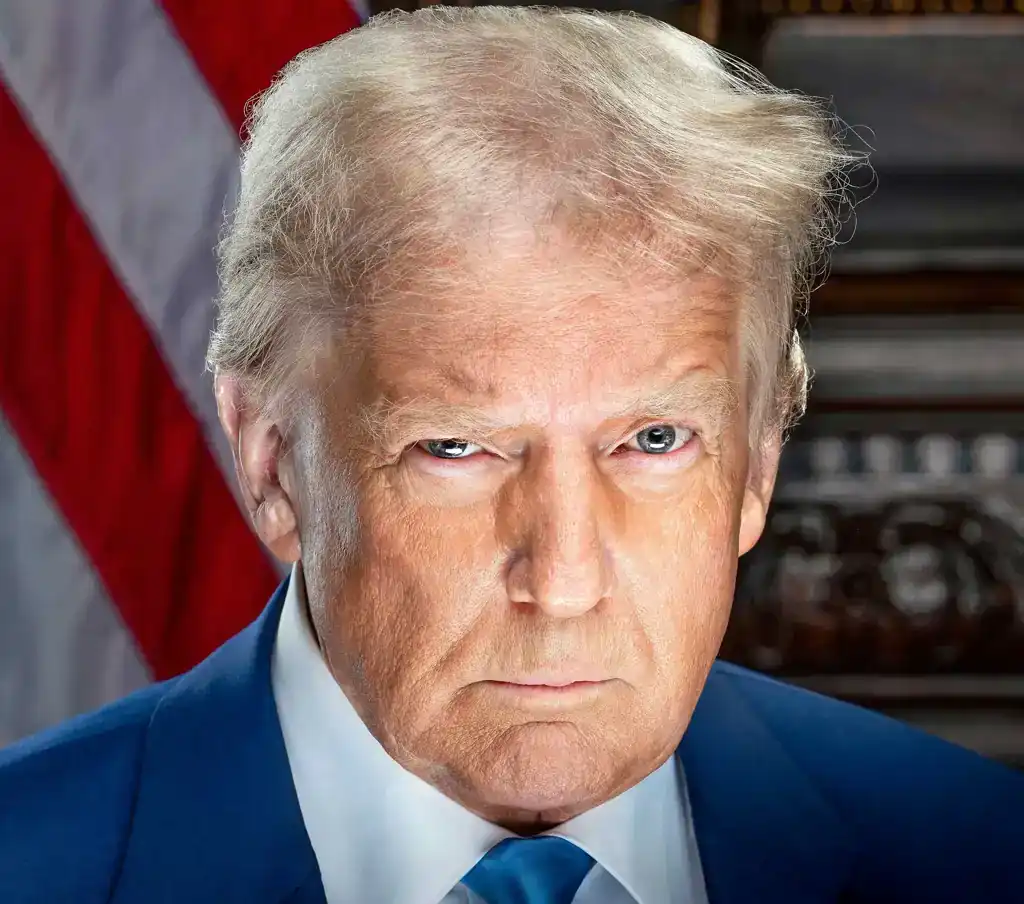
WASHINGTON – President Donald Trump has announced a new round of tariffs on imports from dozens of U.S. trading partners, replacing temporary worldwide import levies with longer-term trade measures that the administration says are intended to strengthen enforcement against goods produced through forced labor.
The administration said imports from 60 trading partners, representing approximately 99% of U.S. imports, will face tariffs ranging from 10% to 12.5%. Officials said the affected countries either lack sufficient prohibitions on forced labor imports or have failed to adequately enforce existing restrictions.
The new tariffs take effect shortly after midnight Friday, coinciding with the expiration of temporary 10% global tariffs imposed after the U.S. Supreme Court invalidated broader duties introduced earlier under emergency powers.

U.S. Trade Representative Jamieson Greer said the United States has long prohibited imports produced with forced labor and argued that trading partners should adopt similarly robust enforcement measures.
Administration Shifts to Long-Term Trade Authority
The new tariffs are being imposed under Section 301 of the Trade Act of 1974, which authorizes the president to impose trade measures against countries found to engage in unjustifiable, unreasonable or discriminatory trade practices.
The administration adopted that approach after the Supreme Court ruled that the International Emergency Economic Powers Act of 1977 (IEEPA) did not authorize the sweeping tariffs previously imposed on imports from nearly every country.
The decision required the government to refund tariffs collected under the invalidated program.
Following the ruling, Trump temporarily relied on Section 122 of the Trade Act, which permits limited across-the-board tariffs for up to 150 days. Those temporary duties expire Friday.

Section 301 has previously withstood legal challenges. Trump used the same authority during his first term to impose tariffs on Chinese imports, many of which remained in effect following court review.
The administration also indicated that additional trade measures may follow.
The Office of the U.S. Trade Representative has opened an investigation into whether 16 countries, representing roughly 70% of U.S. imports, have engaged in overproduction that depresses global prices and disadvantages U.S. manufacturers.
Forced Labor Becomes Central to the Policy
Administration officials said the tariffs are intended to encourage stronger enforcement against forced labor throughout global supply chains.
According to a senior administration official, several countries strengthened enforcement after the tariffs were first proposed, allowing them to qualify for lower tariff rates.
India, for example, will face a 10% tariff instead of the previously proposed 12.5%, the official said.
The administration exempted several categories of imports, including:
- Oil
- Natural gas
- Fertilizer
- Goods qualifying for duty-free treatment under the United States-Mexico-Canada Agreement (USMCA)
Officials said the affected countries were identified as either lacking adequate legal restrictions or failing to effectively enforce prohibitions on imports produced through forced labor.
The International Labour Organization (ILO) defines forced labor as work performed involuntarily under the threat of penalty.
According to the organization’s latest estimates, approximately 27.6 million people were living in forced labor worldwide in 2021.
Critics Question Economic Impact
The tariffs drew criticism from economists, importers and trade specialists who warned that higher import costs could ultimately be passed on to American consumers.
Because tariffs are paid by U.S. importers, businesses often offset the additional expense through higher retail prices.
The measures also arrive as consumers continue to face elevated living costs and only months before the Nov. 3 midterm elections.
Some human rights advocates welcomed stronger action against forced labor while questioning whether broad tariffs are the most effective enforcement mechanism.
Martina Vandenberg, founder and president of The Human Trafficking Legal Center, said import restrictions can be an important tool for combating forced labor but should be accompanied by sufficient time and resources for governments to establish effective enforcement systems.
She cautioned that import bans without meaningful implementation risk becoming symbolic rather than effective.
Trading Partners and Experts Respond
Canada reacted cautiously to the announcement.
Canada-U.S. Trade Minister Dominic LeBlanc said the tariffs were not unexpected and emphasized that Canada shares the United States’ objective of preventing goods produced through forced labor from entering global supply chains.
He said discussions with U.S. officials would continue regarding the tariffs and other trade issues.
Legal and human rights experts said the policy builds on previous U.S. efforts, including the Uyghur Forced Labor Prevention Act, enacted in 2021, which restricts imports connected to China’s Xinjiang region or designated entities.
Kenya Davis, a partner at Boies Schiller Flexner, said previous import restrictions have increased international attention on labor trafficking but noted that their effectiveness remains the subject of ongoing debate.
She said greater transparency and stronger international cooperation would improve enforcement.
Isabelle Glimcher, senior research scientist for global labor at the NYU Stern Center for Human Rights, said the new tariffs focus on countries rather than specific supply chains, which may limit their effectiveness.
Nevertheless, she said the prospect of Section 301 tariffs appears to have encouraged some governments—including India—to strengthen import controls related to forced labor.
She also noted that forthcoming European Union regulations are increasing international attention on supply chain enforcement.
Trade Policy Likely to Remain a Central Issue
The administration’s latest action reinforces Trump’s broader effort to reshape U.S. trade policy by linking market access to labor standards abroad.
With additional Section 301 investigations underway and trading partners evaluating their own responses, the tariffs are likely to remain a significant issue for global commerce as governments and businesses assess both their economic impact and their effectiveness in addressing forced labor.
This report is based on reporting by The Associated Press.