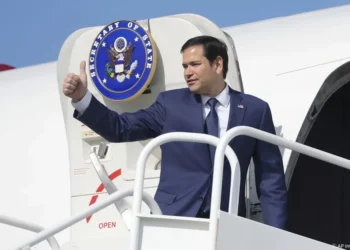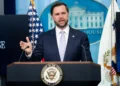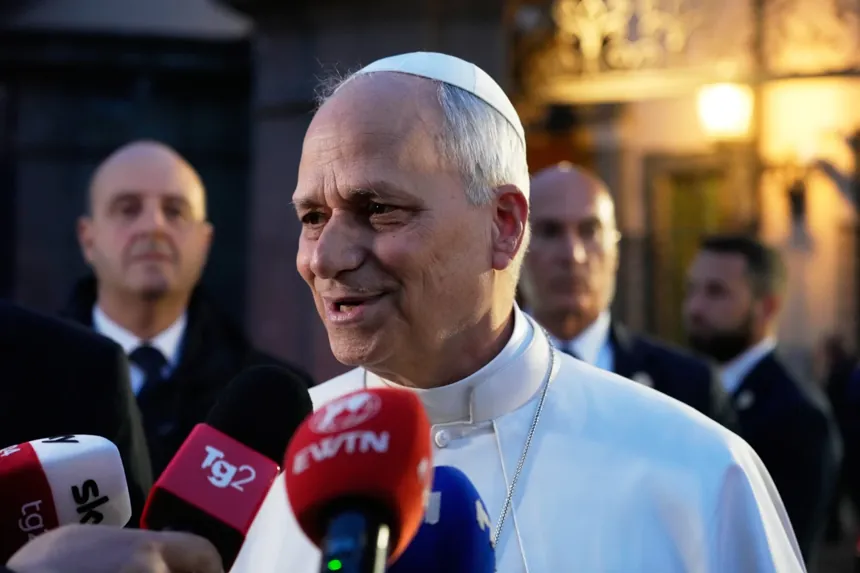
A renewed round of criticism by former U.S. President Donald Trump directed at Pope Leo has introduced fresh uncertainty into diplomatic relations between Washington and the Vatican, just days before a scheduled visit by U.S. Secretary of State Marco Rubio. The episode underscores potential friction at a time when both sides face overlapping concerns on global security, migration, and humanitarian crises.
The comments, delivered in recent public statements, have drawn attention within diplomatic circles for their timing, coinciding with preparations for high-level talks in Vatican City. According to reporting from The Associated Press, officials are concerned the rhetoric could complicate efforts to maintain steady engagement between the United States and the Holy See.
Diplomatic Pressure Builds
The Vatican has traditionally maintained cautious neutrality in political disputes, but direct criticism from prominent political figures can create diplomatic sensitivities. Analysts note that Trump’s remarks could place additional pressure on Vatican officials as they prepare to receive Rubio, particularly if the issue surfaces during discussions.

While the U.S. State Department has not formally linked Trump’s statements to Rubio’s agenda, diplomats suggest the episode may require careful handling to prevent distraction from broader policy goals. Officials speaking to Reuters indicated that maintaining continuity in U.S.-Vatican relations remains a priority despite domestic political dynamics.
Strategic Dialogue Faces New Test
Rubio’s visit is expected to focus on areas of mutual concern, including ongoing conflicts, humanitarian aid coordination, and migration challenges. The Vatican has played an increasingly active role in advocating for conflict resolution and supporting displaced populations, aligning in part with U.S. diplomatic objectives.
However, political tensions tied to Trump’s remarks could complicate the tone of discussions. Reporting from BBC News highlights that the Holy See often seeks to avoid becoming entangled in partisan disputes, emphasizing moral and humanitarian priorities over political alignment.
International Stakes Rise
The episode reflects broader challenges in maintaining consistent foreign policy messaging when domestic political figures influence international perceptions. Analysts interviewed by the Financial Times noted that such incidents can create uncertainty among global partners, particularly when they involve influential religious institutions with diplomatic standing.
For the Vatican, preserving its role as an independent moral authority remains central, while for the United States, ensuring stable engagement supports coordination on global issues ranging from conflict mediation to climate initiatives.


Future Implications for Bilateral Relations
Despite the immediate tension, diplomatic observers expect both sides to prioritize continuity in relations. The United States and the Vatican have historically navigated political differences while sustaining cooperation on international concerns.
The coming meetings are likely to test whether both parties can maintain focus on shared global priorities amid heightened political rhetoric. The outcome may shape not only bilateral engagement but also broader collaboration on humanitarian and geopolitical challenges in the months ahead.