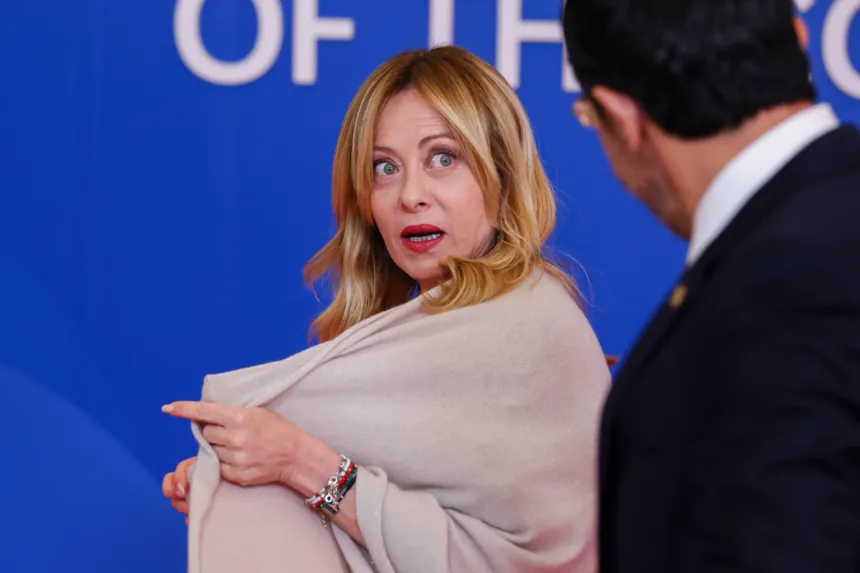
A growing controversy in Italy involving a deepfake of Giorgia Meloni has raised fresh concerns about the use of artificial intelligence in political disinformation. The issue escalated after Meloni denounced a fabricated image of herself, calling it a targeted political attack. As a result, the incident highlights rising risks for democratic systems, especially as AI-generated content becomes harder to detect and regulate.
The manipulated image spread widely on social media and falsely showed Meloni in a compromising situation. According to reporting from The Associated Press, the Italian leader strongly condemned the image. She warned that such technology is increasingly used to mislead the public and damage reputations.
Moreover, Meloni stressed that while public figures may be able to respond, ordinary people remain far more vulnerable. This, she said, points to broader societal risks tied to the rapid growth of synthetic media.

Digital Disinformation Threat Expands
The controversy also shows how AI-generated content is reshaping political communication across Europe. In particular, deepfakes—fabricated or altered images and videos—have become a growing concern for governments. These tools can undermine electoral integrity and weaken public trust.
In remarks reported by Reuters, Meloni said the incident proves that “anything at all” can now be used to spread false information. She urged the public to verify content before sharing it online.
At the same time, analysts say these cases blur the line between real and fake media. Consequently, institutions face greater difficulty in countering misinformation while still protecting freedom of expression.
European Policy Response Intensifies
Meanwhile, the episode comes as the European Union pushes forward with efforts to regulate artificial intelligence. Italy has been among the countries calling for stricter oversight, including laws that target harmful uses of AI-generated content.
Reports from international media indicate that similar incidents—some involving explicit fabricated images of public figures—have already led to legal action and policy debate. Therefore, pressure is growing on governments to act more decisively.



European policymakers are now trying to strike a balance. On one hand, they want to support innovation. On the other, they must prevent abuse as deepfake technology becomes more advanced and accessible.
Political Stakes Rise Ahead of Future Campaigns
The timing of the controversy has also raised concerns about future elections in Europe. Experts warn that deepfakes could influence voters, damage candidates, or create confusion during critical moments.
In response, Meloni’s stance reflects a wider shift among political leaders. Many now recognize that digital misinformation is evolving at a rapid pace. However, governments still face a difficult challenge: how to fight disinformation without limiting open debate or slowing technological progress.
Strategic Implications for Global Information Security
Ultimately, the controversy highlights the growing link between technology and geopolitics. As AI tools spread globally, so does the risk of cross-border manipulation of information.
For policymakers, this incident underscores the urgent need for international cooperation. Shared standards and stronger enforcement mechanisms may become essential in addressing these threats.
Looking ahead, the effectiveness of such measures could play a key role in protecting democratic institutions in an increasingly digital world.