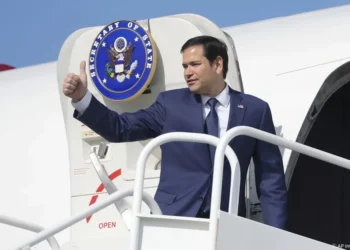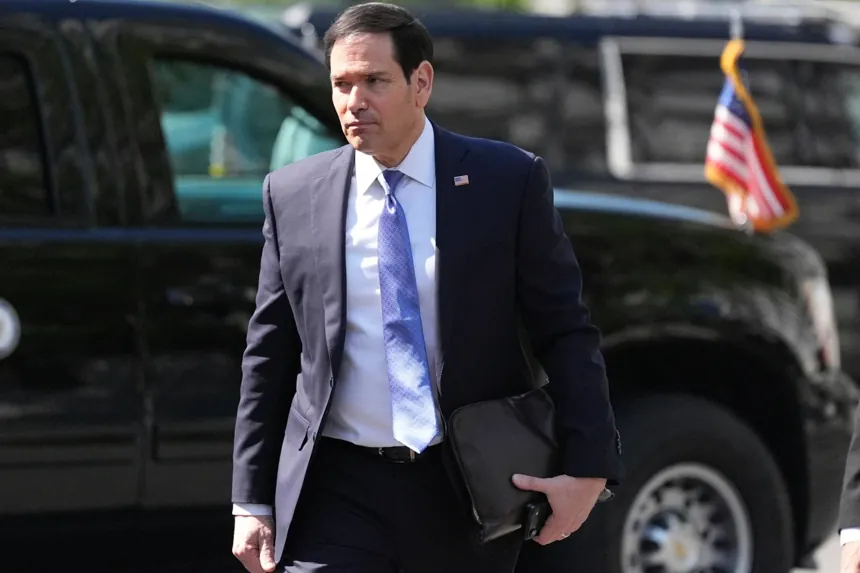
U.S. Secretary of State Marco Rubio is scheduled to travel to Rome and Vatican City this week for high-level meetings, including a planned audience with Pope Leo XIV, as tensions deepen between President Donald Trump and the head of the Catholic Church over U.S. foreign policy, particularly the war in Iran, officials said.
According to the U.S. State Department and Vatican announcements, Rubio will be in Italy on Thursday and Friday, with a key meeting expected at the Vatican on Thursday. Officials speaking to Reuters and the Associated Press confirmed the trip is aimed at easing growing diplomatic friction between Washington and the Holy See amid escalating political exchanges between Trump and the first American-born pope.
The visit comes after weeks of public criticism between the Trump administration and Pope Leo XIV, who has voiced opposition to aspects of U.S. military policy and broader international conduct. Trump, in turn, has sharply criticized the pontiff’s positions, contributing to what analysts describe as an unusual strain in relations between the White House and the Vatican.

Rubio, a Catholic and one of the administration’s most prominent foreign policy figures, is also expected to meet senior Vatican officials, including the Holy See’s secretary of state, as well as Italian government representatives in Rome.
Diplomatic effort amid rising political strain
Officials familiar with the planning said the trip is intended to stabilize relations and reopen dialogue on shared concerns, including Middle East developments and broader Western Hemisphere policy coordination. The State Department described the visit as part of ongoing engagement with European and Vatican counterparts on security and geopolitical priorities.
Reporting from the Associated Press indicates Rubio’s itinerary also includes discussions with Italian officials on defense and strategic cooperation, reflecting parallel tensions between Washington and key NATO allies over U.S. policy direction.
The diplomatic backdrop has been complicated by Trump’s recent remarks targeting both Pope Leo and European leaders, triggering concerns among allies about consistency in U.S. messaging on global conflicts and alliance commitments.
Vatican relations tested by public rhetoric
The dispute between the Trump administration and the Vatican has unfolded in parallel with Pope Leo’s increasingly vocal stance on international conflicts, particularly the war in Iran. The pope has emphasized calls for de-escalation and criticized the use of religious justification for military action, positions that have drawn political pushback from U.S. officials.
■ Related News

According to officials cited by Reuters, Rubio’s role is seen within the administration as an attempt to soften rhetoric and maintain institutional channels with European and religious leadership at a time of heightened global instability.
Observers note that the meeting also carries domestic political implications, as tensions with Catholic leadership risk influencing perceptions among religious voters in the United States ahead of upcoming electoral cycles.
Broader implications for U.S. diplomacy
The visit underscores the increasingly complex intersection of foreign policy, domestic political messaging, and religious diplomacy. Analysts cited in U.S. media reports say the episode reflects broader challenges in maintaining unified diplomatic communication as disagreements over war policy and international leadership intensify.
While the Vatican has not publicly escalated the dispute, its continued criticism of military escalation and humanitarian consequences of the conflict has kept relations with Washington under strain.
Rubio’s meetings in Rome are therefore being closely watched as an early test of whether diplomatic engagement can ease tensions or whether divisions between the Trump administration and the Vatican will persist through broader geopolitical disputes.