Journos News - Breaking News, World News, Top Stories, Todays Headlines and Flash Reports
Tuesday, October 13, 2026
  • Login
  • Home
  • World
    • Africa
    • Americas
    • Asia
    • Europe
    • Middle East
    • Oceania
  • Politics
  • Business
  • Technology
  • Health
  • Science
  • Sports
  • Entertainment
  • Culture
No Result
View All Result
  • Home
  • World
    • Africa
    • Americas
    • Asia
    • Europe
    • Middle East
    • Oceania
  • Politics
  • Business
  • Technology
  • Health
  • Science
  • Sports
  • Entertainment
  • Culture
No Result
View All Result
Journos News - Breaking News, World News, Top Stories, Todays Headlines and Flash Reports
No Result
View All Result
Home In Depth

Why the Iran–Israel–U.S. Ceasefire Remains Fragile

A temporary truce has paused direct escalation, but the structural drivers of conflict remain unresolved.

The Daily Desk by The Daily Desk
April 12, 2026
in In Depth
0
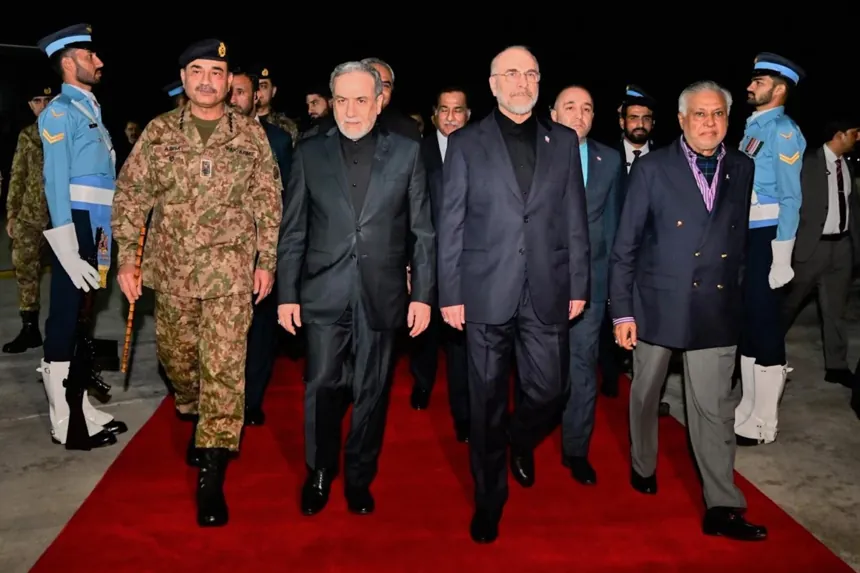
Diplomatic talks following Iran Israel US ceasefire negotiations - Pakistan Ministry of Foreign Affairs via AP

Diplomats meet as ceasefire tensions persist across the Middle East. - Pakistan Ministry of Foreign Affairs via AP

The ceasefire involving Iran, Israel, and the United States is less a final settlement than a tactical pause inside a wider regional conflict system. The immediate agreement—brokered by Pakistan as a two-week halt in direct U.S.-Iran hostilities—has reduced the risk of short-term escalation, especially around the Strait of Hormuz, one of the world’s most critical oil transit chokepoints. Yet Reuters and other international reporting show that major disputes over nuclear policy, maritime control, proxy conflicts, and regional deterrence remain intact.

What makes this ceasefire particularly significant is that it sits at the intersection of three overlapping arenas: the Iran–Israel shadow war, direct U.S.–Iran confrontation, and the wider regional network involving Lebanon, Gulf shipping, and global energy markets. While the truce has temporarily slowed direct military exchanges, it has not addressed the strategic logic that produced the conflict in the first place.

The immediate trigger: from escalation to pause

The current ceasefire emerged after roughly 40 days of intense confrontation involving U.S. and Israeli strikes on Iranian-linked military and nuclear targets, followed by Iranian retaliation against Gulf energy infrastructure and maritime routes. According to Reuters, the agreement was reached after Pakistan-mediated diplomacy created a narrow opening just before a U.S. escalation deadline expired.

At the core of the deal is a limited suspension of attacks and a partial reopening of the Strait of Hormuz. This waterway carries a major share of global seaborne oil exports, which means even a temporary disruption can ripple through shipping insurance, commodity pricing, and inflation expectations worldwide.

The ceasefire therefore matters far beyond the Middle East. It functions as an economic stabilization mechanism as much as a military one.

Historical roots of the conflict system

The Iran–Israel confrontation did not begin with the current war cycle. Its roots stretch back to the 1979 Iranian Revolution, which transformed Iran from a strategic U.S. partner into one of Washington’s principal regional adversaries. Over the decades, Israel came to view Iran’s nuclear ambitions and support for armed regional allies as existential threats.

The United States’ role evolved from indirect backing of Israel and Gulf allies into periodic direct intervention, particularly when maritime trade routes or nuclear red lines were perceived to be at risk.

This long history explains why ceasefires in this arena are rarely simple bilateral arrangements. They must navigate ideological hostility, nuclear deterrence, domestic political pressures, and alliance credibility simultaneously.

■ Related News

Lufthansa Airbus A350-941, registration D-AIXT, operating flight LH714 from Munich to Tokyo Haneda, photographed at Tokyo Haneda Airport on June 10, 2026.

Lufthansa and Indian Airlines Suspend Riyadh Flights After Airport Explosions

October 9, 2026
Iran’s state banknote printing facility photographed on August 9, 2008, showing equipment and operations inside the printing facility.

Iraq Devalues Dinar as War Disrupts Oil Exports and Strait of Hormuz Shipping

October 7, 2026
Dashcam image showing a militant kidnapping an Israeli civilian near the Nova music festival site at Re’im, Israel.

Israelis Mark Oct. 7 Anniversary as Palestinians Face Lasting Gaza War Devastation

October 7, 2026
Map shows Yemeni forces' reported gains around Dhubab, Mokha, Dhubab Airport and the strategic Bab el-Mandeb Strait.

Yemeni Forces Retake Key Areas Near Bab el-Mandeb From Houthis

October 6, 2026

Why the ceasefire remains structurally weak

The central weakness is that the truce pauses violence without resolving the issues that caused it.

First is Iran’s nuclear program. Reuters reporting from the Islamabad talks shows the United States continues to insist on non-proliferation guarantees, while Iran seeks recognition of at least some enrichment rights.

Second is the Strait of Hormuz. Tehran sees the waterway as both sovereign leverage and strategic deterrence. Washington and global shipping markets, by contrast, treat uninterrupted passage as a non-negotiable international economic interest.

Third is the Lebanon and Hezbollah question. One of the clearest signs of fragility is disagreement over whether Israel’s operations in Lebanon fall within the ceasefire framework. Because Hezbollah is closely aligned with Iran, military activity there can rapidly spill back into the U.S.-Iran track.

This layered ambiguity means all sides can claim compliance while accusing rivals of violations.

The U.S. strategic calculation

For Washington, the ceasefire serves several immediate goals.

It lowers the risk of a prolonged regional war that could threaten energy markets, U.S. bases, and allied governments. It also creates diplomatic space to pursue nuclear and maritime concessions without appearing to retreat under pressure.

However, the failed follow-up talks in Islamabad underscore how limited this breathing room may be. Reuters reported that after 21 hours of negotiations, the U.S. and Iranian delegations left without a deal, with both sides blaming incompatible demands.

This suggests the ceasefire may function more as crisis management than a pathway to durable peace.

Israel’s security doctrine and the limits of the truce

Israel’s position differs from Washington’s in one important way: its strategic focus extends beyond direct Iranian military assets to Iran’s regional network.

That includes Hezbollah in Lebanon, missile supply routes, and nuclear-linked infrastructure. As a result, Israel may continue operations that it views as essential to degrading long-term threats, even if such actions complicate U.S.-Iran diplomacy.

This creates a classic alliance tension: Washington may prioritize de-escalation, while Israel prioritizes attritional weakening of Iranian capabilities.

That divergence is one reason the ceasefire remains inherently unstable.

Global economic implications

The most immediate international consequence of the ceasefire is energy market relief.

Reuters noted that oil prices fell after the truce announcement, largely because traders interpreted the temporary reopening of Hormuz as reducing worst-case supply risks.

Yet markets remain highly sensitive because the structural vulnerability persists. The waterway can still be disrupted by mines, missile threats, or insurance-driven commercial caution.

For import-dependent economies across Asia and Europe, this means the ceasefire lowers immediate volatility but does not remove the geopolitical risk premium embedded in energy pricing.

Why the issue persists

The deeper reason this conflict repeatedly returns is that all parties still derive strategic value from controlled instability.

Iran uses calibrated escalation to reinforce deterrence and bargaining power.
Israel uses periodic military pressure to prevent strategic surprise.
The United States uses diplomatic pauses to preserve regional influence while avoiding open-ended war.

Because these incentives are embedded in national security doctrine, ceasefires tend to freeze the conflict rather than transform it.

Conclusion

What is currently known is that the Iran–Israel–U.S. ceasefire has reduced the immediate risk of direct escalation, stabilized parts of the Gulf shipping environment, and opened a narrow diplomatic channel. Reuters reporting, however, shows that follow-up talks have already stalled over nuclear restrictions, reparations, and maritime control.

What remains unresolved is more consequential than what has been temporarily paused: the future of Iran’s nuclear program, Israel’s regional security doctrine, and the status of proxy theaters such as Lebanon. That is why the ceasefire continues to matter globally. It is not simply a pause in fighting, but a test of whether regional deterrence structures can be temporarily managed without being fundamentally redesigned.

Tags: #ConflictAnalysis#Geopolitics#GlobalSecurity#Hormuz#InDepth#IranCeasefire#IsraelIran#MiddleEast#NuclearDiplomacy#OilMarkets#ReutersExplainer#USForeignPolicy
The Daily Desk

The Daily Desk

The Daily Desk is the editorial byline of Journos News, representing reporting produced by the newsroom across world news, politics, business, technology, disasters, and other areas of public interest. Stories published under this byline are independently researched, verified, and edited in accordance with Journos News’ editorial standards, with an emphasis on accuracy, transparent sourcing, attribution, context, and editorial independence.

Related Posts

Sailors aboard USS William P. Lawrence prepare to assist a burning vessel during a transit of the Strait of Hormuz on March 11, 2013.

OPEC+ Keeps November Oil Production Targets Unchanged Amid Supply Disruptions

by The Daily Desk
October 5, 2026
0

VIENNA, Austria – OPEC+ will keep its November oil production targets unchanged, extending a pause...

Fuel dispenser at a service station, photographed on June 17, 2016, showing multiple fuel nozzles and dispensing equipment.

G7 to Release 100 Million Barrels of Oil and Fuel as Prices Surge

by The Daily Desk
October 3, 2026
0

PARIS, France – Group of Seven leaders have agreed to implement a coordinated release of...

Ethiopian Prime Minister Abiy Ahmed attends Somalia’s presidential inauguration ceremony in Mogadishu on June 9, 2022.

Ethiopia Expels 10 Eritrean Diplomats as Tensions Escalate

by The Daily Desk
October 2, 2026
0

ADDIS ABABA, Ethiopia – Ethiopia has expelled 10 Eritrean diplomats and ordered them to leave...

Vladimir Putin attends a meeting of heads of state from Collective Security Treaty Organization member countries on May 15, 2012.

Putin Warns Russia Will Use ‘All Weapons’ if Territory Is Attacked

by The Daily Desk
October 2, 2026
0

MOSCOW, Russia – Russian President Vladimir Putin has warned that Russia would consider using all...

Donald Trump speaks at the 2013 Conservative Political Action Conference in National Harbor, Maryland, on March 15, 2013.

Trump Threatens Iran With Retaliation if Linked to Flydubai Attack

by The Daily Desk
October 2, 2026
0

WASHINGTON, United States – President Donald Trump warned Thursday that Iran would face a severe...

U.S. President Donald Trump delivers his inaugural address at the U.S. Capitol in Washington, D.C., on January 20, 2025.

Third U.S. Carrier, 9,000 Troops Head to Middle East as Trump Weighs Iran Strikes

by The Daily Desk
October 2, 2026
0

WASHINGTON, United States – The United States is sending a third aircraft carrier strike group...

Flydubai Boeing 737 aircraft A6-FDF photographed in Dubai on July 20, 2012.

Netanyahu Says Motive Unclear in Dubai-Tel Aviv Flight Attack

by The Daily Desk
October 1, 2026
0

JERUSALEM, Israel – Israeli Prime Minister Benjamin Netanyahu said Wednesday that the motive behind an...

U.S. president holds a press conference with the attorney general and deputy attorney general in the James S. Brady Press Briefing Room.

US Withdraws From European Anti-Corruption Body in Multilateral Retreat

by The Daily Desk
September 30, 2026
0

WASHINGTON, United States – The United States has formally withdrawn from the Council of Europe's...

U.S. Ambassador to China David Perdue takes a selfie before the Great Seal at the U.S. Embassy in Beijing on May 15, 2025.

Trump Asked Xi Whether China Wanted to Buy U.S. Arms, Ambassador Says

by The Daily Desk
September 28, 2026
0

WASHINGTON, United States - U.S. Ambassador to China David Perdue says President Donald Trump at...

Iranian Foreign Minister Abbas Araghchi photographed during an official meeting in Moscow on April 27, 2026.

Trump Rejects Iran’s Seven-Day Plan to Reopen Strait of Hormuz

by The Daily Desk
September 28, 2026
0

WASHINGTON, United States - President Donald Trump has rejected an Iranian proposal that Tehran says...

Load More
Next Post
Carlos Ulberg celebrates after knockout win over Jiri Prochazka at UFC 327 - AP Photo/Rebecca Blackwell

Carlos Ulberg Claims UFC 327 Title With First-Round KO in Miami

Oil tanker and refinery symbolize modern energy market resilience - AP Photo, File

Why the Global Economy Is Less Vulnerable to Oil Shocks Than in the 1970s

RECOMMENDED

Interior of the domestic departures area at King Khalid International Airport in Riyadh, Saudi Arabia, photographed on August 10, 2019.

Riyadh Airport Terminal Struck Again as Saudi Officials Report Injuries

October 12, 2026
Pope Leo XIV attends an audience with members of the media on May 12, 2025, in a photograph taken by Edgar Beltrán.

Pope Leo XIV to Undergo Surgery to Remove Lung Nodule

October 12, 2026
Doorbell-camera footage shows two people running during the October 9, 2026, shooting in Erie, Pennsylvania, as reported by YourErie.

Father of Toddler Killed in Erie Shooting Remembers Family Patriarch

October 12, 2026
Russian President Vladimir Putin meets U.S. President Donald Trump on the sidelines of the 25th APEC Economic Leaders’ Meeting in Da Nang, Vietnam, on November 11, 2017.

Senators Urge Trump to Reverse Russian Diesel Plan, Citing Laws

October 11, 2026
Fuel dispenser nozzles arranged at a filling station, photographed by Santeri Viinamäki on June 17, 2016.

Trump’s Russian Diesel Deal Unlikely to Cut US Fuel Prices Significantly

October 11, 2026

MOST VIEWED

  • Doorbell-camera footage shows two people running during the October 9, 2026, shooting in Erie, Pennsylvania, as reported by YourErie.

    Father of Toddler Killed in Erie Shooting Remembers Family Patriarch

    0 shares
    Share 0 Tweet 0
  • Iran Says US Response to Hormuz Proposal Is Insufficient

    0 shares
    Share 0 Tweet 0
  • UK Prime Minister Says Russia Interfered in 2016 Brexit Referendum

    0 shares
    Share 0 Tweet 0
  • Senators Urge Trump to Reverse Russian Diesel Plan, Citing Laws

    0 shares
    Share 0 Tweet 0
  • North Korea Fires Multiple Ballistic Missiles Toward Eastern Waters

    0 shares
    Share 0 Tweet 0
JournosNews logo

Journos News delivers globally neutral, fact-based journalism that meets international media standards — clear, credible, and made for a connected world.

  • Categories
  • World News
  • Politics
  • Business & Markets
  • Technology
  • Health
  • Science
  • Sports
  • Arts & Culture
  • Resources
  • Editorial Standards
  • Submit a Story
  • Advertise with Us
  • Syndication & Partnerships
  • Site Map
  • Press & Media Kit
  • Editorial Team
  • Careers

Join thousands of readers receiving the latest updates, tips, and exclusive insights straight to their inbox. Never miss an important story again.

  • About Us
  • Editorial & Trust Center
  • Contact Us
  • Privacy Policy
  • Terms of Use & Copyright Notice

© JournosNews.com All rights reserved.

Welcome Back!

Login to your account below

Forgotten Password?

Retrieve your password

Please enter your username or email address to reset your password.

Log In
JournosNews

Independent Journalism.
Verified Facts.

You're about to read a professionally edited article from JournosNews.com.

Every article is produced in accordance with our editorial standards, emphasizing factual accuracy, transparent attribution, fairness, editorial independence, and meaningful context.

Editorial Standards
No Result
View All Result
  • Home
  • World
    • Africa
    • Americas
    • Asia
    • Europe
    • Middle East
    • Oceania
  • Politics
  • Business
  • Technology
  • Health
  • Science
  • Sports
  • Entertainment
  • Culture

© JournosNews.com All rights reserved.

This website uses cookies. By continuing to use this website you are giving consent to cookies being used. Visit our Privacy and Cookie Policy.