Journos News - Breaking News, World News, Top Stories, Todays Headlines and Flash Reports
Tuesday, September 1, 2026
  • Login
  • Home
  • World
    • Africa
    • Americas
    • Asia
    • Europe
    • Middle East
    • Oceania
  • Politics
  • Business
  • Technology
  • Health
  • Science
  • Sports
  • Entertainment
  • Culture
No Result
View All Result
  • Home
  • World
    • Africa
    • Americas
    • Asia
    • Europe
    • Middle East
    • Oceania
  • Politics
  • Business
  • Technology
  • Health
  • Science
  • Sports
  • Entertainment
  • Culture
No Result
View All Result
Journos News - Breaking News, World News, Top Stories, Todays Headlines and Flash Reports
No Result
View All Result
Home World News Middle East

Gulf Energy Infrastructure Under Sustained Attack as Iran-Israel War Expands Economic Front

Escalating strikes on oil and gas assets push global markets into volatility while regional deterrence shows signs of strain

The Daily Desk by The Daily Desk
March 21, 2026
in Middle East, World News
0
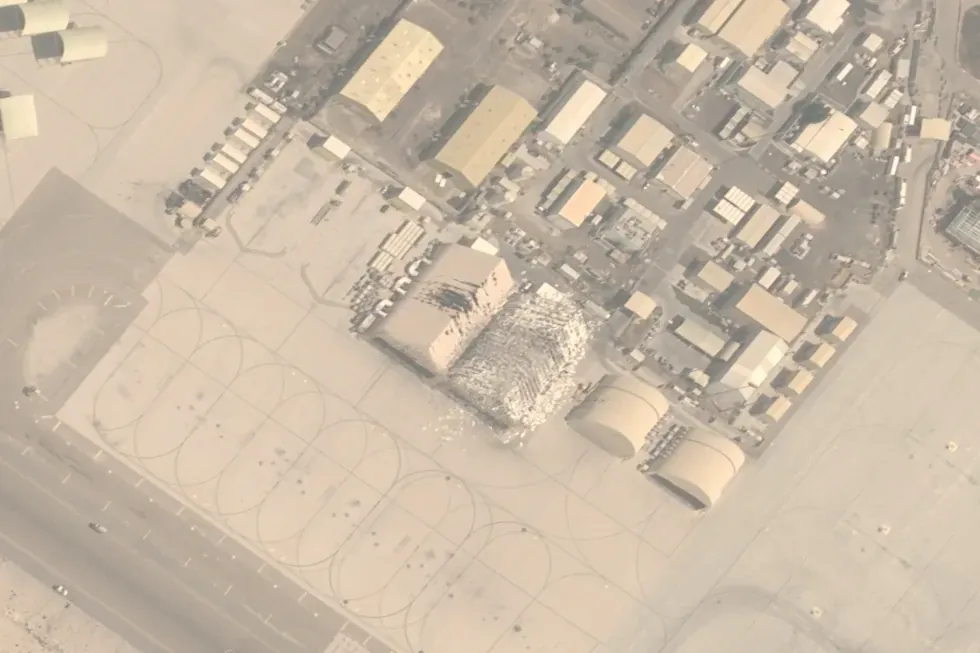
Oil facilities burning after strikes amid Iran Israel energy war escalation - Airbus Defence and Space© via AP

Strikes on Gulf energy infrastructure intensify global market fears - Airbus Defence and Space© via AP

By a senior international affairs editor

The conflict between Israel and Iran has entered a phase where economic disruption is no longer a byproduct but a central battleground, with coordinated strikes on energy infrastructure reverberating far beyond the region. As first reported by The Associated Press, Israeli airstrikes reached Tehran during the Persian New Year, even as Iranian retaliation widened across Gulf energy corridors.

The timing underscores a shift: symbolic dates and civilian rhythms are now intersecting with strategic targeting, amplifying uncertainty across both domestic populations and global markets. The conflict, now in its third week, is testing the resilience of energy supply chains that underpin international economic stability.

Energy Arteries Face Direct Pressure

The latest exchanges have increasingly focused on oil and gas infrastructure, placing the Strait of Hormuz at the center of global concern. Roughly a fifth of the world’s oil passes through this narrow corridor, and Iran’s geographic leverage has translated into sustained pressure on shipping and supply continuity.

Brent crude briefly surged above $119 per barrel, reflecting not just immediate supply fears but a deeper anxiety about prolonged disruption. Natural gas markets followed suit, with European benchmarks doubling within weeks. These shifts suggest the market is pricing in a structural risk rather than a temporary shock.

Israeli leadership has indicated restraint in specific areas, with Prime Minister Benjamin Netanyahu stating that attacks on the South Pars gas field would be paused following a request from Donald Trump. Yet this selective de-escalation has not translated into broader stability, as Iranian counterstrikes have expanded geographically.

Regional Supply Networks Begin to Fracture

Iranian missile activity has extended across key Gulf producers, targeting facilities in Saudi Arabia, Qatar, Kuwait, and the United Arab Emirates. The cumulative effect is not isolated damage but systemic strain across interconnected supply networks.

Qatar’s Ras Laffan liquefied natural gas facility, a cornerstone of global LNG exports, has seen output reduced significantly following missile damage. Saudi Arabia’s efforts to reroute oil exports toward the Red Sea—bypassing Hormuz—have also been undermined by drone strikes on alternative infrastructure.


■ Related News

Iranian leader pictured in an official image associated with a message marking Workers’ Day and Teachers’ Day in May 2026.

Iran’s Leaders Defy the U.S. Six Months Into War, Signaling Little Tolerance for Dissent

August 29, 2026
Donald Trump speaks at the Conservative Political Action Conference in Washington, D.C., in 2011 during a political address.

After Six Months of Iran War, U.S. Goals Have Shifted. Strait of Hormuz Is Now a Top Concern

August 27, 2026
Asian stock markets rise as oil prices fall, with market indexes, crude prices, Nvidia shares and key investor risks highlighted. - Journos News, File

Asian Shares Rise as Lower Oil Prices and AI Optimism Support Markets

August 26, 2026
Iranian fuel tankers arrive in Lebanon as Hezbollah-linked fuel shipments enter the country amid a severe energy crisis.

Iran’s Fuel Lines Grow as U.S. Sanctions Deepen Economic Pressure

August 26, 2026

This pattern reveals a deliberate attempt to constrain redundancy. As fallback routes come under attack, the margin for maintaining stable exports narrows, increasing the likelihood of prolonged volatility.

Maritime Risk Expands Beyond Chokepoints

The threat environment has extended into open المياه, with vessels damaged or set ablaze off the coasts of the UAE and Qatar. These incidents indicate that the conflict’s economic dimension is not confined to fixed infrastructure but includes mobile assets critical to global trade.

Insurance premiums for shipping through the Gulf have risen sharply, and early indicators suggest some operators are reconsidering transit routes altogether. This introduces secondary disruptions, including delays and increased costs, that compound the direct impact of physical damage.

The strategic implication is clear: even limited maritime incidents can cascade into broader supply chain disruptions, amplifying the economic reach of the conflict.

Diplomatic Channels Struggle to Contain Spillover

An emergency session of the United Nations Security Council highlighted growing alarm among Gulf states, which have urged Iran to halt strikes on regional assets. However, diplomatic signaling has so far failed to alter operational behavior on the ground.

The divergence between military escalation and diplomatic restraint efforts suggests diminishing leverage for external actors. While Washington has drawn red lines—particularly regarding attacks on Qatar—its reluctance to deploy ground forces reflects a calibrated approach that may limit immediate deterrence.

Meanwhile, internal security concerns are surfacing within Gulf states. Authorities in the UAE reported dismantling a network allegedly linked to Hezbollah and Iran, pointing to a parallel layer of financial and covert activity accompanying the overt military campaign.

Military Degradation Meets Persistent Capability

Israeli officials maintain that Iran’s conventional military capacity has been significantly degraded, citing damage to air defenses and naval assets. However, the استمرار of missile and drone launches suggests that Tehran retains sufficient asymmetric capability to sustain pressure.

This imbalance—reduced conventional القوة alongside persistent strike capacity—complicates assessments of escalation risk. It allows Iran to continue influencing the conflict’s trajectory without requiring full-spectrum military parity.

The الحرب, which began on February 28, has already resulted in significant casualties across multiple theaters, including Lebanon and Israel. Yet the absence of a decisive shift on the battlefield reinforces the likelihood of a prolonged confrontation.

Strategic Outlook: Economic Front Likely to Define Next Phase

The evolving pattern indicates that the conflict’s next phase will be shaped less by territorial gains and more by economic endurance. Energy infrastructure, shipping lanes, and financial networks are emerging as primary targets, suggesting a war of attrition focused on systemic pressure.

If current trends persist, global markets may face sustained instability, with ripple effects extending into inflation, energy policy, and geopolitical alignment. The interplay between military operations and economic disruption will likely determine not only the conflict’s duration but its broader international consequences.


Tags: #EnergyCrisis#Geopolitics#GlobalEconomy#GulfCrisis#IranIsraelWar#MarketVolatility#MiddleEastConflict#NaturalGas#OilMarkets#SecurityNews#StraitOfHormuz#WorldNews
The Daily Desk

The Daily Desk

The Daily Desk is a contributor at JournosNews.com covering politics, media, governance, and the evolving dynamics of public discourse. Stories published under this byline are produced in accordance with JournosNews' editorial standards, with an emphasis on verified reporting, accuracy, context, and impartiality.

Related Posts

Journos News explainer graphic showing how tariffs work, who pays them, supply-chain effects, government purposes, quotas and consumer impacts.

What Are Tariffs and How Do They Work?

August 26, 2026
Canada’s innovation minister speaks during a frontier artificial intelligence safety roundtable at Bletchley Park in the United Kingdom.

Canada Escalates Trade Confrontation With U.S. With New Tariffs

August 26, 2026
Strait of Hormuz connecting the Gulf of Oman and Persian Gulf, photographed from the International Space Station.

LIVE: Middle East Conflict — Ongoing Coverage

August 12, 2026
Map showing reported Houthi attack near Bab el-Mandeb and U.S. maritime operations across the Gulf of Oman and Strait of Hormuz

Houthi Attack Kills Six as U.S. Forces Strike Ship Near Iranian Blockade

August 12, 2026
USCGC Aquidneck transits the Strait of Hormuz during U.S. naval operations on December 2, 2020.

LIVE: Middle East Conflict — Ongoing Coverage

August 11, 2026
An Iraqi Special Operations Forces armored personnel carrier drives along a street in Mosul during the battle against Islamic State forces.

Iraq Struggles to Balance U.S. and Iran as Regional War Intensifies

August 10, 2026
U.S. President Donald Trump meets Israeli Prime Minister Benjamin Netanyahu in the Oval Office to discuss a Gaza peace plan.

Israel Rejects Gaza Withdrawal Plan as Houthi Attacks Raise Regional Tensions

August 10, 2026
Houthi supporters protest against Saudi-led coalition airstrikes in Sana’a, Yemen, in September 2015.

Houthi Attacks Raise Risk of Wider Conflict and Red Sea Shipping Disruption

August 9, 2026
Load More
Next Post
Elon Musk attends court during Twitter investor lawsuit proceedings - AP Photo/Godofredo A. Vasquez

Jury Finds Elon Musk Liable for Misleading Twitter Investors

Flooded streets in Hawaii prompting evacuations and emergency response - AP Photo/Mengshin Lin

Severe Flooding in Hawaii Triggers Evacuations Amid Dam Safety Fears

JournosNews logo

Journos News delivers globally neutral, fact-based journalism that meets international media standards — clear, credible, and made for a connected world.

  • Categories
  • World News
  • Politics
  • Business & Markets
  • Technology
  • Health
  • Science
  • Sports
  • Arts & Culture
  • Resources
  • Editorial Standards
  • Submit a Story
  • Advertise with Us
  • Syndication & Partnerships
  • Site Map
  • Press & Media Kit
  • Editorial Team
  • Careers

Join thousands of readers receiving the latest updates, tips, and exclusive insights straight to their inbox. Never miss an important story again.

  • About Us
  • Editorial & Trust Center
  • Contact Us
  • Privacy Policy
  • Terms of Use & Copyright Notice

© JournosNews.com All rights reserved.

Welcome Back!

Login to your account below

Forgotten Password?

Retrieve your password

Please enter your username or email address to reset your password.

Log In
JournosNews

Independent Journalism.
Verified Facts.

You're about to read a professionally edited article from JournosNews.com.

Every article is produced in accordance with our editorial standards, emphasizing factual accuracy, transparent attribution, fairness, editorial independence, and meaningful context.

Editorial Standards
No Result
View All Result
  • Home
  • World
    • Africa
    • Americas
    • Asia
    • Europe
    • Middle East
    • Oceania
  • Politics
  • Business
  • Technology
  • Health
  • Science
  • Sports
  • Entertainment
  • Culture

© JournosNews.com All rights reserved.

This website uses cookies. By continuing to use this website you are giving consent to cookies being used. Visit our Privacy and Cookie Policy.