Journos News - Breaking News, World News, Top Stories, Todays Headlines and Flash Reports
Tuesday, September 1, 2026
  • Login
  • Home
  • World
    • Africa
    • Americas
    • Asia
    • Europe
    • Middle East
    • Oceania
  • Politics
  • Business
  • Technology
  • Health
  • Science
  • Sports
  • Entertainment
  • Culture
No Result
View All Result
  • Home
  • World
    • Africa
    • Americas
    • Asia
    • Europe
    • Middle East
    • Oceania
  • Politics
  • Business
  • Technology
  • Health
  • Science
  • Sports
  • Entertainment
  • Culture
No Result
View All Result
Journos News - Breaking News, World News, Top Stories, Todays Headlines and Flash Reports
No Result
View All Result
Home World News Middle East

Shifting Iran Rhetoric Raises Military Escalation Risk for Washington

Conflicting statements on nuclear threats and regime change sharpen uncertainty across the Middle East and narrow diplomatic space.

The Daily Desk by The Daily Desk
March 3, 2026
in Middle East, World News
0
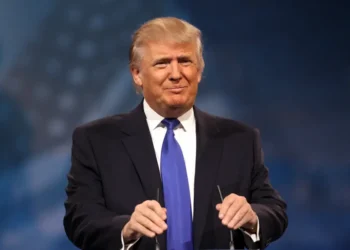
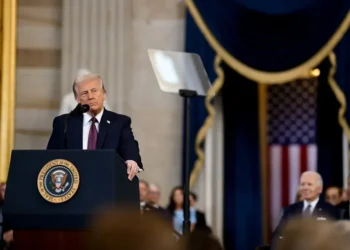
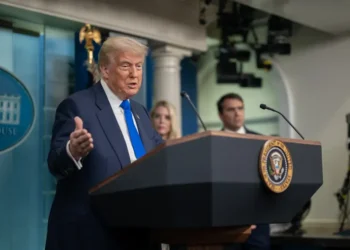
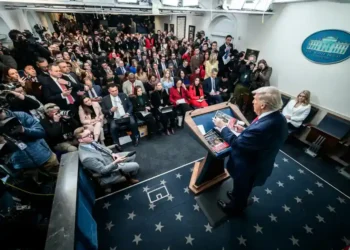
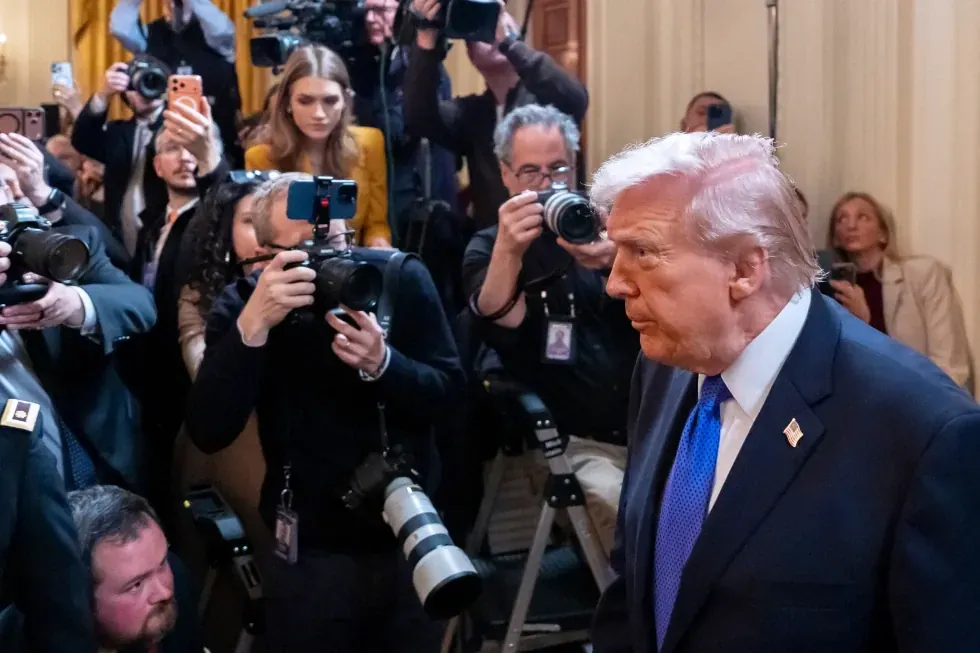
President Trump speaking about Iran security policy shift - AP Photo/Alex Brandon

Trump addresses Iran strategy amid rising regional tension. - AP Photo/Alex Brandon

WASHINGTON (JN) – The risk of a wider confrontation with Tehran is rising as U.S. messaging grows less consistent. In recent months, President Donald Trump has shifted his language on Iran’s nuclear program and the purpose of recent strikes. That evolution has fueled concern that deterrence signaling could drift into open-ended military escalation.

According to reporting by The Associated Press, the administration’s public explanations have changed significantly since last summer. At that time, Trump declared Iran’s nuclear infrastructure “completely destroyed.” Today, officials warn of urgent and expanding threats.

The change in tone is not a minor adjustment. In high-risk security environments, clarity shapes stability. When objectives appear fluid, adversaries may prepare for worst-case scenarios.

From Total Destruction to Renewed Alarm

In June 2025, after coordinated strikes, Trump said Iran’s nuclear facilities had been “obliterated.” Defense Secretary Pete Hegseth echoed that assessment. Secretary of State Marco Rubio rejected intelligence reporting that suggested only a temporary setback.

Months later, the message shifted. Trump argued that Iran was again close to acquiring a nuclear weapon. He also voiced frustration with stalled negotiations.

That pivot carries strategic consequences. If the original assessment overstated the damage, credibility may erode. If new intelligence drove the shift, the threat picture may be worsening. Either way, the gap between past assurances and current warnings complicates deterrence.

Allies must now interpret whether Washington sees a contained program or a rapidly advancing one. That distinction affects military planning across the region.

■ Related News

Saudi Crown Prince, Turkish President and Pakistani Prime Minister attend the signing of a joint defense agreement in Makkah.

Turkey, Pakistan and Saudi Arabia Sign Mutual Defense Pact as Regional Security Tensions Rise

August 8, 2026
Firefighters from Ukraine's State Emergency Service work among the rubble of a severely damaged building as smoke rises following a Russian attack in Kyiv.

Ukraine Expands Strikes on Russian Oil Facilities as Kyiv Seeks Stronger Air Defenses

August 7, 2026
A U.S. Navy sailor stands watch aboard a military vessel while transiting the Strait of Hormuz, monitoring nearby maritime traffic.

Iran Nears Strait of Hormuz Agreement as Israel Reports First Troop Deaths Since Lebanon Ceasefire

August 6, 2026
Locator map showing the approximate coal mine explosion site near Harnai in Pakistan's Baluchistan province, rescue operation areas, nearby communities, and key incident information.

Pakistan Coal Mine Explosion Kills at Least 32 as Rescuers Search for Trapped Workers

July 31, 2026

Regime Change Signals Complicate Intent

The rhetoric expanded further when discussion moved beyond nuclear facilities.

In mid-2025, Trump publicly entertained the idea of regime change. Vice President JD Vance, however, said the goal remained limited to ending nuclear ambitions. After subsequent strikes that killed Iran’s Supreme Leader, Ali Khamenei, Trump described the moment as an opportunity for Iranians to reclaim their country. Other officials stopped short of declaring regime change official policy.

Hegseth later stated that it was “not a so-called regime change war,” even as leadership had changed.

Such mixed signals blur operational boundaries. Even without a formal doctrine of political transformation, adversaries may interpret leadership targeting as an attempt at systemic change. That perception alone can increase incentives for retaliation.

Washington has historically tried to separate counterproliferation strikes from regime removal campaigns. The erosion of that line adds uncertainty to an already fragile environment.

Missile Threat Framing Widens the Conflict Scope

Administration officials also expanded the threat narrative to include ballistic missiles.

Rubio warned that Iran maintains a substantial short-range missile arsenal capable of striking U.S. bases in the Gulf. Trump later suggested Iranian missile development could eventually threaten the American mainland. Hegseth argued that missile and drone programs were designed to protect nuclear leverage.

This broader framing matters. Once missile capabilities become central to the justification, the potential target set widens. Preemptive logic may extend beyond nuclear sites.

For regional partners hosting U.S. forces, the message underscores vulnerability. For Tehran, it signals that future strikes might not be limited to enrichment facilities. That dynamic raises the escalation threshold.

Protest Warnings Give Way to Hardline Posture

In January, amid protests inside Iran, Trump positioned Washington as a potential protector of demonstrators. He warned against executions and paused meetings with Iranian officials. He later suggested that reported halts validated U.S. pressure.

Weeks later, the tone changed. At a White House event in early March, Trump described military action as a “last, best chance” to remove intolerable threats. He concluded that negotiation was no longer viable.

The shift from conditional engagement to firm rejection narrows diplomatic flexibility. Publicly closing negotiation channels reduces room for de-escalation. It also signals to adversaries that force may take priority over dialogue.

Strategic Ambiguity Shapes the Escalation Curve

The broader issue is not rhetoric alone. In crisis settings, words guide expectations. When leaders alternate between claims of total destruction, warnings of imminent threat, and suggestions of regime change, strategic intent becomes harder to read.

Allies such as Israel and Gulf states rely on clear signals for coordination. Iran may interpret unpredictability as preparation for expanded action. Global markets, particularly energy, react to perceived instability.

The United States has long used calibrated language to manage risk in the Middle East. When messaging accelerates faster than policy clarity, escalation control becomes more difficult.

It remains unclear whether these shifts reflect new intelligence, tactical messaging, or evolving strategy. What is clear is that inconsistent framing adds friction to an already volatile standoff.

As deployments continue and diplomatic channels strain, the margin for miscalculation tightens. In a nuclear-adjacent confrontation, even incremental changes in language can reshape the trajectory of escalation.

Tags: #DefensePolicy#EscalationRisk#Geopolitics#GlobalSecurity#IranNuclear#MiddleEastSecurity#MilitaryStrategy#RegionalStability#TrumpIran#USForeignPolicy#WhiteHouse#WorldNews
The Daily Desk

The Daily Desk

The Daily Desk is a contributor at JournosNews.com covering politics, media, governance, and the evolving dynamics of public discourse. Stories published under this byline are produced in accordance with JournosNews' editorial standards, with an emphasis on verified reporting, accuracy, context, and impartiality.

Related Posts

A Russian Gerbera drone displayed after being downed by Ukrainian border guards in Ukraine's Sumy region during a reported drone attack.

Romania Shoots Down Russian Drones After Repeated Airspace Violations Near Ukraine

July 29, 2026
Regional map showing conflict locations across Iraq and Iran, major maritime shipping routes, and strategic chokepoints including the Strait of Hormuz and Bab el-Mandeb Strait.

US Strikes Continue as Explosions Reported Near American Base in Northern Iraq Conflict expands across the region

July 24, 2026
A pair of binoculars sits on the signal bridge of USS Harry S. Truman as an MH-60S Seahawk conducts a replenishment mission at sea.

Navy Ends Routine Release of Sailors’ Service Records, Expanding Limits on Media Access

July 23, 2026
Locator map showing Iran's Natanz Nuclear Complex, Pickaxe Mountain underground facility, and other major nuclear sites, including Fordo, Isfahan, and Bushehr.

Trump Threatens Strike on Deep Underground Iranian Nuclear Site at Pickaxe Mountain

July 23, 2026
Live coverage dashboard summarizing military operations, maritime security, oil markets, and regional developments across the Middle East. – Image Graphic/JournosNews (File)

LIVE: Middle East Security Crisis — Ongoing Coverage

July 20, 2026
Map showing the strategic islands near the Strait of Hormuz and major shipping routes. — Graphic: JournosNews

Strategic Hormuz Islands Return to Focus as U.S.-Iran Conflict Escalates

July 17, 2026
U.S. President Donald Trump and Chinese President Xi Jinping attend an official welcome ceremony in Beijing.

Global Survey Finds China and Xi Viewed More Favorably Than U.S. and Trump in Many Countries

July 16, 2026
Official portrait of U.S. President Donald Trump.

Trump to Deliver Primetime Address Focused on Elections Amid Renewed Push for Federal Voting Rules

July 15, 2026
Load More
Next Post
Bill Clinton testifies before House committee on Epstein ties - AP Photo/Susan Walsh, file

Clinton Testimony Signals Leadership Risk as Epstein Scrutiny Resurfaces

Bill Gates speaking at Gates Foundation town hall meeting - AP Photo/Evan Vucci, File

Gates Foundation Under Strain as Epstein Links Resurface

JournosNews logo

Journos News delivers globally neutral, fact-based journalism that meets international media standards — clear, credible, and made for a connected world.

  • Categories
  • World News
  • Politics
  • Business & Markets
  • Technology
  • Health
  • Science
  • Sports
  • Arts & Culture
  • Resources
  • Editorial Standards
  • Submit a Story
  • Advertise with Us
  • Syndication & Partnerships
  • Site Map
  • Press & Media Kit
  • Editorial Team
  • Careers

Join thousands of readers receiving the latest updates, tips, and exclusive insights straight to their inbox. Never miss an important story again.

  • About Us
  • Editorial & Trust Center
  • Contact Us
  • Privacy Policy
  • Terms of Use & Copyright Notice

© JournosNews.com All rights reserved.

Welcome Back!

Login to your account below

Forgotten Password?

Retrieve your password

Please enter your username or email address to reset your password.

Log In
JournosNews

Independent Journalism.
Verified Facts.

You're about to read a professionally edited article from JournosNews.com.

Every article is produced in accordance with our editorial standards, emphasizing factual accuracy, transparent attribution, fairness, editorial independence, and meaningful context.

Editorial Standards
No Result
View All Result
  • Home
  • World
    • Africa
    • Americas
    • Asia
    • Europe
    • Middle East
    • Oceania
  • Politics
  • Business
  • Technology
  • Health
  • Science
  • Sports
  • Entertainment
  • Culture

© JournosNews.com All rights reserved.

This website uses cookies. By continuing to use this website you are giving consent to cookies being used. Visit our Privacy and Cookie Policy.