Updated – February 23, 2026
China’s Central Economic Work Conference offers insight into how leaders are balancing exports, property stress, innovation and debt risks as the country prepares for 2026.
China has outlined its economic priorities for 2026 following the annual Central Economic Work Conference, a closed-door gathering that sets the policy tone for the year ahead. While the language of the communiqué emphasized stability and resilience, analysts say the deeper message lies in what was reinforced rather than newly introduced.

The meeting, held in December in Beijing, comes at a sensitive juncture. The world’s second-largest economy is navigating a prolonged property downturn, soft domestic demand and increasingly complex trade relationships, even as it prepares to enter a new planning cycle under the 15th Five-Year Plan in 2026.
Rather than unveiling sweeping stimulus, policymakers appear to be signaling continuity. The approach suggests a preference for structural alignment with long-term goals over short-term demand surges — a strategy that may limit volatility but also constrains rapid acceleration.
Exports remain central, even if understated
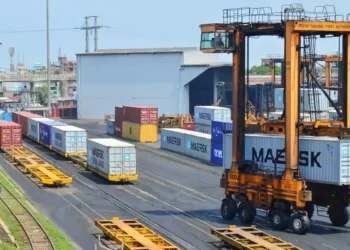
Exports were not foregrounded in official messaging, yet trade data and analyst assessments indicate they remain a primary growth pillar. China’s trade surplus surpassed US$1 trillion in the first eleven months of 2025, according to customs figures, reflecting continued external demand despite geopolitical headwinds.
Shipments to Europe, Southeast Asia and Africa have expanded, offsetting a notable decline in exports to the United States. This suggests diversification is partly cushioning bilateral tensions, though it does not eliminate risk.
Economists point out that when growth relies heavily on exports, trade frictions tend to intensify. European leaders have publicly warned of potential defensive measures if domestic industries face sustained competitive pressure. This dynamic indicates that while exports may continue to anchor near-term growth, their durability depends on political as well as economic variables.
■ Related News




Projections from private-sector economists suggest export growth could moderate in 2026 from this year’s pace. That moderation would not imply contraction, but it does raise questions about whether other domestic engines are strong enough to compensate.
Property: stabilization without revival
The property sector, once a dominant driver of Chinese growth, remains fragile. Although earlier political signals were muted, the conference communiqué explicitly called for stabilizing the housing market through city-specific measures, inventory reduction and improved housing quality.
This language indicates a shift from expansion to floor-setting. The focus appears to be preventing systemic deterioration rather than restoring the sector to its former scale. Analysts note that large-scale stimulus comparable to past redevelopment campaigns — such as the post-2008 shantytown renovation program — has not been signaled.
The property downturn has already affected developers, local government finances and household confidence. Continued price declines could weigh on banks and consumption through wealth effects. Policymakers have introduced measures including mortgage rate reductions, relaxed purchase restrictions and tools to ensure delivery of pre-sold homes, but the conference suggests no dramatic escalation.
This reflects a balancing act: containing financial risk while allowing excess capacity to clear gradually. The strategy suggests policymakers are prepared for a prolonged adjustment rather than a rapid rebound.
Domestic demand: priority with limits
Boosting consumption and stabilizing investment once again topped the policy agenda. Officials pledged to raise household incomes, expand quality goods and services and continue consumer trade-in subsidy programs.
Over the past year, fiscal tools — including special bond issuance and targeted support measures — have already been deployed at significant scale. The conference language suggests these programs will continue but not necessarily expand.
The distinction is subtle but important. Last year’s messaging emphasized scaling up support. This year’s phrasing focused on “reasonable use” of existing policies. That tonal shift implies consolidation rather than acceleration.
The communiqué also pledged to address “involutionary competition,” a term increasingly used in China to describe inefficient price wars and excess capacity in certain industries. This suggests policymakers are concerned about deflationary pressures and industrial overcapacity, particularly in strategic sectors such as advanced manufacturing and technology.
While supporting domestic demand remains central, the framework indicates incremental adjustment instead of aggressive stimulus.
Innovation and energy as structural anchors
Beyond cyclical management, the conference placed notable emphasis on innovation, talent development and green energy. Officials outlined plans to expand artificial intelligence applications, strengthen industrial supply chains and improve governance of emerging technologies.
The language also stressed balancing technological progress with labor market stability, reflecting awareness that automation and platform economies can disrupt employment patterns. This suggests policymakers are seeking to integrate social stability considerations into innovation policy.
Green energy emerged as a particularly prominent theme. For the first time, the communiqué referenced drafting a national plan to build an “energy-strong nation,” aligning with long-term decarbonization and industrial upgrading goals.
This emphasis reflects structural priorities rather than short-term stimulus. China already leads in several renewable and electric-vehicle supply chains, and additional financing support could further consolidate that position. However, such investment is typically gradual in macroeconomic impact compared with large-scale construction stimulus.
Investment slowdown and fiscal restraint
Investment was identified explicitly as an area of concern. Official data show fixed-asset investment declined year-on-year in 2025, largely due to property weakness. Excluding real estate, growth was modest but positive.
The conference called for halting the decline and stabilizing investment, yet offered limited new instruments. Measures referenced largely reiterate previously introduced policies, including local government special bond quotas and policy-based financing tools.
This suggests policymakers acknowledge the slowdown but are cautious about expanding leverage. The communiqué emphasized a “more proactive” fiscal stance while maintaining debt discipline and a prudent monetary policy.
Analysts interpret this as containment rather than expansion. Debt stabilization appears to remain a guiding principle, limiting the scope for aggressive countercyclical action.
A strategy of alignment over acceleration
Taken together, the conference signals a calibrated approach. Rather than deploying large-scale stimulus to push growth higher, policymakers appear focused on aligning economic performance with longer-term structural goals: innovation, green energy, industrial upgrading and financial risk control.
This approach may reduce volatility and systemic risk, particularly in the property and local government debt spheres. However, it also implies that growth in 2026 could depend heavily on external demand and incremental domestic improvements.
Uncertainty remains around global trade conditions, geopolitical tensions and domestic confidence. Analysts broadly suggest that while a sharp downturn is not indicated by current policy signals, neither is a forceful rebound engineered through expansive stimulus.
In that sense, the Central Economic Work Conference reflects a governing philosophy that prioritizes resilience and structural transition over rapid expansion. Whether that balance proves sufficient will depend on forces both within and beyond China’s control.
Source: CNA – 5 takeaways from China’s Central Economic Work Conference as Beijing maps its 2026 growth path