Journos News - Breaking News, World News, Top Stories, Todays Headlines and Flash Reports
Tuesday, September 1, 2026
  • Login
  • Home
  • World
    • Africa
    • Americas
    • Asia
    • Europe
    • Middle East
    • Oceania
  • Politics
  • Business
  • Technology
  • Health
  • Science
  • Sports
  • Entertainment
  • Culture
No Result
View All Result
  • Home
  • World
    • Africa
    • Americas
    • Asia
    • Europe
    • Middle East
    • Oceania
  • Politics
  • Business
  • Technology
  • Health
  • Science
  • Sports
  • Entertainment
  • Culture
No Result
View All Result
Journos News - Breaking News, World News, Top Stories, Todays Headlines and Flash Reports
No Result
View All Result
Home World News Middle East

Pakistan Steps In as U.S.–Iran Diplomacy Falters Under Sudden U.S. Pullback

Islamabad’s mediation effort intensifies as Washington’s decision to sideline envoys raises new risks for already fragile nuclear negotiations

The Daily Desk by The Daily Desk
April 26, 2026
in Middle East, World News
0
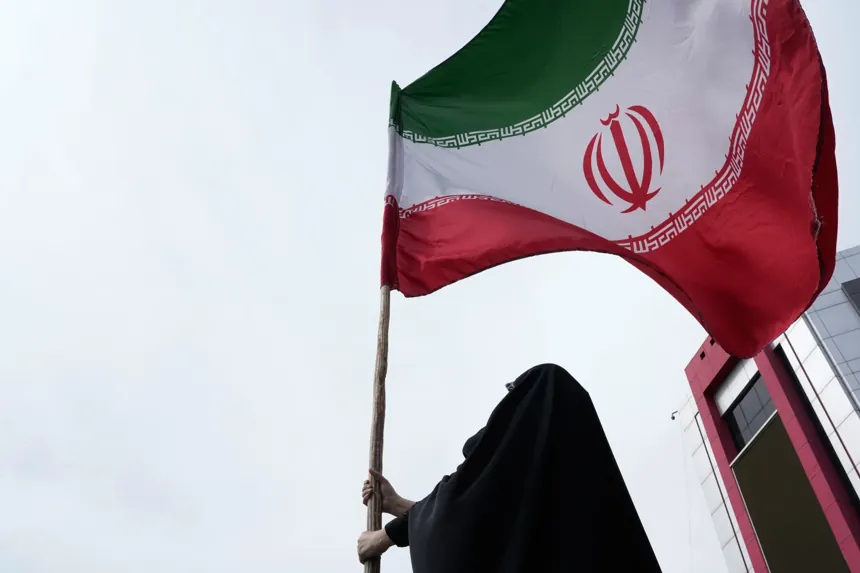
Pakistan mediates amid US Iran diplomacy crisis and halted envoy talks - AP Photo/Vahid Salemi

Pakistan attempts to sustain dialogue as U.S. withdraws envoys from Iran talks - AP Photo/Vahid Salemi

Pakistan has moved to stabilize sensitive diplomatic engagement between the United States and Iran after an abrupt decision by President Donald Trump to keep American envoys from participating in ongoing talks disrupted an already fragile negotiation track. The development introduces new uncertainty into efforts aimed at preventing further escalation in the Gulf.

According to a report by The Associated Press, Pakistani officials have accelerated backchannel communications with both Washington and Tehran, seeking to prevent a complete collapse of dialogue that had shown tentative signs of revival. The U.S. decision, made without a detailed public explanation, has prompted concerns among regional stakeholders that the diplomatic process could lose coherence at a critical moment.

The shift comes as tensions across the Middle East remain elevated, with maritime security concerns and proxy dynamics continuing to test the limits of deterrence.

Diplomatic Vacuum Deepens as U.S. Steps Back

Washington’s absence from the negotiating table has created a vacuum that Pakistan is now attempting to fill, positioning itself as a temporary intermediary capable of maintaining continuity. However, Islamabad’s role remains constrained by limited leverage over core U.S. strategic calculations.

Pakistani officials are reportedly urging both sides to preserve communication channels, warning that a breakdown in talks could rapidly translate into heightened military posturing in the region. The absence of direct U.S. participation complicates efforts to achieve clarity on key issues, particularly nuclear compliance and sanctions relief.

This interruption in formal diplomacy signals a broader recalibration in U.S. engagement strategy, one that risks undermining confidence among partners relying on predictable negotiation frameworks.

Strategic Misalignment Raises Stakes for Regional Stability

The decision to withhold envoys appears to reflect internal divisions within the U.S. administration over the direction of Iran policy. This divergence has introduced an additional layer of uncertainty into negotiations already burdened by mistrust and competing timelines.

Iranian officials, while not formally withdrawing from talks, have signaled skepticism about the viability of progress without consistent U.S. representation. The lack of clarity from Washington has reinforced Tehran’s concerns about negotiating reliability, further complicating the path forward.

■ Related News

A U.S. Navy sailor stands watch aboard a military vessel while transiting the Strait of Hormuz, monitoring nearby maritime traffic.

Iran Nears Strait of Hormuz Agreement as Israel Reports First Troop Deaths Since Lebanon Ceasefire

August 6, 2026
Japan Maritime Self-Defense Force frigate JS Mogami (FFM-1) moored at Yokosuka Naval Base, viewed from the left rear during a port visit.

Japan Prioritizes Combat Drones and AI as Defense Strategy Evolves Amid Regional Security Challenges

August 4, 2026
Locator map showing the approximate coal mine explosion site near Harnai in Pakistan's Baluchistan province, rescue operation areas, nearby communities, and key incident information.

Pakistan Coal Mine Explosion Kills at Least 32 as Rescuers Search for Trapped Workers

July 31, 2026
A Russian Gerbera drone displayed after being downed by Ukrainian border guards in Ukraine's Sumy region during a reported drone attack.

Romania Shoots Down Russian Drones After Repeated Airspace Violations Near Ukraine

July 29, 2026

Pakistan’s intervention underscores the extent to which regional actors are being drawn into managing the consequences of great-power inconsistency. While Islamabad has previously facilitated dialogue in similar contexts, the current environment presents higher stakes due to overlapping security flashpoints.

Economic and Security Pressures Converge Around Gulf Corridor

The diplomatic disruption arrives at a moment when economic and security pressures are tightly intertwined. The Gulf region, particularly key maritime routes, remains vulnerable to disruptions that could have immediate global energy implications.

Analysts note that uncertainty surrounding U.S.–Iran engagement tends to correlate with increased volatility in shipping corridors, including those critical to oil transit. Pakistan’s outreach reflects an awareness that even incremental diplomatic setbacks can carry disproportionate economic consequences.

By attempting to sustain dialogue, Islamabad is also signaling its interest in preventing broader regional destabilization that could impact its own economic and security environment.

Regional Mediators Face Limits of Influence

Despite Pakistan’s proactive posture, its ability to shape outcomes remains limited by structural constraints. Unlike major powers directly involved in the dispute, Islamabad lacks the capacity to enforce commitments or offer significant economic incentives.

Still, its involvement highlights a growing reliance on middle-power diplomacy to manage crises where primary actors step back. This dynamic introduces both opportunities and risks: while it can prevent immediate breakdowns, it may also delay necessary decisions by the principal parties.

The current situation illustrates how gaps in leadership at the highest levels can cascade into broader systemic uncertainty, requiring ad hoc interventions to maintain even minimal diplomatic continuity.

Negotiation Trajectory Hinges on U.S. Reengagement

The immediate future of the talks now depends largely on whether Washington reenters the process with a clear mandate and negotiating framework. Without that, Pakistan’s mediation may only serve as a temporary stabilizing measure rather than a pathway to resolution.

Iran, for its part, appears to be weighing its options carefully, balancing the desire to avoid escalation with skepticism about the durability of any potential agreement under shifting U.S. policy conditions.

If the current impasse persists, the risk is not simply diplomatic stagnation but a gradual erosion of the mechanisms that have historically prevented open confrontation. In that context, Pakistan’s intervention may delay escalation—but cannot substitute for direct engagement between the principal actors.

Tags: #DiplomacyBreakdown#ForeignPolicy#Geopolitics#GlobalSecurity#IranUSRelations#MiddleEastTensions#NuclearTalks#PakistanMediation#Security#StrategicRisk#USIranCrisis#WorldNews
The Daily Desk

The Daily Desk

The Daily Desk is a contributor at JournosNews.com covering politics, media, governance, and the evolving dynamics of public discourse. Stories published under this byline are produced in accordance with JournosNews' editorial standards, with an emphasis on verified reporting, accuracy, context, and impartiality.

Related Posts

Regional map showing conflict locations across Iraq and Iran, major maritime shipping routes, and strategic chokepoints including the Strait of Hormuz and Bab el-Mandeb Strait.

US Strikes Continue as Explosions Reported Near American Base in Northern Iraq Conflict expands across the region

July 24, 2026
Andy Burnham arrives outside 10 Downing Street in London after becoming the United Kingdom's prime minister.

Andy Burnham Forms New UK Cabinet After Replacing Starmer as Prime Minister

July 22, 2026
Editorial map showing the expansion of militant kidnappings into southwest Nigeria, highlighting Oyo State, Kwara State, and the reported forest transit route. – Image Graphic/JournosNews (File)

Nigerian Schoolchildren Describe Captivity After Rescue as Militants Expand Reach Into Southern Nigeria

July 20, 2026
Live coverage dashboard summarizing military operations, maritime security, oil markets, and regional developments across the Middle East. – Image Graphic/JournosNews (File)

LIVE: Middle East Security Crisis — Ongoing Coverage

July 20, 2026
Editorial map showing reported U.S. and Iranian military activity, the Strait of Hormuz, and Gulf shipping routes. – Image Graphic/JournosNews (File)

US launches fresh airstrikes against Iran as regional tensions intensify

July 20, 2026
Map showing the strategic islands near the Strait of Hormuz and major shipping routes. — Graphic: JournosNews

Strategic Hormuz Islands Return to Focus as U.S.-Iran Conflict Escalates

July 17, 2026
U.S. President Donald Trump and Chinese President Xi Jinping attend an official welcome ceremony in Beijing.

Global Survey Finds China and Xi Viewed More Favorably Than U.S. and Trump in Many Countries

July 16, 2026
Smoke rises following U.S. airstrikes on Iranian military targets amid tensions over the Strait of Hormuz. - Amirhosein Khorgoo/ISNA via AP

US Ends Latest Airstrikes on Iran After Tehran Expands Attacks Across Gulf

July 13, 2026
Load More
Next Post
Iranian and Pakistani officials meeting during diplomatic talks in 2026 - Iranian Foreign Ministry via AP

Iran–Pakistan Diplomatic Strain Eases as U.S. Signals Remote Talks Option

Air defense systems active amid Middle East security tensions - AP Photo/Vahid Salemi

LIVE: Middle East Security Developments — Ongoing Coverage

JournosNews logo

Journos News delivers globally neutral, fact-based journalism that meets international media standards — clear, credible, and made for a connected world.

  • Categories
  • World News
  • Politics
  • Business & Markets
  • Technology
  • Health
  • Science
  • Sports
  • Arts & Culture
  • Resources
  • Editorial Standards
  • Submit a Story
  • Advertise with Us
  • Syndication & Partnerships
  • Site Map
  • Press & Media Kit
  • Editorial Team
  • Careers

Join thousands of readers receiving the latest updates, tips, and exclusive insights straight to their inbox. Never miss an important story again.

  • About Us
  • Editorial & Trust Center
  • Contact Us
  • Privacy Policy
  • Terms of Use & Copyright Notice

© JournosNews.com All rights reserved.

Welcome Back!

Login to your account below

Forgotten Password?

Retrieve your password

Please enter your username or email address to reset your password.

Log In
JournosNews

Independent Journalism.
Verified Facts.

You're about to read a professionally edited article from JournosNews.com.

Every article is produced in accordance with our editorial standards, emphasizing factual accuracy, transparent attribution, fairness, editorial independence, and meaningful context.

Editorial Standards
No Result
View All Result
  • Home
  • World
    • Africa
    • Americas
    • Asia
    • Europe
    • Middle East
    • Oceania
  • Politics
  • Business
  • Technology
  • Health
  • Science
  • Sports
  • Entertainment
  • Culture

© JournosNews.com All rights reserved.

This website uses cookies. By continuing to use this website you are giving consent to cookies being used. Visit our Privacy and Cookie Policy.