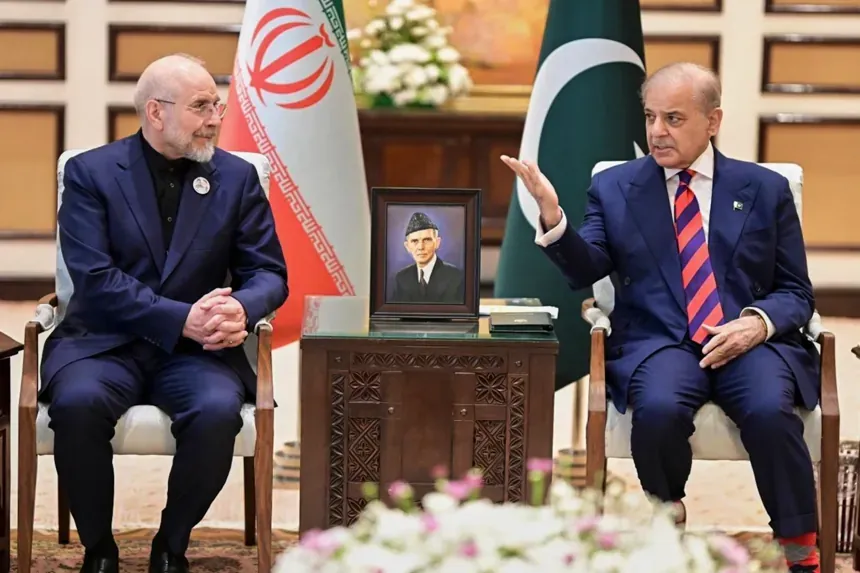
The collapse of direct U.S.-Iran talks in Islamabad has shifted the diplomatic center of gravity away from ceasefire preservation and toward a broader contest over strategic control in the Gulf. After 21 hours of negotiations, Vice President JD Vance said Washington left without an agreement, leaving the already fragile two-week truce exposed to renewed military and economic pressure.
As first reported by the Associated Press, the failure hinged on Washington’s demand for an explicit Iranian commitment not to pursue nuclear weapons capability, a condition Tehran declined to accept in the format presented. That breakdown matters beyond the negotiating room: it leaves unresolved the single most destabilizing wartime lever Iran still holds — the Strait of Hormuz.
Rather than treating the talks as a conventional diplomatic setback, the more consequential frame is strategic contraction: every hour without a framework narrows diplomatic options while expanding the military and economic cost of maintaining the ceasefire.

Strategic Depth Shrinks Around Hormuz
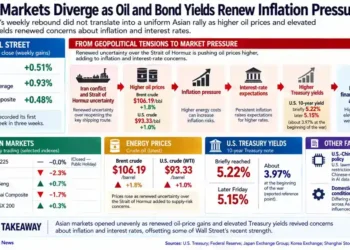
The immediate consequence of the impasse is the continued uncertainty over access to the Strait of Hormuz, through which roughly a fifth of global traded oil typically moves in normal conditions. Shipping traffic remains drastically reduced, and U.S. military preparations for mine-clearing operations indicate Washington is already planning for a scenario in which diplomacy fails to reopen the corridor quickly.
The reported movement of U.S. destroyers through the strait ahead of clearance operations adds a new layer of deterrence risk. Even if both sides avoid direct confrontation, the presence of naval assets in a constricted and politically charged chokepoint increases the probability of miscalculation.
This is where the talks’ failure carries its greatest strategic cost: the conflict is no longer defined only by battlefield attrition, but by shrinking maneuver space in the global energy system.
Economic Pressure Builds Beyond the Battlefield
The unresolved Hormuz blockade continues to exert disproportionate leverage over global markets, amplifying the war’s economic footprint far beyond the Middle East. Oil and gas exports from Gulf producers remain partially trapped, insurance premiums on shipping routes are elevated, and governments dependent on energy imports are recalculating supply resilience.
Iran’s insistence on compensation for war damage, access to frozen assets and influence over postwar maritime arrangements suggests Tehran is attempting to convert battlefield endurance into long-term economic bargaining power.
■ Related News



Washington’s counterposition — pairing nuclear restrictions with reopening the strait — effectively ties global market stabilization to a broader security settlement, making any future agreement structurally harder to reach.
Regional Deterrence Faces New Stress
The Islamabad impasse also sharpens pressure on parallel fronts, particularly Lebanon, where Israeli strikes against Hezbollah-linked targets continue despite the broader ceasefire architecture. That asymmetry weakens confidence in the viability of compartmentalized diplomacy, because actors on secondary fronts can still undermine progress at the core table.
Iran’s negotiating red lines reportedly included reduced Israeli strikes in southern Lebanon, underscoring how Tehran increasingly views the regional theater as a single integrated deterrence map rather than separate conflicts.
That convergence raises escalation risk: if diplomacy over Hormuz stalls further, spillover from Lebanon or Gulf maritime operations could rapidly become the next trigger point.
Diplomacy Enters a Narrower, Riskier Window
Pakistan’s mediation prevented an immediate collapse of dialogue, but the absence of even a provisional framework means the next round — if it happens — will begin from a more hardened position. The ceasefire clock continues to run while military preparations in the Gulf advance and Israeli-Lebanese tensions remain unresolved.
The forward risk is no longer simply whether Washington and Tehran can reach terms. It is whether diplomacy can move faster than the region’s accelerating strategic contraction.
If no interim mechanism emerges before the ceasefire window expires, the conflict’s next phase is likely to be defined less by formal declarations and more by contested waterways, constrained energy flows and a steadily diminishing margin for de-escalation.