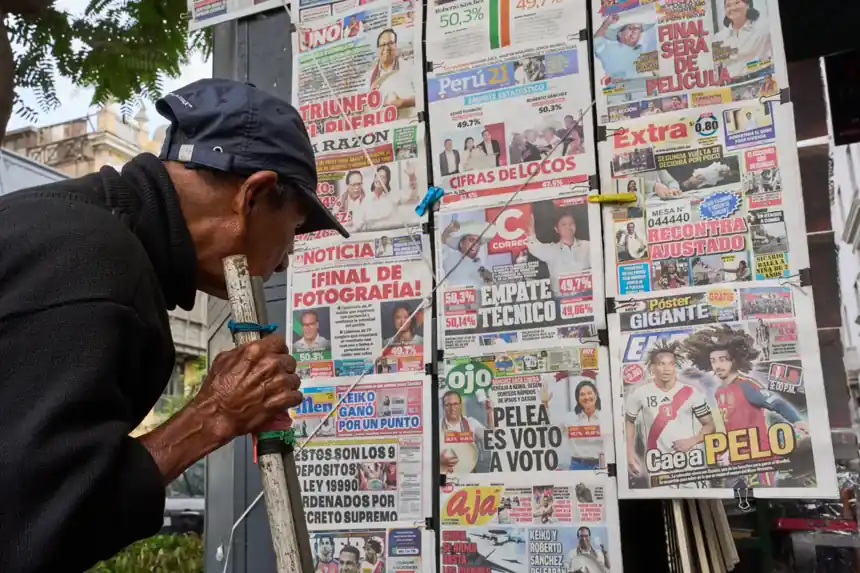
LIMA, Peru — Peru’s presidential runoff remained highly contested on Tuesday as election officials continued counting ballots from Sunday’s vote, with the two candidates separated by fewer than 20,000 votes and millions of Peruvians awaiting a final result.
Official figures released by Peru’s electoral authorities showed nationalist congressman Roberto Sánchez holding 50.055% of the vote, while conservative politician Keiko Fujimori had secured 49.945%, after approximately 96% of ballots had been counted. More than 17.8 million votes had been processed.
The closely fought election will determine the next leader of a country that has experienced significant political instability, cycling through eight presidents in the past decade. The winner will become Peru’s ninth president in 10 years when sworn into office on July 28.

Count Expected to Take Weeks
Peru’s chief electoral authority, Roberto Burneo, said the final outcome may not be known for up to 30 days and urged political parties and voters to remain patient as the process continues.
Burneo called on citizens and political organizations to act with “democratic responsibility” while officials complete the count.
The prolonged tally reflects Peru’s electoral procedures, which require ballots and tally sheets from polling stations nationwide to be transported to more than 100 counting offices. Votes cast abroad must also be returned from 63 countries before being included in the final count.
More than 27 million Peruvians were registered to vote in the election, including roughly 1.2 million citizens living overseas, primarily in the United States and Argentina.
Candidates Reflect Deep Political Divisions
Neither candidate entered the runoff with broad national support. Sánchez and Fujimori advanced from an initial field of 35 candidates after April’s first-round vote, though neither received even 20% of the total vote.
■ Related News



Electoral authorities required more than a month to certify the results of that contest before confirming both candidates’ advancement to the runoff.
Many voters continue to associate the candidates with former Peruvian leaders whose administrations remain controversial.
Fujimori is closely linked to the legacy of her father, former President Alberto Fujimori, whose government in the 1990s remains a divisive chapter in Peruvian politics. She previously served as Peru’s first lady following her parents’ separation.
Sánchez, meanwhile, is considered a close ally of former President Pedro Castillo, who is currently imprisoned. Castillo’s 16-month administration was marked by frequent political turmoil and more than 70 cabinet changes.
Crime Dominates Voter Concerns
Public security emerged as one of the most significant issues during the campaign.
Voters expressed growing concern over rising crime levels, particularly extortion, which has become increasingly prevalent across parts of the country.
Experts cited in the source material linked the growing influence of organized criminal groups to increasing profits from illegal gold mining operations in Peru’s Andean and Amazon regions.
The next administration will face pressure to address security concerns while navigating a politically fragmented landscape that has contributed to repeated leadership changes in recent years.
Until the remaining ballots are counted, the outcome of the presidential race remains uncertain.