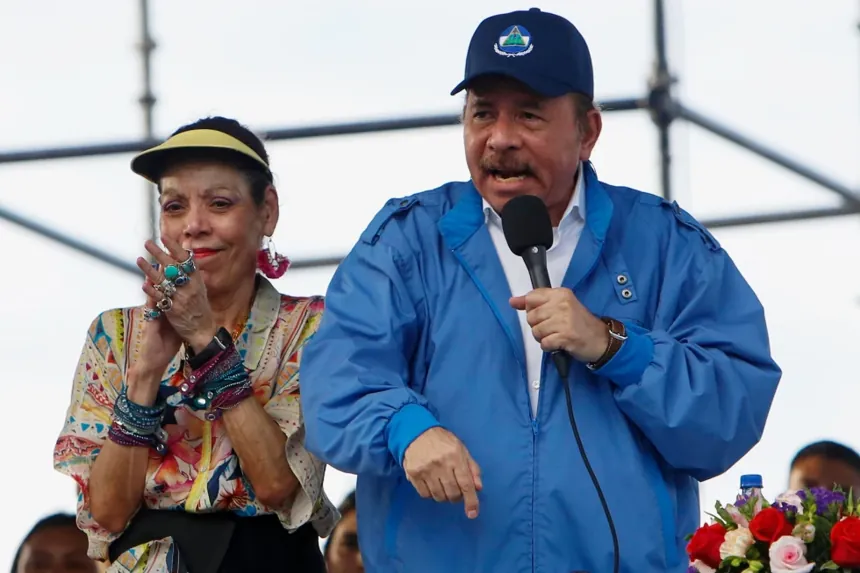
WASHINGTON — The United States has imposed new travel restrictions on more than 100 Nicaraguan government officials and their family members, expanding efforts to pressure President Daniel Ortega’s administration over allegations of human rights violations and political repression.
U.S. Secretary of State Marco Rubio announced the measures on Monday, describing them as part of Washington’s broader response to actions taken by Nicaragua’s government against political opponents, civil society figures and activists.
The latest sanctions were introduced following the death of imprisoned Indigenous activist Brooklyn Rivera, whose case drew international attention and renewed criticism of Nicaragua’s human rights record.

Washington Cites Death of Activist
In a statement, Rubio said the United States remained committed to supporting Nicaraguans seeking greater political freedoms and democratic rights.
The secretary specifically referenced Rivera, a longtime Indigenous leader and government critic who died last month while in custody.
“The United States stands with the Nicaraguan people who, like Rivera, aspire to see a free Nicaragua,” Rubio said.
The Nicaraguan government did not immediately comment on the latest sanctions announcement.
U.S. officials did not publicly identify the individuals affected by the newest restrictions.
■ Related News
Growing List of Sanctioned Individuals
According to the State Department, the latest action brings the total number of Nicaraguan officials and family members barred from entering the United States to more than 2,350.
The sanctions represent part of a broader campaign by successive U.S. administrations to increase pressure on the government led by Ortega and co-president Rosario Murillo.
Earlier this year, the Trump administration imposed sanctions on two sons of the country’s ruling presidential couple.
The U.S. Bureau of Western Hemisphere Affairs also raised concerns about reports that six relatives and associates of Rivera have disappeared, condemning what it described as their unexplained absence.
Longtime Indigenous Leader Became Symbol of Crackdown
Rivera was widely known for advocating on behalf of Indigenous communities in Nicaragua’s Caribbean region.
He was detained in September 2023 amid an ongoing government crackdown that intensified after nationwide protests erupted in 2018. The demonstrations were violently suppressed, according to human rights organizations and international observers.
Authorities in Nicaragua said Rivera died from complications linked to a bacterial infection and declining health following a previous case of COVID-19. Government officials stated that his condition had deteriorated physically and neurologically before his death.
Human rights groups and activists in several countries criticized the circumstances surrounding Rivera’s imprisonment and death. The United States had previously called for his release after official photographs showed him hospitalized in critical condition.
International Criticism of Nicaragua Continues
Nicaragua’s government has faced sustained international scrutiny over its treatment of opposition figures, journalists, religious leaders and civil society organizations.
Critics accuse authorities of systematically restricting political dissent and limiting civic freedoms. The government has rejected many of those accusations, arguing that its actions are necessary to preserve national stability and public order.
Since the 2018 protests, authorities have imprisoned numerous political opponents and later expelled many from the country. Hundreds have reportedly been stripped of citizenship and property rights.
Government measures have also led to the closure of thousands of organizations, many of them religious institutions and nonprofit groups, while large numbers of Nicaraguans have left the country in recent years.
Pressure Campaign Shows No Sign of Easing
The latest travel restrictions signal that Washington intends to maintain pressure on Nicaragua’s leadership despite years of diplomatic tensions between the two countries.
With human rights concerns remaining at the center of U.S. policy toward Managua, further sanctions and diplomatic actions remain possible as international scrutiny of Nicaragua’s political climate continues.
Tags: Nicaragua, United States, Daniel Ortega, Marco Rubio, Human Rights