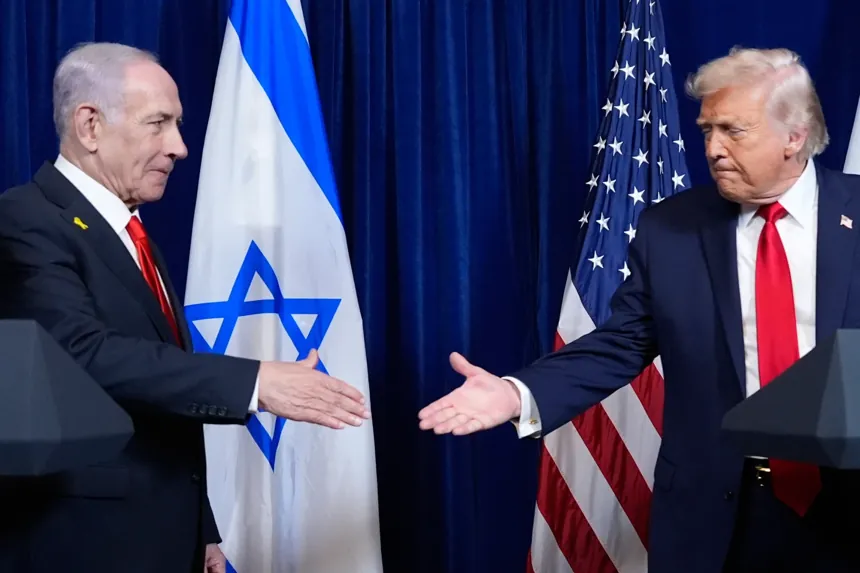
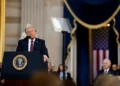
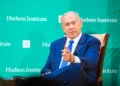
JERUSALEM — Public differences between U.S. President Donald Trump and Israeli Prime Minister Benjamin Netanyahu have become increasingly visible as fighting involving Israel, Iran and Lebanon continues to reshape the regional security landscape.
Reporting by the Associated Press indicates that while both leaders initially aligned closely when military operations against Iran began earlier this year, their priorities now appear to be moving in different directions. The divergence has become particularly apparent over Lebanon, Iran and the prospects for a broader ceasefire.
Trump has publicly urged restraint in recent weeks as his administration pursues negotiations with Iran and seeks stability in global energy markets. Netanyahu, meanwhile, remains focused on continuing military pressure against Iran-backed groups and demonstrating progress in Israel’s wider regional campaign.

Different Political Pressures
When military operations against Iran began in February, Trump and Netanyahu presented a united front.
According to the Associated Press, Netanyahu described the objectives as weakening Iran’s military capabilities, targeting its nuclear and missile programs, and ultimately undermining the country’s leadership. Trump also adopted a confrontational stance toward Tehran during the early stages of the conflict.
As the fighting continued, however, the political realities facing both leaders evolved.
In the United States, rising energy costs and criticism over continued involvement in a Middle East conflict have created challenges for the administration ahead of congressional elections later this year. Trump has faced pressure from critics who argue that the conflict contradicts earlier promises to avoid prolonged foreign military entanglements.
Netanyahu faces a different political environment. He remains under domestic pressure to demonstrate lasting gains following the regional conflicts that followed Hamas’ October 2023 attack on Israel. Despite significant military operations, Hamas continues to maintain influence in parts of Gaza, Hezbollah remains active, and Iran’s government is still in power.


Lebanon Becomes a Key Point of Disagreement
The most visible tensions between Washington and Jerusalem have emerged over Lebanon.
Iran has reportedly linked any broader regional settlement to a full ceasefire in Lebanon, a position that aligns with efforts to secure a wider diplomatic agreement. Israel, however, continues to treat Lebanon as a separate military theater and has maintained operations aimed at reducing Hezbollah’s capabilities.
The disagreement surfaced publicly after Trump acknowledged a difficult conversation with Netanyahu regarding developments in Lebanon. According to the Associated Press, Trump expressed frustration that Israeli military actions could complicate ongoing negotiations with Iran.
The dispute intensified after Israel carried out a strike in Beirut despite earlier public warnings from Trump against such action. Lebanese authorities reported that the attack struck a residential building, killing two people and injuring 20 others.
Iran later launched ballistic missiles toward Israel, prompting further Israeli military action against Iranian targets.
Efforts to Balance Diplomacy and Security
Officials familiar with discussions between the United States and Israel told the Associated Press that Washington initially encouraged restraint in an effort to protect negotiations and reduce market instability.
Israeli officials reportedly argued that failing to respond to attacks would carry political and security costs and would place Netanyahu in a difficult domestic position.
Despite the public disagreements, Netanyahu has sought to emphasize continued cooperation between the two governments. Following the latest military exchanges, he stated that Israel would continue exercising what he described as its right to self-defense while maintaining communication with Trump.
Alliance Faces Public Scrutiny
Analysts cited by the Associated Press noted that disagreements between American and Israeli leaders are not unusual, but the current situation stands out because many of the differences are being aired publicly.
Trump has previously criticized Israeli military decisions. Earlier in the conflict, he publicly opposed an Israeli strike on an Iranian gas facility, warning against actions that could trigger wider retaliation across the region.
However, reporting indicated that Washington was informed in advance of Israel’s plans, highlighting the continued strategic coordination between the allies even during periods of disagreement.
Experts on U.S.-Israel relations suggested that the alliance itself is unlikely to face a serious rupture. Nevertheless, significant policy differences remain regarding Iran, Lebanon and the future of the conflict in Gaza.
Uncertainty Remains
While recent military exchanges have subsided, questions remain over whether the United States and Israel can reconcile their differing approaches to the region’s ongoing conflicts.
Trump continues to pursue diplomatic outcomes that could reduce tensions and stabilize economic conditions, while Netanyahu remains focused on military objectives against Iran and its allied groups.
The extent to which those competing priorities can coexist may shape the next phase of Middle East diplomacy and security efforts.
Tags: Israel, Iran, Donald Trump, Benjamin Netanyahu, Lebanon