Taiwan has announced a sweeping $40 billion special defense budget aimed at strengthening its air and missile defenses and expanding cooperation with the United States, marking one of the largest military investments in the island’s history as regional security pressures intensify.
President Lai Ching-te confirmed on Wednesday that the funds will be allocated over an eight-year period beginning in 2026, forming a central pillar of his broader strategy to deter military coercion from China. The package includes plans to develop a new “Taiwan Dome” defense system and acquire advanced weapons from the United States, alongside joint procurement and technology collaboration.
The announcement comes at a moment of heightened anxiety across the Indo-Pacific, where governments have grown increasingly vocal about security risks linked to China’s expanding military footprint. While Taiwan currently spends around 3.3% of its GDP on defense, Lai has pledged to raise spending to 5% in the coming years — a shift that aligns with Washington’s calls for greater self-reliance but exceeds the defense burden of most global powers.

Special budget underscores U.S.-Taiwan security alignment
Lai said the special allocation reflects a rapidly shifting security environment and growing attempts by Beijing to apply military, political and informational pressure. In recent years, China’s military has flown fighter jets and surveillance drones near Taiwan on an almost daily basis, accompanied by naval patrols and frequent exercises across the Taiwan Strait.
“China’s threats to Taiwan and the Indo-Pacific region are escalating,” Lai said in remarks delivered in Taipei. He cited recent incursions into air and maritime zones near Japan, the Philippines and Taiwan, saying these actions have generated “deep unease and distress” among governments in the region.
Taiwan remains self-ruled but is claimed by Beijing, which has not ruled out the use of force to bring the island under its control. The United States maintains no formal diplomatic ties with Taipei but is legally obligated to support the island’s ability to defend itself under the Taiwan Relations Act, and remains its main supplier of weapons.
Lai previewed the budget in an opinion article published in The Washington Post, stating that the funds would help accelerate the island’s shift toward asymmetric defense — a strategy focused on mobility, precision weapons and distributed systems designed to deter a larger force. He later told reporters that the plan was unrelated to ongoing trade discussions with Washington.
Defense Minister Wellington Koo described the $40 billion figure as an upper limit rather than a guaranteed amount, noting that final spending will depend on procurement needs and production timelines. He said the funds will be used to acquire precision-strike missiles and equipment jointly developed with the United States, part of a broader effort to reduce vulnerabilities and increase deterrence.
■ Related News
Taiwan Dome project marks major shift in air defense planning
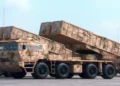
A central feature of the budget is the proposed “Taiwan Dome,” a multi-layered air defense system with advanced detection and interception capabilities. While details remain limited, officials say the platform would integrate radar, missile systems and command networks to counter potential large-scale attacks.
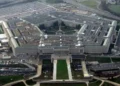
Analysts note that Taiwan’s existing defenses include Patriot missile batteries and indigenous interception systems but face challenges due to geography and the scale of China’s missile arsenal. The Pentagon has assessed that China possesses the world’s largest inventory of ground-launched ballistic and cruise missiles, prompting regional states to reassess their defensive strategies.
Lai said Taiwan’s role as “the most critical part of the first island chain” requires stronger responsibility in maintaining regional stability. The phrase refers to a line of territories stretching from Japan to the Philippines, viewed by strategists as a geographic buffer between China’s coast and the wider Pacific.
Domestic pressures and international expectations
Taiwan’s defense budget for 2026 is currently set at 949.5 billion Taiwan dollars (approximately $31.18 billion), equal to 3.3% of GDP. Former U.S. President Donald Trump has publicly called for Taiwan to raise defense spending to as much as 10% — a level far above what the United States or its major allies invest.
While such demands are unlikely to be met, the Biden administration and senior U.S. officials have repeatedly urged Taipei to focus on systems that could delay or complicate an invasion, rather than larger traditional platforms. Delays in American arms deliveries — partly due to global supply constraints — have also pushed Taiwan to expand local production capacity.
Lai emphasized that the government will not only prioritize hardware but also counter China’s psychological and information campaigns, which he said aim to “weaken our unity.” Taiwan plans to increase monitoring ahead of major events and elections, following concerns over online interference during previous votes.
Regional diplomacy grows more strained
The announcement has coincided with rising tensions between China and Japan, after Japanese Prime Minister Sanae Takaichi suggested Tokyo may intervene if Beijing acts militarily against Taiwan. China condemned the remarks as provocative, prompting renewed exchanges between the two governments.
Lai said Takaichi’s comments appeared focused on regional stability and called for China to demonstrate the responsibility expected of a major power. “Instead, it has continued to raise threats and attacks toward neighboring countries,” he said.
Both Japan and the Philippines have expanded security ties with the United States, while Australia and South Korea have increased military coordination in response to what they describe as a more unpredictable regional landscape. The World Bank, IMF and regional economic bodies have warned that prolonged instability could affect trade and investment flows across the Indo-Pacific, one of the world’s most important shipping corridors.
Long-term security strategy faces uncertainty
While the special budget signals a significant shift in defense planning, challenges remain. Analysts say Taiwan must balance spending with economic constraints, and building complex systems such as integrated air defense networks requires long-term coordination and training.
The government has also sought to increase voluntary military service and bolster reserve capabilities, responding to concerns from U.S. defense advisors about manpower and readiness. Taiwan extended mandatory conscription from four months to one year beginning in 2024, with training reforms still underway.
For Lai, who took office in 2024, the announcement marks one of the most consequential national security decisions of his presidency. The coming years will test whether Taiwan can translate spending commitments into practical resilience — and whether regional diplomacy can keep tensions from escalating further.
Source: AP News – Taiwan puts $40 billion toward building a defense dome and buying US weapons