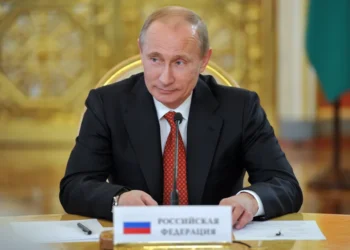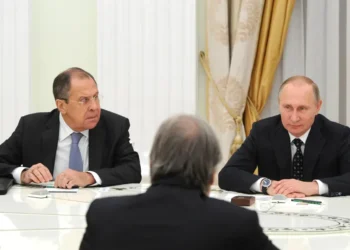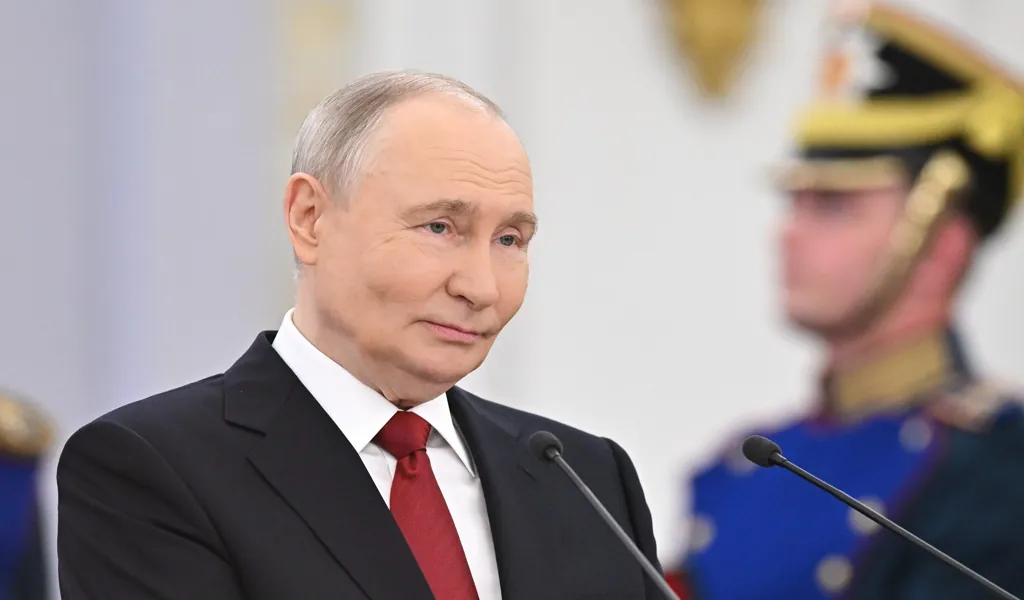
Russian President Vladimir Putin has authorized the government to temporarily assume control of critical infrastructure when private operators fail to adequately protect facilities from Ukrainian drone attacks or restore them after strikes.
The decree covers facilities in the energy, industrial, communications, transportation and logistics sectors. It gives the Kremlin another mechanism to pressure private companies as repeated Ukrainian attacks disrupt parts of Russia’s economy.
This report is based on reporting by The Associated Press.

Kremlin Expands Authority Over Critical Infrastructure
The Kremlin has not specified how widely the new authority will be used. Presidential spokesperson Dmitry Peskov said some business owners were not doing enough to protect their facilities, including against drone attacks.
Deputy Prime Minister Denis Manturov said the measure does not constitute nationalization or transfer ownership of private companies to the state.
Instead, he described it as a mechanism allowing the government to participate temporarily in managing individual enterprises when security or recovery problems require intervention.
Manturov said the measure would be applied selectively rather than across the economy, with decisions made at the highest level.
The decree nevertheless creates a new source of pressure for companies whose facilities are repeatedly damaged or whose owners are considered too slow to strengthen defenses or restore operations.
■ Related News

Refinery Attacks Increase Pressure on Businesses
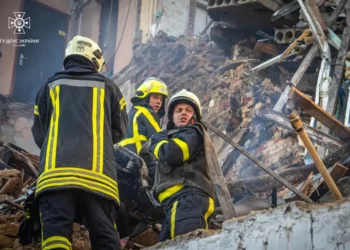
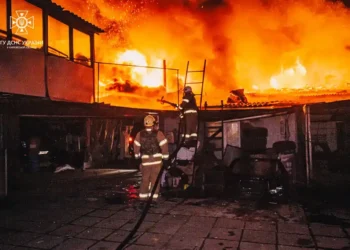
The policy follows months of Ukrainian drone strikes against Russian infrastructure, particularly oil refineries.
Repeated attacks have disrupted operations and increased the financial burden on companies already operating under the economic pressures created by the war.
Russian political analyst Abbas Gallyamov said the measure could pressure owners of repeatedly targeted refineries to spend more on repairs and protection despite the continuing risk of attacks.
Chris Weafer, chief executive of Macro-Advisory Ltd. Consultancy, said the Kremlin appeared to be pushing businesses to assume greater responsibility for protecting their facilities rather than relying entirely on the government.
That approach could reduce additional demands on the Russian budget. The war has already increased government spending, while Moscow has raised taxes and increased domestic borrowing as it manages its budget deficit.
However, state intervention could also create additional financial obligations if the government assumes responsibility for facilities that private companies cannot secure or repair.
Ukraine Reports Further Refinery Strikes
Ukraine’s General Staff said Tuesday that Ukrainian forces struck the Afipsky oil refinery in Russia’s Krasnodar region overnight, causing a fire.
Krasnodar Gov. Veniamin Kondratyev also reported a fire at an oil refinery in Afipsky.
A separate Ukrainian attack damaged the Novoshakhtinsk oil refinery in Russia’s Rostov region and halted its operations, according to Rostov Gov. Yuri Slyusar.
Ukraine’s General Staff said Afipsky had been targeted eight times in the previous year and Novoshakhtinsk four times.
The repeated attacks highlight the difficulty of protecting Russia’s large network of infrastructure. The country’s geographic scale makes comprehensive defense against drones difficult, increasing pressure on operators to strengthen security around individual facilities.
Moscow Pushes Businesses to Strengthen Defenses
Putin has called for stronger air defenses and closer coordination among military, law-enforcement and civilian authorities.
He has also urged state-owned enterprises and private companies to participate in protecting critical infrastructure.
The government has taken similar steps in other sectors. Russia has offered financial assistance to Wildberries, a major online retailer whose warehouses and sellers have been affected by Ukrainian attacks. The Finance Ministry proposed extending deadlines for tax and insurance payments for the company and its sellers.
Russian lawmakers also approved measures in May allowing the Central Bank, state-controlled Sberbank and other financial-services companies to install air-defense systems at their facilities.
The latest decree goes further by creating the possibility of temporary state management when private operators fail to adequately protect or restore critical facilities.
A New Tool for Kremlin Intervention
The decree reflects a broader shift in how Russia is managing the economic consequences of the war.
Private companies remain responsible for operating their facilities, but the government is increasingly demanding that they help absorb the security risks created by Ukrainian attacks.
The practical significance of Putin’s new authority will depend on how often it is used and which companies are subjected to state intervention.
If applied selectively, it could serve primarily as a warning to infrastructure owners to increase spending on security and repairs. If used more broadly, however, it could expand the state’s role in managing strategically important parts of Russia’s private economy.
For businesses operating critical infrastructure, the message is increasingly clear: failure to protect or restore facilities damaged by Ukrainian attacks could bring not only financial losses but also direct government intervention.
Reporting Credit: Journos News World Desk, based on reporting by The Associated Press.