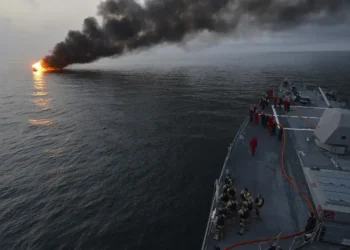
WASHINGTON — The escalating confrontation between the United States and Iran is widening across the Gulf, with renewed U.S. strikes on Iranian military targets followed by Iranian missile and drone attacks involving Gulf states, while commercial shipping through the Strait of Hormuz remains heavily disrupted.
The conflict carries consequences well beyond the immediate military exchange because the Gulf contains critical energy infrastructure and the Strait of Hormuz remains a vital route for global oil and liquefied natural gas shipments. Continued attacks or restrictions on maritime traffic could affect energy supplies, shipping costs and inflation far beyond the region.
U.S. strikes hit Iranian military capabilities
U.S. Central Command said American forces completed a wave of strikes against Islamic Revolutionary Guard Corps targets in Iran on Sept. 1, targeting air-defense sites, radar systems, maritime assets, mine-laying capabilities and communications facilities.

CENTCOM said the operation had been completed but did not indicate that U.S. military activity against Iran had ended. The targeting of maritime and mine-laying capabilities is particularly significant because of their potential connection to security in the Persian Gulf and the Strait of Hormuz.
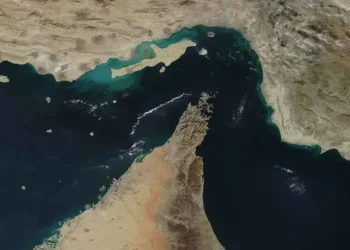
The waterway serves as the principal maritime outlet for oil and gas exports from several Gulf producers, making military activity around it an immediate concern for international energy markets.
Iranian attacks expose Gulf states to the conflict
Iran’s response has expanded the confrontation beyond direct U.S.-Iran military exchanges.
Kuwait’s state news agency reported that the country’s air defenses were responding to Iranian missile and drone attacks. Other Gulf states have also faced threats as the conflict spreads across the region.
The attacks increase risks for countries hosting U.S. military forces and for infrastructure located near the conflict zone. Airports, ports, energy facilities and commercial operations could face greater exposure if attacks continue.
■ Related News



The widening confrontation has also raised the prospect of further U.S. military action and additional Iranian retaliation, increasing the risk that neighboring countries could become more directly involved.
Strait of Hormuz becomes a central pressure point
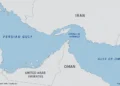
The Strait of Hormuz remains central to the international consequences of the conflict because of its importance to global energy trade.
The U.S. Energy Information Administration has described Hormuz as the world’s most important oil chokepoint. More than one-quarter of global seaborne oil trade and about one-fifth of global liquefied natural gas trade passed through the strait in 2024.
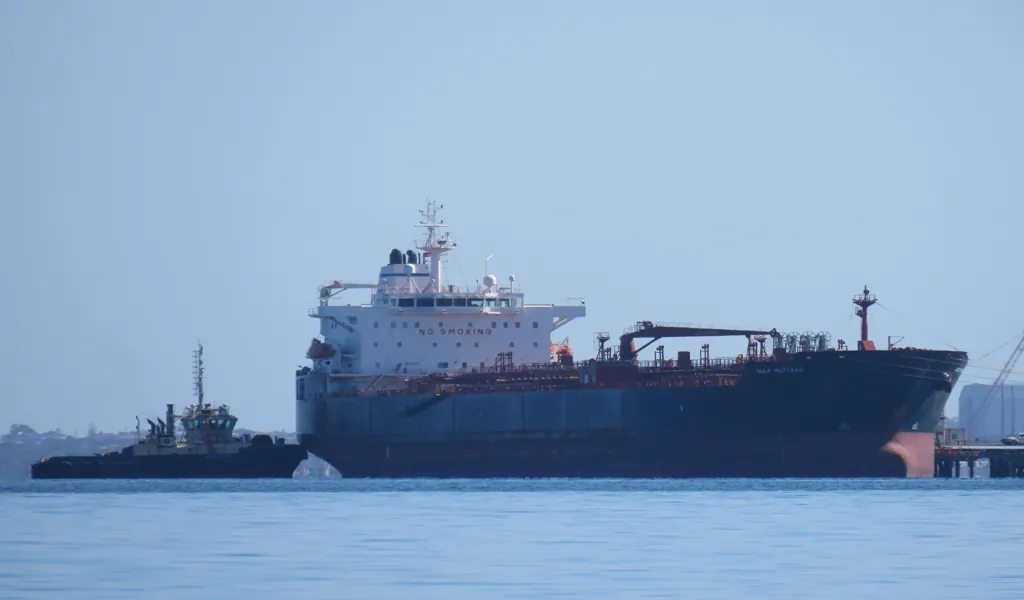
The scale of that dependence means even a partial disruption can affect countries far beyond the Gulf. Shipping companies may alter operations before a complete closure occurs because of security concerns, insurance costs, delays and the possibility of attacks.
Recent reporting indicated that vessel traffic through Hormuz had fallen sharply as Iran imposed restrictions and commercial operators became increasingly cautious. Reuters reported that the number of vessels transiting the strait had declined significantly amid the renewed fighting.
Maritime operations add to commercial uncertainty
The United States has also continued maritime operations in the region.
CENTCOM previously said U.S. forces were enforcing a blockade involving Iranian ports and had redirected commercial vessels attempting to reach Iran.
For commercial operators, the conflict has created difficult choices between continuing through a high-risk route, delaying voyages or seeking alternative routes where possible. Those decisions can increase transportation costs and disrupt supply chains even when vessels are not directly attacked.
The immediate consequences extend beyond oil tankers. A prolonged deterioration in maritime security could affect broader commercial traffic moving through the Gulf.
Oil prices rise as disruption fears deepen
Energy markets have responded to the renewed escalation.
Brent crude reached a six-week high on Sept. 3, rising to about $97 a barrel during trading before retreating somewhat. West Texas Intermediate also reached a six-week high as investors assessed the possibility of further disruptions to Gulf energy supplies.
The market reaction reflects the strategic importance of Hormuz and concerns about whether producers will be able to continue moving crude through the waterway.
Any sustained disruption affecting tankers, ports or export infrastructure could have wider consequences for global oil inventories, transportation costs and inflation.
Energy infrastructure faces broader regional risks
The risks extend beyond the Strait of Hormuz itself.
Oil terminals, refineries, pipelines, ports and petrochemical facilities are concentrated across a relatively small area of the Gulf. Damage to those facilities could affect supply even if the strait remains technically navigable.
The Energy Information Administration has estimated that alternative pipelines in Saudi Arabia and the United Arab Emirates can bypass part of the strait’s traffic, but those routes cannot fully replace Hormuz.
That limitation leaves major producers and energy-consuming countries exposed if military activity causes a prolonged disruption.
Regional conflict could bring wider economic consequences
Higher oil prices could increase transportation and production costs globally, while prolonged uncertainty may affect investment and the movement of goods through the region.
Oil-importing countries could face additional inflation pressure if energy prices remain elevated. Oil-exporting states could benefit from higher prices, although physical disruptions could threaten their production and export capacity.
The economic effects will depend heavily on how long the confrontation continues and whether attacks or restrictions further reduce the movement of oil and gas.
Next developments hinge on maritime security and regional escalation
The immediate international stakes are concentrated around two connected systems: maritime commerce and global energy supply.
The United States has signaled that protecting maritime access remains a central military objective, while Iran has continued using pressure on shipping as part of its response to the conflict. U.S. Secretary of State Marco Rubio previously described attacks on ships in the Strait of Hormuz as a central concern for Washington.
Further developments will depend on whether military operations expand, whether Gulf states face additional attacks and whether commercial traffic can continue moving safely through Hormuz. The scale and duration of any disruption will be critical to determining the broader impact on regional security and global energy markets.
Reporting Credit: U.S. Central Command; U.S. Energy Information Administration; U.S. Department of State; Kuwait News Agency and Kuwaiti security authorities.