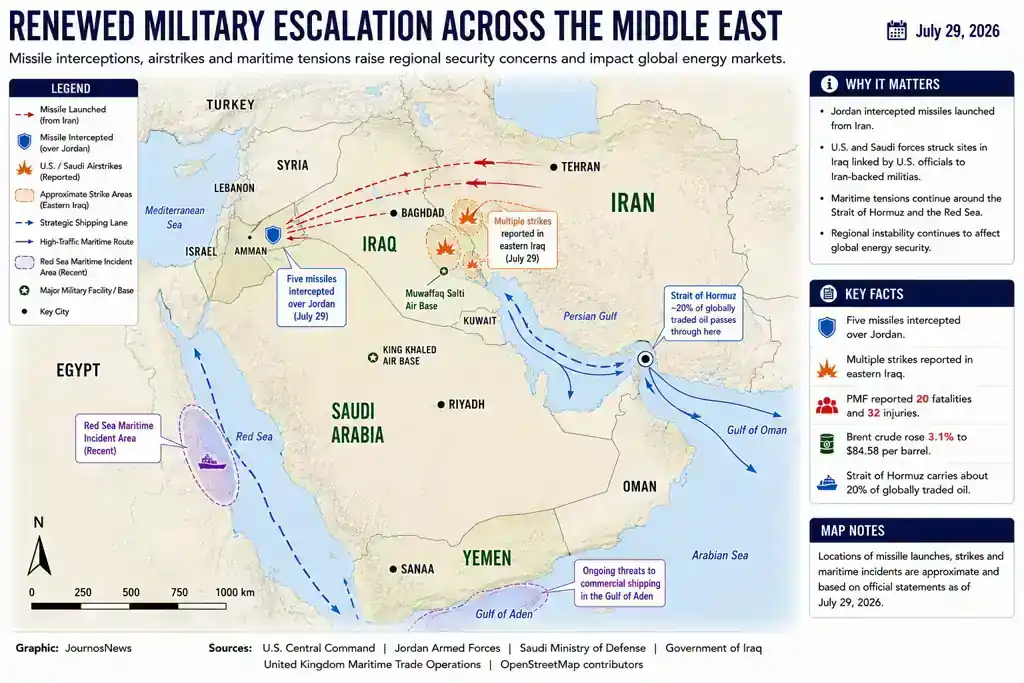
CAIRO, Egypt – Jordan said its air defenses intercepted and destroyed five missiles launched from Iran early Wednesday, while the United States said it had earlier repelled an Iranian missile barrage targeting American forces in the Middle East, ending a brief lull in hostilities and raising renewed concerns about regional escalation.
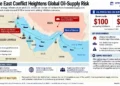
The latest military exchanges came as U.S. and Saudi forces carried out coordinated strikes against sites in Iraq that U.S. officials said were being used by Iran-backed militias to launch recent attacks. The developments added fresh uncertainty to regional security and global energy markets, with Brent crude oil rising 3.1% to $84.58 a barrel.
Jordan Intercepts Iranian Missiles
Jordan’s military said its air defense systems intercepted and destroyed five missiles launched from Iran before they reached their intended targets.

Iran’s state-run IRNA news agency published a statement from the Islamic Revolutionary Guard Corps (IRGC), which said its Aerospace Force launched ballistic missiles at Muwaffaq Salti Air Base and the headquarters of U.S. Central Command in Jordan.
Earlier, U.S. Central Command said American forces remained “at a high state of readiness” after intercepting an Iranian missile barrage aimed at U.S. military personnel in the region.
U.S. and Saudi Arabia Strike Sites in Iraq
U.S. Central Command said American and Saudi military aircraft struck multiple logistics and weapons facilities in eastern Iraq that officials said were used by Iran-backed militias responsible for more than 30 drone attacks over the previous 72 hours.
The command warned that additional attacks against U.S. personnel or Saudi Arabia’s energy infrastructure could trigger further military action.
Saudi Arabia’s Ministry of Defense confirmed its participation in the operation, saying the kingdom did not seek escalation but would respond to attacks against its territory and critical infrastructure.



Iraqi Prime Minister Ali al-Zaidi convened an emergency meeting of the National Security Council following the strikes.
Iran-Backed Militias Report Casualties
The Popular Mobilization Forces (PMF), a coalition of mostly Shiite armed groups that operates within Iraq’s security structure, said at least 20 fighters were killed and 32 others were wounded in overnight strikes at multiple locations.
The PMF was established during the campaign against the Islamic State group after its territorial gains in Iraq in 2014. Although the Iraqi government formally incorporated the coalition into the country’s armed forces in 2016, many affiliated militias continue to operate with considerable autonomy, and some have carried out attacks on U.S. facilities.
Hormuz Dispute Adds to Regional Uncertainty
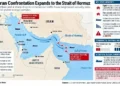
The latest exchanges followed roughly three days without publicly announced attacks after weeks of heightened tensions centered on the Strait of Hormuz, a strategic shipping route through which about one-fifth of the world’s traded oil normally passes.
Iranian Deputy Foreign Minister Kazem Gharibabadi said Tehran had rejected an Omani proposal for jointly managing maritime traffic through the strait.
Speaking on Iranian state television, Gharibabadi said the proposal failed to address Iran’s concerns and that Tehran instead proposed a temporary arrangement allowing ships to transit through Iranian territorial waters.
He also said Iran’s policy was for the Strait of Hormuz “never to return to its prewar situation.”
Conflicting Claims Over Maritime Attacks
Iran’s state-run IRNA news agency reported that the Revolutionary Guard’s Navy had intercepted and halted three oil tankers in the Strait of Hormuz after the vessels allegedly ignored warnings and sailed along what Iran described as an unsafe route.
The report did not identify the ships or the countries under whose flags they were operating, and the claims could not be independently verified.
Separately, Yemen’s Iran-backed Houthi movement said it fired missiles at the Saudi oil tanker NCC Ghazal in the Red Sea on Tuesday, forcing the vessel to turn back. Saudi Arabia did not immediately comment on the claim.
The United Kingdom Maritime Trade Operations center said a commercial tanker reported hearing explosions while transiting the southern Red Sea the previous day. It said the vessel and crew were safe but did not report attacks on tankers in the Strait of Hormuz.
Regional Security Remains Fragile
Saudi Arabia said it intercepted drones launched by Iran-backed militias in Iraq for a second consecutive day.
Iraqi authorities said they were investigating the allegations and reiterated that Iraqi territory should not be used to launch attacks against neighboring countries or international partners.
The Islamic Resistance in Iraq, an umbrella organization of Iran-backed armed groups, denied involvement in the reported drone attacks and described Saudi allegations as fabricated, suggesting the operations had instead been carried out by Yemen’s Houthi movement.
The latest military exchanges underscore the fragile security situation across the Middle East, where confrontations involving Iran, the United States, regional partners and allied armed groups continue to threaten energy infrastructure and critical international shipping routes.
This report is based on reporting by The Associated Press.