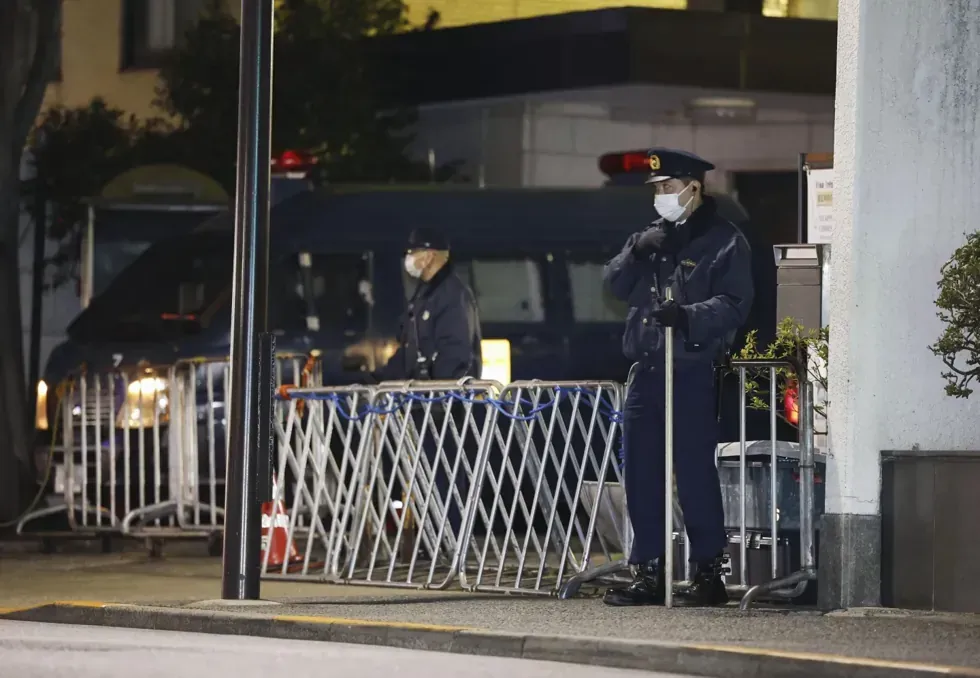
Japan confirmed the arrest of a soldier accused of entering the Chinese embassy compound in Tokyo, an incident that has intensified diplomatic tensions between the two countries and drawn a formal protest from Beijing.
Authorities said the suspect, a 23-year-old member of Japan’s Ground Self-Defense Force (GSDF), was detained after allegedly scaling the embassy wall and entering the premises on Tuesday. The case has become a flashpoint in an already fragile relationship shaped by security concerns and geopolitical rivalry in East Asia.
Diplomatic Pressure Builds Following Embassy Breach
According to officials cited by The Associated Press, the suspect was apprehended at the scene by Tokyo police after reportedly forcing his way into the embassy grounds. Japanese authorities confirmed the individual is stationed at Camp Ebino in Miyazaki prefecture and said the military is cooperating fully with the investigation.

Chinese officials reacted swiftly, with Foreign Ministry spokesperson Lin Jian describing the incident as “deeply shocking” during remarks in Beijing. He said China had lodged a formal protest with Japan, demanding a full investigation, accountability, and measures to prevent similar breaches.
The embassy intrusion has placed additional strain on diplomatic channels, with Beijing emphasizing Japan’s responsibility under international law to ensure the security of foreign missions.
Security Concerns and Regional Stability Tested
Preliminary reports from Japanese media, including public broadcaster NHK, indicated the suspect may have been carrying a knife and sought to confront the Chinese ambassador over Beijing’s policies toward Japan. Police sources cited in domestic reports said the individual also threatened self-harm if his demands were not met.
No injuries were reported, but the circumstances have raised concerns over security protocols surrounding diplomatic facilities in Tokyo. Analysts note that even isolated incidents involving military personnel can carry outsized implications in a region where tensions remain high.
The episode underscores vulnerabilities in safeguarding foreign missions and could prompt both countries to reassess protective measures for diplomatic sites.
■ Related News



Strategic Stakes Rise Amid Broader Bilateral Friction
The incident comes against a backdrop of deteriorating ties between Japan and China, driven by disputes over security policy, trade measures, and regional influence. Recent remarks by Japanese Prime Minister Sanae Takaichi linking potential Chinese military action against Taiwan to Japan’s national security have further strained relations.
Beijing has responded in recent months with diplomatic and economic pressure, reflecting growing friction over Taiwan and broader strategic competition in the Asia-Pacific.
While the embassy intrusion appears to be an individual act, its timing amplifies its diplomatic sensitivity. Observers say such incidents risk reinforcing mutual distrust at a time when communication channels are already under pressure.
International Implications and Next Steps
Japan has pledged a thorough investigation, with officials expected to determine both the motives behind the intrusion and any institutional lapses. China, meanwhile, is likely to monitor the response closely as a test of Japan’s commitment to diplomatic protections.
The outcome could influence near-term engagement between the two governments, particularly as regional security dynamics continue to evolve. Analysts suggest that how both sides manage the fallout may shape broader efforts to stabilize relations in an increasingly contested geopolitical environment.