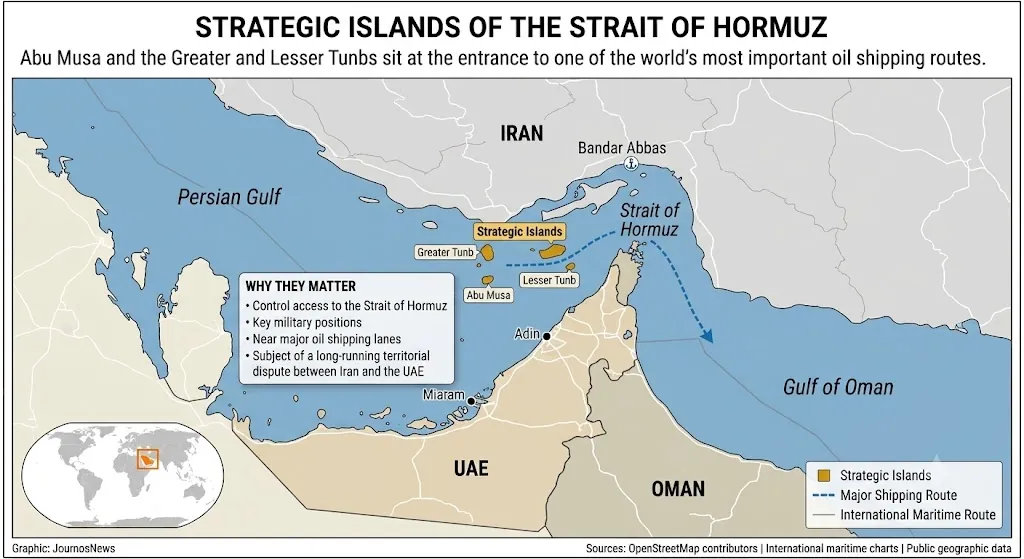
DUBAI, United Arab Emirates – Three disputed islands at the entrance to the Strait of Hormuz have again become a focal point in the escalating conflict between the United States and Iran, highlighting their outsized strategic importance to global energy security despite their small size.
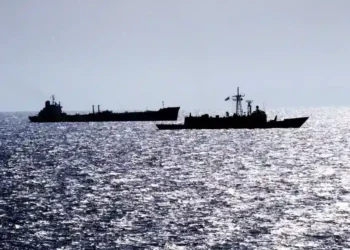
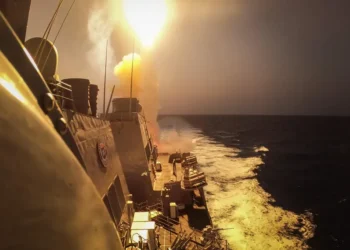
The islands of Abu Musa, Greater Tunb and Lesser Tunb sit along the deep-water shipping channel linking the Persian Gulf to the Strait of Hormuz, through which roughly one-fifth of the world’s oil and natural gas supplies move during peacetime. Their military value has drawn renewed attention after recent U.S. strikes on Abu Musa and Greater Tunb.
The attacks have reignited debate over whether the islands could become targets for broader military operations as Washington expands its campaign against Iran.

Small islands hold critical position over global shipping
Together, the three islands cover only about 10 square miles (25 square kilometers), but their location allows Iran to monitor and potentially influence maritime traffic through one of the world’s most important energy chokepoints.
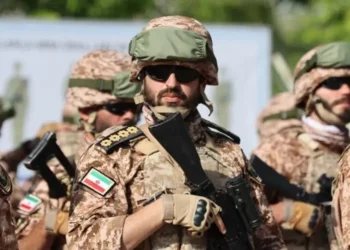
Abu Musa, the largest of the islands, includes a small village but primarily serves as a base for Iran’s paramilitary Revolutionary Guard. Iranian forces have deployed fast attack boats, missile systems and air defenses there. Greater Tunb also hosts military installations and air defense systems, while the smaller Lesser Tunb maintains a military presence.
Iran seized the islands by force on Nov. 30, 1971, under Shah Mohammad Reza Pahlavi, two days before the United Arab Emirates was established. At the time, the shah, then Washington’s principal security partner in the region, faced little international opposition.
Long history of military operations
Following Iran’s 1979 Islamic Revolution, the islands became key military positions during the “Tanker War” of the 1980s, when Iranian forces targeted commercial shipping and the U.S. Navy escorted oil tankers through the Gulf.
Iran used the islands to monitor vessel movements, deploy naval mines and launch attacks against ships. U.S. estimates indicate Iran attacked more than 160 vessels during that conflict.
■ Related News




In the current war, the Joint Maritime Information Center, a coalition overseen by the U.S. Navy, has recorded more than 50 attacks involving commercial vessels and oil infrastructure. The incidents include cases in which U.S. forces fired on ships accused of attempting to breach Washington’s blockade on Iran.
Military analysts weigh operational risks
The recent U.S. strikes have fueled speculation over whether American forces could attempt to seize the islands.
Isabel Oakeshott, a columnist for The Telegraph, described Abu Musa as “a fixed aircraft carrier” for Iran, arguing that the islands collectively function as “a layered denial system to the most critical energy chokepoint in the world.”
Analysts caution, however, that while U.S. forces may have the capability to capture the islands, maintaining control could prove considerably more difficult.
Brandon Carr, an analyst at the Washington-based Quincy Institute for Responsible Statecraft, said American troops operating there would remain vulnerable to Iranian missile and drone attacks.
“Without prepared, hardened fortifications to provide cover — even with air support from nearby naval assets — force protection would be an enormous challenge,” Carr said.
“The Marines would come under fire from Iranian ballistic missiles and drones, severely limiting their ability to project power into the strait.”
Territorial dispute remains unresolved
The sovereignty dispute over the islands has continued for decades alongside their military importance.
In recent years, the United Arab Emirates persuaded both China and Russia to include language in joint statements supporting a resolution of the dispute through negotiations or international legal mechanisms, a position that drew sharp criticism from Tehran.
Emirati legal scholar Noora Mohamed Al Murry argued in April that the dispute extends beyond territorial claims to the security of a critical international waterway.
“What the world called a bilateral territorial dispute was, from the beginning, a strategic claim on a global chokepoint,” she wrote.
“Managed ambiguity, in a waterway this consequential, is not a neutral position. It is a choice with a price, and the world is now holding the invoice.”
Oakeshott suggested the UAE could seek renewed efforts to regain the islands after the conflict, particularly as the country hosts U.S. military forces and has repeatedly come under Iranian fire during the war.
More than five decades after Iran seized the islands, their strategic position continues to shape regional security calculations and global concerns over the uninterrupted flow of energy through the Strait of Hormuz.
This report is based on reporting by The Associated Press.
Article Topics: Strait of Hormuz | Iran | United Arab Emirates | Persian Gulf | Maritime Security | Energy Security | U.S.-Iran Conflict | Territorial Dispute