Journos News - Breaking News, World News, Top Stories, Todays Headlines and Flash Reports
Tuesday, September 1, 2026
  • Login
  • Home
  • World
    • Africa
    • Americas
    • Asia
    • Europe
    • Middle East
    • Oceania
  • Politics
  • Business
  • Technology
  • Health
  • Science
  • Sports
  • Entertainment
  • Culture
No Result
View All Result
  • Home
  • World
    • Africa
    • Americas
    • Asia
    • Europe
    • Middle East
    • Oceania
  • Politics
  • Business
  • Technology
  • Health
  • Science
  • Sports
  • Entertainment
  • Culture
No Result
View All Result
Journos News - Breaking News, World News, Top Stories, Todays Headlines and Flash Reports
No Result
View All Result
Home World News Middle East

Leadership Vacuum Deepens as Iran Loses Senior Security Figures Under Fire

Targeted killings and retaliatory strikes intensify pressure on Tehran’s command structure while widening regional risk

The Daily Desk by The Daily Desk
June 20, 2026
in Middle East, World News
0
Iranian missile launches amid leadership crisis after Israeli airstrikes - AP Photo/Bilal Hussein, File

Missile launches follow Israeli strikes that killed senior Iranian officials - AP Photo/Bilal Hussein, File

DUBAI, United Arab Emirates (Journos News) – Iran’s senior leadership structure is facing acute strain after the targeted killing of two of its most influential security figures, triggering a calibrated but widening military response that now stretches across multiple fronts in the Middle East.

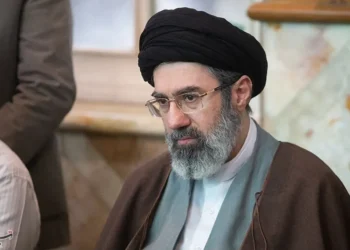
According to a report by The Associated Press, Tehran confirmed the deaths of Ali Larijani and Gholam Reza Soleimani following Israeli strikes, marking one of the most consequential blows to Iran’s command network since the conflict began. The development comes in the aftermath of the earlier killing of Supreme Leader Ali Khamenei, further compounding uncertainty at the highest levels of governance.

Iran responded within hours, launching missile barrages toward Israel and deploying drones across Gulf airspace, signaling that while leadership losses are mounting, operational capacity remains intact.

Command Fractures Emerge as Leadership Losses Accelerate

The elimination of Larijani and Soleimani removes two pillars of Iran’s internal security and strategic planning apparatus at a moment of sustained external pressure. Larijani, who served as a senior adviser on nuclear negotiations and security policy, was widely viewed as a stabilizing figure within Iran’s decision-making hierarchy.

Soleimani, who led the Basij paramilitary force, played a central role in enforcing internal order, particularly during recent anti-government unrest. Their simultaneous loss raises questions about continuity of command and the regime’s ability to coordinate both domestic control and external military operations.

Israeli officials have framed the strikes as part of a broader effort to disrupt Iran’s governing structure. Prime Minister Benjamin Netanyahu indicated the objective was to weaken institutional cohesion, while Defense Minister Israel Katz confirmed the targeted nature of the operation.

The absence of visible public dissent inside Iran suggests that, for now, internal security mechanisms remain functional, though increasingly stretched.

Strategic Depth Shrinks as Retaliation Expands Across Borders

Iran’s retaliatory posture underscores a shift toward broader regional engagement, extending beyond Israel to include Gulf states. Missile and drone interceptions were reported over multiple countries, including the United Arab Emirates, reflecting a widening operational footprint.

■ Related News

Iranian leader pictured in an official image associated with a message marking Workers’ Day and Teachers’ Day in May 2026.

Iran’s Leaders Defy the U.S. Six Months Into War, Signaling Little Tolerance for Dissent

August 29, 2026
Donald Trump speaks at the Conservative Political Action Conference in Washington, D.C., in 2011 during a political address.

After Six Months of Iran War, U.S. Goals Have Shifted. Strait of Hormuz Is Now a Top Concern

August 27, 2026
Asian stock markets rise as oil prices fall, with market indexes, crude prices, Nvidia shares and key investor risks highlighted. - Journos News, File

Asian Shares Rise as Lower Oil Prices and AI Optimism Support Markets

August 26, 2026
Iranian fuel tankers arrive in Lebanon as Hezbollah-linked fuel shipments enter the country amid a severe energy crisis.

Iran’s Fuel Lines Grow as U.S. Sanctions Deepen Economic Pressure

August 26, 2026

Explosions heard over Dubai were attributed to successful air defense interceptions, highlighting both the scale of Iranian launches and the growing reliance on regional missile defense systems.

This outward projection of force serves a dual purpose: maintaining deterrence credibility while compensating for perceived vulnerabilities at the leadership level. However, it also increases the risk of miscalculation across multiple theaters simultaneously.

Energy Leverage Under Strain as Hormuz Becomes Pressure Point

Tehran’s continued assertion of control over the Strait of Hormuz introduces a critical economic dimension to the crisis. The waterway, a key conduit for global oil shipments, has become a focal point of strategic leverage as Iran signals selective restrictions on maritime access.

Reports of vessel strikes and restricted passage for U.S.-aligned shipping have heightened concerns of supply disruption. Oil markets have responded with increased volatility, reflecting uncertainty over the security of one of the world’s most critical energy corridors.

U.S. military actions targeting Iranian missile infrastructure near the strait suggest a growing emphasis on securing maritime routes, though coordination among allies remains limited.

Former U.S. President Donald Trump indicated that efforts to assemble a multinational naval presence have not gained traction, pointing to hesitation among key partners.

Diplomatic Isolation Deepens as Allies Hold Back

The absence of broad international backing for intervention efforts signals a more constrained diplomatic environment for escalation management. European leaders have explicitly distanced themselves from direct involvement, emphasizing the risks of being drawn into a widening conflict.

Statements from EU officials reflect a deliberate effort to avoid entanglement, reinforcing a fragmented international response at a time when coordinated de-escalation mechanisms are limited.

Meanwhile, concerns over nuclear safety have re-emerged after a reported projectile strike near Iran’s Bushehr facility. While no damage was confirmed, international watchdogs have renewed calls for restraint, underscoring the potential for unintended escalation into nuclear risk territory.

Regional Deterrence Tested as Conflict Spills Into Lebanon

Israel’s parallel operations against Iran-backed groups in Lebanon add another layer of complexity. Continued strikes targeting Hezbollah positions have resulted in casualties and large-scale displacement, further stretching regional stability.

The expanding geographic scope of the conflict suggests that deterrence boundaries are being actively tested, with multiple actors engaging across interconnected fronts.

Forward Outlook: Leadership Instability as a Catalyst for Escalation

The removal of key figures from Iran’s leadership core introduces a volatile variable into an already fluid conflict. While Tehran has demonstrated its capacity to respond militarily, the longer-term implications of leadership disruption remain uncertain.

If succession mechanisms fail to consolidate authority quickly, the risk shifts from coordinated retaliation to fragmented decision-making—an outcome that could accelerate escalation rather than contain it.

At the same time, the reluctance of external powers to engage directly leaves fewer channels for de-escalation, increasing the likelihood that the conflict will continue to expand before any stabilization takes hold.

Tags: #DefenseStrategy#Geopolitics#GlobalSecurity#IranLeadershipCrisis#IsraelIranConflict#MiddleEastTensions#MilitaryEscalation#OilMarketRisk#RegionalStability#SecurityCrisis#StraitOfHormuz#WorldNews
The Daily Desk

The Daily Desk

The Daily Desk is a contributor at JournosNews.com covering politics, media, governance, and the evolving dynamics of public discourse. Stories published under this byline are produced in accordance with JournosNews' editorial standards, with an emphasis on verified reporting, accuracy, context, and impartiality.

Related Posts

Strait of Hormuz connecting the Gulf of Oman and Persian Gulf, photographed from the International Space Station.

LIVE: Middle East Conflict — Ongoing Coverage

August 12, 2026
Map showing reported Houthi attack near Bab el-Mandeb and U.S. maritime operations across the Gulf of Oman and Strait of Hormuz

Houthi Attack Kills Six as U.S. Forces Strike Ship Near Iranian Blockade

August 12, 2026
USCGC Aquidneck transits the Strait of Hormuz during U.S. naval operations on December 2, 2020.

LIVE: Middle East Conflict — Ongoing Coverage

August 11, 2026
Houthi supporters protest against Saudi-led coalition airstrikes in Sana’a, Yemen, in September 2015.

Houthi Attacks Raise Risk of Wider Conflict and Red Sea Shipping Disruption

August 9, 2026
Saudi Crown Prince, Turkish President and Pakistani Prime Minister attend the signing of a joint defense agreement in Makkah.

Turkey, Pakistan and Saudi Arabia Sign Mutual Defense Pact as Regional Security Tensions Rise

August 8, 2026
Editorial map showing the Strait of Hormuz, Iran and Oman, with shipping routes and key locations amid Iran-Oman ceasefire diplomacy.

Iran Ceasefire Talks Put the Strait of Hormuz at the Center of a Fragile Middle East De-Escalation

August 8, 2026
Firefighters from Ukraine's State Emergency Service work among the rubble of a severely damaged building as smoke rises following a Russian attack in Kyiv.

Ukraine Expands Strikes on Russian Oil Facilities as Kyiv Seeks Stronger Air Defenses

August 7, 2026
U.S. Navy sailors aboard USS William P. Lawrence prepare to provide rescue assistance to a burning vessel while transiting the Strait of Hormuz.

Iran Signals Progress on Strait of Hormuz Agreement as Middle East Tensions Persist

August 7, 2026
Load More
Next Post
Oil tankers and energy infrastructure amid global supply disruption crisis - AP Photo/Hiro Komae

Energy Shock From Iran Conflict Forces Governments Into Strategic Contraction Mode

Satellite imagery showing damaged ships and military bases in Gulf region - Planet Labs PBC via AP

Satellite Evidence Signals Expanding Iran War Footprint Across Gulf Military Network

JournosNews logo

Journos News delivers globally neutral, fact-based journalism that meets international media standards — clear, credible, and made for a connected world.

  • Categories
  • World News
  • Politics
  • Business & Markets
  • Technology
  • Health
  • Science
  • Sports
  • Arts & Culture
  • Resources
  • Editorial Standards
  • Submit a Story
  • Advertise with Us
  • Syndication & Partnerships
  • Site Map
  • Press & Media Kit
  • Editorial Team
  • Careers

Join thousands of readers receiving the latest updates, tips, and exclusive insights straight to their inbox. Never miss an important story again.

  • About Us
  • Editorial & Trust Center
  • Contact Us
  • Privacy Policy
  • Terms of Use & Copyright Notice

© JournosNews.com All rights reserved.

Welcome Back!

Login to your account below

Forgotten Password?

Retrieve your password

Please enter your username or email address to reset your password.

Log In
JournosNews

Independent Journalism.
Verified Facts.

You're about to read a professionally edited article from JournosNews.com.

Every article is produced in accordance with our editorial standards, emphasizing factual accuracy, transparent attribution, fairness, editorial independence, and meaningful context.

Editorial Standards
No Result
View All Result
  • Home
  • World
    • Africa
    • Americas
    • Asia
    • Europe
    • Middle East
    • Oceania
  • Politics
  • Business
  • Technology
  • Health
  • Science
  • Sports
  • Entertainment
  • Culture

© JournosNews.com All rights reserved.

This website uses cookies. By continuing to use this website you are giving consent to cookies being used. Visit our Privacy and Cookie Policy.