Journos News - Breaking News, World News, Top Stories, Todays Headlines and Flash Reports
Monday, July 13, 2026
  • Login
  • Home
  • World
    • Africa
    • Americas
    • Asia
    • Europe
    • Middle East
    • Oceania
  • Politics
  • Business
  • Technology
  • Health
  • Science
  • Sports
  • Entertainment
  • Culture
No Result
View All Result
  • Home
  • World
    • Africa
    • Americas
    • Asia
    • Europe
    • Middle East
    • Oceania
  • Politics
  • Business
  • Technology
  • Health
  • Science
  • Sports
  • Entertainment
  • Culture
No Result
View All Result
Journos News - Breaking News, World News, Top Stories, Todays Headlines and Flash Reports
No Result
View All Result
Home World News Middle East

Energy Shock From Iran Conflict Forces Governments Into Strategic Contraction Mode

As supply routes tighten and prices climb, policymakers face narrowing options between economic stability and energy security

The Daily Desk by The Daily Desk
March 18, 2026
in Middle East, World News
0
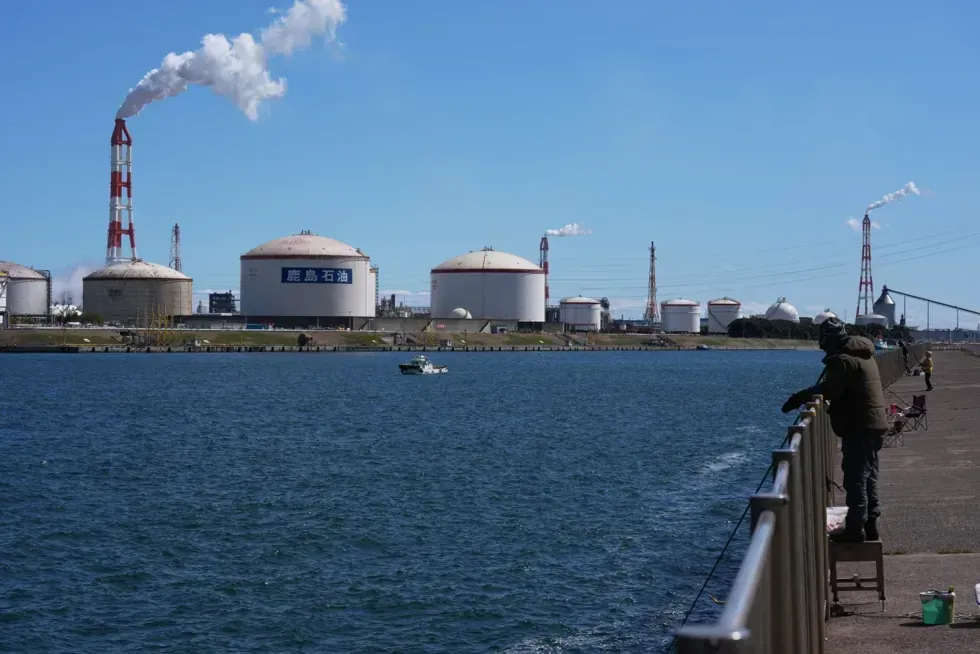
Oil tankers and energy infrastructure amid global supply disruption crisis - AP Photo/Hiro Komae

Energy supply disruptions force governments into demand-cutting strategies worldwide - AP Photo/Hiro Komae

The widening conflict involving Iran is triggering a global phase of strategic contraction, as governments move beyond contingency planning into active demand suppression, supply rationing, and fiscal trade-offs. What began as a supply disruption is rapidly evolving into a policy dilemma with cascading economic implications.

According to reporting by The Associated Press, the closure of key transit routes tied to the Strait of Hormuz — a corridor critical to global oil and liquefied natural gas flows — has forced energy-importing nations to reassess how long they can sustain current consumption levels without triggering broader economic strain.

Across multiple regions, the immediate response is no longer about stabilizing markets, but about shrinking exposure.

Supply Arteries Tighten as Strategic Depth Narrows

The concentration of global energy flows through a limited number of chokepoints has left import-dependent economies with little room to maneuver. Asia, which absorbs the bulk of shipments passing through Hormuz, is now confronting the limits of its supply flexibility.

More than a logistical disruption, the bottleneck is exposing structural vulnerabilities. Energy systems built on steady, high-volume imports are being recalibrated in real time, with governments prioritizing essential consumption while scaling back industrial usage.

RELATED POSTS

Qatar’s Former Emir Sheikh Hamad bin Khalifa Al Thani Dies at 74, Leaving Lasting Global Legacy

US Ends Latest Airstrikes on Iran After Tehran Expands Attacks Across Gulf

Africa’s Renewable Energy Push Shifts Focus to Stronger Institutions and Investment Climate

Off-Duty Chilean Navy Officer Crashes Into Open-Air Market, Killing Several People

Ukraine’s Prime Minister Resigns as Zelenskyy Unveils New Government Shake-Up

Macron Warns Against Rising Antisemitism as France Honors Alfred Dreyfus 120 Years After Exoneration

Analysts warn that this contraction is not temporary in nature. Even partial disruptions are sufficient to force production slowdowns, particularly in export-driven economies where energy demand is tightly linked to manufacturing output.

This marks a shift from price sensitivity to supply fragility as the dominant risk factor.

Demand Suppression Expands Across Southeast Asia

In Southeast Asia, governments are moving decisively to curb consumption, signaling that supply preservation has overtaken growth as the immediate priority.


Administrative measures — including reduced workweeks, remote work policies, and enforced limits on electricity use — are being deployed not as symbolic gestures but as necessary interventions to stretch limited reserves.

These policies carry measurable economic consequences. Lower energy consumption directly translates into reduced industrial throughput, weaker service sector activity, and tightening margins for small businesses already operating under cost pressure.

At the same time, regional competition for available fuel supplies is intensifying. Efforts to secure domestic stability — such as export restrictions and price controls — are beginning to ripple outward, contributing to shortages in neighboring markets.

The result is a feedback loop where national-level protection measures amplify regional scarcity.

Reserve Releases Offer Time, Not Resolution

In East Asia, governments are leaning heavily on strategic reserves, but the limitations of that approach are becoming increasingly clear.

Large-scale releases of stockpiled oil are designed to cushion immediate shocks and prevent abrupt price spikes. However, they do not address the underlying issue of constrained inflows.

Energy analysts note that reserves function as a temporal buffer rather than a structural solution. Once deployed, they must eventually be replenished — often at higher market prices and under less favorable conditions.

This creates a narrowing window in which policymakers must either secure alternative supply lines or accept reduced consumption as a baseline reality.

The longer disruptions persist, the greater the likelihood that industrial sectors — particularly those reliant on continuous energy input — will be forced to scale back operations.

Household Prioritization Intensifies Fiscal Pressure

In densely populated economies, governments are prioritizing household energy access, particularly for cooking fuel, even as this approach places growing strain on public finances.

Subsidy programs designed to shield consumers from price volatility are absorbing a significant share of rising costs. While politically stabilizing in the short term, these measures are fiscally unsustainable if global prices remain elevated.

The redistribution of limited supplies toward households is already creating secondary effects. Commercial users — including restaurants, transport operators, and small manufacturers — are experiencing reduced access, leading to curtailed operations and revenue losses.

This reallocation underscores a broader contraction dynamic: as essential consumption is protected, non-essential economic activity becomes the adjustment variable.

Over time, this imbalance risks feeding into inflationary pressures and slower growth.

Policy Trade-Offs Approach Critical Threshold

Governments now face a tightening set of policy choices. Maintaining subsidies supports social stability but risks widening budget deficits. Removing them restores fiscal balance but exposes populations to immediate cost increases.

In several economies, analysts warn that this trade-off is approaching a critical threshold. Limited reserves, high import dependency, and rising demand are converging to reduce the effectiveness of incremental policy adjustments.

If supply disruptions persist, policymakers may be forced into more abrupt decisions — including sharp price corrections or enforced rationing — both of which carry political and economic risks.

This phase of contraction is defined not by a single shock, but by the cumulative erosion of policy flexibility.

Europe Moves Toward Structural Demand Reduction

Beyond Asia, European policymakers are signaling a longer-term shift toward structural demand reduction as a response to volatility.

Efforts to accelerate clean energy adoption and reduce dependence on imported fossil fuels are being framed not only as climate initiatives, but as economic resilience strategies.

Short-term measures aimed at protecting consumers and businesses are being paired with broader efforts to lower baseline energy demand across the bloc.

This dual-track approach reflects a recognition that recurring supply disruptions may become a defining feature of the geopolitical landscape.

Forward Outlook: Contraction as the New Baseline

The current crisis is redefining how governments approach energy security. Rather than expanding supply to meet demand, the immediate strategy has shifted toward compressing demand to fit constrained supply.

If disruptions linked to the Iran conflict continue, this contraction phase could extend beyond emergency measures and become embedded in policy frameworks.

The longer-term implication is a global economy operating with tighter energy margins — where growth is increasingly contingent on efficiency, diversification, and the ability to withstand prolonged supply uncertainty.


Tags: #AsiaEconomy#EconomicRisk#EnergyPolicy#EnergySecurity#Geopolitics#GlobalEnergyCrisis#InflationPressure#IranConflict#LNGSupply#OilMarkets#SupplyShock#WorldNews
The Daily Desk

The Daily Desk

The Daily Desk is a contributor at JournosNews.com covering politics, media, governance, and the evolving dynamics of public discourse. Stories published under this byline are produced in accordance with JournosNews' editorial standards, with an emphasis on verified reporting, accuracy, context, and impartiality.

Related Posts

Qatar’s Former Emir Sheikh Hamad bin Khalifa Al Thani Dies at 74, Leaving Lasting Global Legacy

by The Daily Desk
July 13, 2026
0
Former Qatar emir Sheikh Hamad bin Khalifa Al Thani during a public appearance - AP Photo/Pablo Martinez monsivais, File

DUBAI, United Arab Emirates - Sheikh Hamad bin Khalifa Al Thani, the former emir who transformed Qatar into a major...

Read moreDetails

US Ends Latest Airstrikes on Iran After Tehran Expands Attacks Across Gulf

by The Daily Desk
July 13, 2026
0
Smoke rises following U.S. airstrikes on Iranian military targets amid tensions over the Strait of Hormuz. - Amirhosein Khorgoo/ISNA via AP

DUBAI, United Arab Emirates — Washington said it struck dozens of Iranian military targets on Monday after an attack on...

Read moreDetails

Africa’s Renewable Energy Push Shifts Focus to Stronger Institutions and Investment Climate

by The Daily Desk
July 13, 2026
0
Renewable energy infrastructure in Africa as experts call for stronger institutions to support clean energy growth. - AP Photo/Themba Hadebe, File

NAIROBI, Kenya — Africa's clean energy transition is entering a new phase. Experts say the continent's biggest challenge is no...

Read moreDetails

Off-Duty Chilean Navy Officer Crashes Into Open-Air Market, Killing Several People

by The Daily Desk
July 13, 2026
0
Emergency responders work at the scene after a vehicle crashed into an open-air market in Viña del Mar, Chile. - Sebastian Cisterna/ATON via AP

SANTIAGO, Chile — Several people were killed and others were injured Sunday after an off-duty Chilean navy officer driving a...

Read moreDetails

Ukraine’s Prime Minister Resigns as Zelenskyy Unveils New Government Shake-Up

by The Daily Desk
July 13, 2026
0
Ukrainian President Volodymyr Zelenskyy announces a government reshuffle following Prime Minister Yulia Svyrydenko's resignation. - AP Photo/Mindaugas Kulbis, File

KYIV, Ukraine — Ukrainian Prime Minister Yulia Svyrydenko resigned Sunday after President Volodymyr Zelenskyy announced a new reshuffle of his...

Read moreDetails

Macron Warns Against Rising Antisemitism as France Honors Alfred Dreyfus 120 Years After Exoneration

by The Daily Desk
July 13, 2026
0
French President Emmanuel Macron attends the unveiling of the Alfred Dreyfus statue in Paris. - Thomas Samson/Pool Photo via AP

PARIS, France - French President Emmanuel Macron warned Sunday against the resurgence of antisemitism as France commemorated the 120th anniversary of...

Read moreDetails

Hundreds of Firefighters Battle Deadly Southern Spain Wildfire That Has Killed at Least 12

by The Daily Desk
July 13, 2026
0
Firefighters battle a large wildfire in Almería province, southern Spain. - AP Photo/Gregorio Marrero

BEDAR, Spain - Hundreds of firefighters supported by helicopters and fixed-wing aircraft continued battling one of Spain's deadliest wildfires on...

Read moreDetails

China’s ‘Green Great Wall’ Slows Desert Expansion, but Scientists Say Long-Term Work Is Essential

by The Daily Desk
July 13, 2026
0
Workers maintain straw checkerboards and vegetation in China's Kubuqi Desert. - AP Photo/Ng Han Guan

KUBUQI DESERT, China - China's decades-long effort to halt the spread of deserts across its northern regions has produced measurable...

Read moreDetails

Typhoon Bavi Weakens After China Landfall but Continues to Lash Eastern Regions

by The Daily Desk
July 13, 2026
0
Strong winds and rain from Typhoon Bavi affect eastern China after landfall. - Jiang Han/Xinhua via AP

BEIJING, China — Typhoon Bavi weakened to a tropical storm on Sunday after making landfall in eastern China's Zhejiang province,...

Read moreDetails
Load More
Next Post
Satellite imagery showing damaged ships and military bases in Gulf region - Planet Labs PBC via AP

Satellite Evidence Signals Expanding Iran War Footprint Across Gulf Military Network

Candidates campaign in competitive Illinois Senate race amid Democratic divisions - AP Photo/Nam Y. huh

Illinois Senate Race Signals Emerging Democratic Strain Amid High-Stakes Power Realignment

Military alert systems active during regional security crisis escalation - AP Photo/Vahid Salemi, File

LIVE: Regional Security Crisis — Real-Time Updates

JournosNews logo

Journos News delivers globally neutral, fact-based journalism that meets international media standards — clear, credible, and made for a connected world.

  • Categories
  • World News
  • Politics
  • Business & Markets
  • Technology
  • Health
  • Science
  • Sports
  • Arts & Culture
  • Resources
  • Editorial Standards
  • Submit a Story
  • Advertise with Us
  • Syndication & Partnerships
  • Site Map
  • Press & Media Kit
  • Editorial Team
  • Careers

Join thousands of readers receiving the latest updates, tips, and exclusive insights straight to their inbox. Never miss an important story again.

  • About Us
  • Editorial & Trust Center
  • Contact Us
  • Privacy Policy
  • Terms of Use & Copyright Notice

© JournosNews.com All rights reserved.

Welcome Back!

Login to your account below

Forgotten Password?

Retrieve your password

Please enter your username or email address to reset your password.

Log In
JournosNews

Independent Journalism.
Verified Facts.

You're about to read a professionally edited article from JournosNews.com.

Every article is produced in accordance with our editorial standards, emphasizing factual accuracy, transparent attribution, fairness, editorial independence, and meaningful context.

Editorial Standards
No Result
View All Result
  • Home
  • World
    • Africa
    • Americas
    • Asia
    • Europe
    • Middle East
    • Oceania
  • Politics
  • Business
  • Technology
  • Health
  • Science
  • Sports
  • Entertainment
  • Culture

© JournosNews.com All rights reserved.

This website uses cookies. By continuing to use this website you are giving consent to cookies being used. Visit our Privacy and Cookie Policy.