Journos News - Breaking News, World News, Top Stories, Todays Headlines and Flash Reports
Wednesday, September 2, 2026
  • Login
  • Home
  • World
    • Africa
    • Americas
    • Asia
    • Europe
    • Middle East
    • Oceania
  • Politics
  • Business
  • Technology
  • Health
  • Science
  • Sports
  • Entertainment
  • Culture
No Result
View All Result
  • Home
  • World
    • Africa
    • Americas
    • Asia
    • Europe
    • Middle East
    • Oceania
  • Politics
  • Business
  • Technology
  • Health
  • Science
  • Sports
  • Entertainment
  • Culture
No Result
View All Result
Journos News - Breaking News, World News, Top Stories, Todays Headlines and Flash Reports
No Result
View All Result
Home Transportation Aviation

How Global Conflicts Are Reshaping the Skies

Why Airlines Are Rerouting Flights Around War Zones

The Daily Desk by The Daily Desk
August 5, 2026
in Aviation, Transportation
0
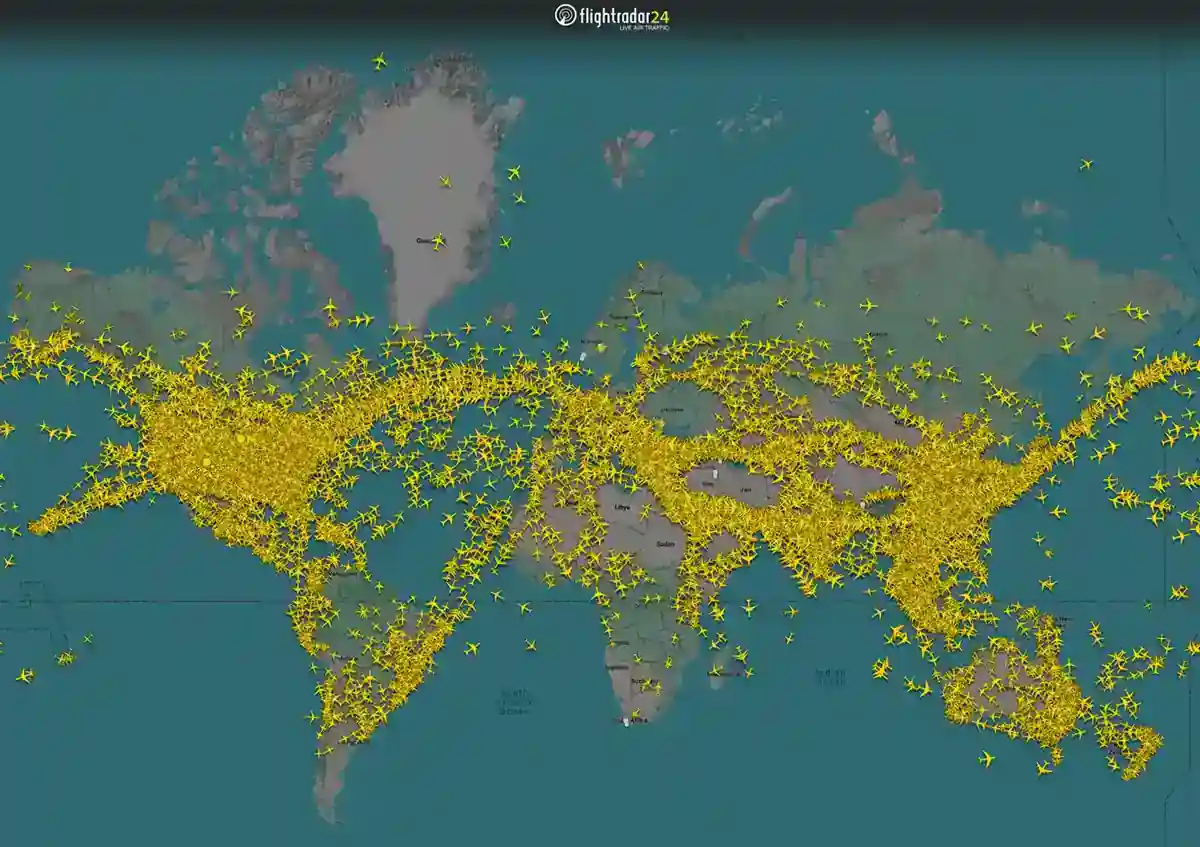
Airlines Scramble as No-Fly Zones Expand Worldwide - Courtesy Flightradar24.com

How Wars and Natural Disasters Are Creating Holes in the Sky - Courtesy Flightradar24.com

Global Conflict Is Reshaping the Skies — And Airlines Are Scrambling to Keep Up

Take a look at a live flight tracker, and one thing jumps out right away: the gaps.
Huge, empty zones in the sky where planes used to fly — now ghostly quiet. These aren’t just quirks of scheduling. They’re the real-time ripple effects of war, political instability, and even natural disasters.

From the Middle East to Eastern Europe, modern air travel is being rerouted, delayed, or canceled altogether — and the costs are stacking up fast.

Flying Around a Fight: The Cost of Conflict in the Air

The latest flare-ups in the Middle East have created fresh no-fly zones over parts of Israel, Iran, Iraq, and Ukraine, squeezing international flights into narrower corridors over Saudi Arabia, Egypt, and Turkey.

This means more fuel burned, more hours in the air, more wear on crews — and much higher costs for airlines.

“Airspace closures have become quite common,” says Brendan Sobie, a Singapore-based aviation consultant.
“It’s almost like the new normal for airlines.”

According to Tony Stanton of Strategic Air in Australia, some rerouted flights — like those from London to Hong Kong — are now taking two extra hours just to avoid conflict zones.

For long-haul jets like a Boeing 777, that can mean an extra $14,000 in fuel costs per round trip — not to mention crew overtime, rebooking headaches, and airport slot fees.

A Sky Full of Risk Assessments

Every commercial airline has a team monitoring global airspace, constantly recalculating what’s safe and what’s not. Even if a region’s airspace is technically open, some carriers might choose to avoid it if the risk feels too high.

“Pilots don’t just need to avoid war zones,” Sobie explains.
“They also need buffer zones in case of emergencies or bad weather that could force a diversion.”

In today’s world, risk isn’t limited to missiles or missiles — cyberattacks are now part of the equation, with experts warning about GPS jamming and spoofing that can mislead aircraft navigation systems near combat zones.

■ Related News
Strait of Hormuz connecting the Gulf of Oman and Persian Gulf, photographed from the International Space Station.

LIVE: Middle East Conflict — Ongoing Coverage

August 12, 2026
Map showing reported Houthi attack near Bab el-Mandeb and U.S. maritime operations across the Gulf of Oman and Strait of Hormuz

Houthi Attack Kills Six as U.S. Forces Strike Ship Near Iranian Blockade

August 12, 2026
USCGC Aquidneck transits the Strait of Hormuz during U.S. naval operations on December 2, 2020.

LIVE: Middle East Conflict — Ongoing Coverage

August 11, 2026
An Iraqi Special Operations Forces armored personnel carrier drives along a street in Mosul during the battle against Islamic State forces.

Iraq Struggles to Balance U.S. and Iran as Regional War Intensifies

August 10, 2026

Traffic Jams at 40,000 Feet

With more planes in the sky than ever before, rerouting flights causes congestion elsewhere. In the Persian Gulf, for example, air traffic has tripled in just a few years.
Now, with fewer safe paths, air traffic controllers are trying to squeeze more aircraft into tighter corridors, adjusting altitudes and departure times to make it all work — but it’s not easy, or cheap.

Short Flights, Big Disruptions

While long-haul routes make headlines, shorter regional flights are often hit the hardest.

Flights from Central Asia to Gulf hubs like Dubai or Doha, which used to cross Iranian airspace, are now rerouting entirely. That means up to half the flight time spent zigzagging to stay clear of conflict.

Volcanoes: Nature’s No-Fly Zones

While war gets the attention, volcanic eruptions may be even more disruptive.

Just look at Bali, where a current eruption is affecting air routes. Or flash back to Eyjafjallajökull in Iceland (2010) — that eruption grounded over 10 million travelers and cost airlines more than $1.7 billion.

Volcanic ash isn’t just an inconvenience. It’s dangerous. It contains microscopic silica that can fuse to jet engine parts, potentially causing catastrophic failures.

“A volcano’s eruption can have much greater impacts than a conflict zone,” Stanton says.

Airlines Are Flying Blind into the Future

One of the hardest parts for airlines? There’s no end date for a conflict.

Some disruptions, like last year’s tension between Iran and Israel, were short-lived. Others, like Russia’s invasion of Ukraine, have dragged on for years with no clear timeline for resolution. Many of the rerouted paths created in 2022 are still in effect today.

And unlike weather forecasts, wars can’t be predicted or planned for — making them one of the most expensive unknowns in modern aviation.

“Running a profitable airline is not easy,” Stanton notes — and in today’s world, it’s getting harder by the mile.

The Bottom Line

Whether it’s war, volcanoes, or cyber threats, airlines are flying through a more volatile sky than ever before. What used to be rare airspace disruptions are now part of everyday flight planning.
For passengers, that might mean longer trips, more delays, and higher ticket prices.
For airlines, it’s a daily high-stakes puzzle — and the cost of getting it wrong can be sky-high.

Source: CNN – How airlines are scrambling as escalating conflicts punch holes in the air map of the world

Tags: #AirlineChallenges#AirlineCosts#AirlineNews#AirspaceClosures#AirTraffic#AirTrafficControl#AirTravelUpdate#AviationIndustry#AviationNews#AviationRisk#AviationSecurity#ConflictZones#FlightCancellations#FlightDelays#FlightDisruptions#FlightRerouting#FlightTracking#FlyingDuringConflict#GeopoliticsAndTravel#GlobalConflicts#InternationalFlights#JetFuelCosts#MiddleEastConflict#MilitaryDefense#NaturalDisasterImpact#NoFlyZones#TravelAdvisory#TravelNews2025#TravelSafety#UkraineWar#VolcanicAsh
The Daily Desk

The Daily Desk

The Daily Desk is a contributor at JournosNews.com covering politics, media, governance, and the evolving dynamics of public discourse. Stories published under this byline are produced in accordance with JournosNews' editorial standards, with an emphasis on verified reporting, accuracy, context, and impartiality.

Related Posts

U.S. President Donald Trump meets Israeli Prime Minister Benjamin Netanyahu in the Oval Office to discuss a Gaza peace plan.

Israel Rejects Gaza Withdrawal Plan as Houthi Attacks Raise Regional Tensions

August 10, 2026
Editorial explainer showing how Ukraine detects, tracks and engages incoming missiles, and why some threats evade interception.

Why Russian Missiles Can Get Through Ukraine’s Air Defenses Even When They Are Detected

August 8, 2026
Map showing Guatemala's Fuego Volcano eruption, hazard zones, ashfall direction, nearby communities, and emergency evacuations as of Aug. 5, 2026.

Guatemala Keeps Thousands on Alert as Fuego Volcano Continues Erupting

August 5, 2026
Commercial aircraft parked at airport gates amid rising airline fuel costs. - AP Photo/Carolyn Kaster, File

U.S. Airlines’ May Fuel Spending Tops $6.6 Billion as Energy Costs Remain Elevated

July 8, 2026
Rescue teams recover victims after deadly bus crash in southwestern Pakistan. - AP Photo/Zain Ullah

Overcrowded Bus Crash in Southwestern Pakistan Kills 40 in Deadly Ravine Plunge

July 3, 2026
Residents inspect damaged homes in southern Lebanon - AP Photo/Hassan Ammar

Southern Lebanese Residents Return Home Amid Uncertainty Following U.S.-Iran Agreement

June 19, 2026
Crash investigation at Missouri skydiving airport site - AP Photo/Reed Hoffman

Fatal Missouri skydiving crash reignites concerns over maintenance and FAA oversight gaps

June 15, 2026
Emergency crews respond after fatal helicopter collision in Rio - AP Photo/Bruna Prado

Six Killed in Rio Helicopter Collision as Oliver Tree Listed Among Passengers

June 15, 2026
Load More
Next Post
Iran Has Enough Material for Nukes, But No Active Bomb Program - Fox News/FDD

UN Nuclear Chief: Iran Has Bomb Materials, But No Plan to Build One

The Diddy Trial: Ex-Assistant & Ex-Girlfriend Speak Out - Eduardo Munoz/Reuters

Diddy on Trial: Inside the Courtroom Drama

JournosNews logo

Journos News delivers globally neutral, fact-based journalism that meets international media standards — clear, credible, and made for a connected world.

  • Categories
  • World News
  • Politics
  • Business & Markets
  • Technology
  • Health
  • Science
  • Sports
  • Arts & Culture
  • Resources
  • Editorial Standards
  • Submit a Story
  • Advertise with Us
  • Syndication & Partnerships
  • Site Map
  • Press & Media Kit
  • Editorial Team
  • Careers

Join thousands of readers receiving the latest updates, tips, and exclusive insights straight to their inbox. Never miss an important story again.

  • About Us
  • Editorial & Trust Center
  • Contact Us
  • Privacy Policy
  • Terms of Use & Copyright Notice

© JournosNews.com All rights reserved.

Welcome Back!

Login to your account below

Forgotten Password?

Retrieve your password

Please enter your username or email address to reset your password.

Log In
JournosNews

Independent Journalism.
Verified Facts.

You're about to read a professionally edited article from JournosNews.com.

Every article is produced in accordance with our editorial standards, emphasizing factual accuracy, transparent attribution, fairness, editorial independence, and meaningful context.

Editorial Standards
No Result
View All Result
  • Home
  • World
    • Africa
    • Americas
    • Asia
    • Europe
    • Middle East
    • Oceania
  • Politics
  • Business
  • Technology
  • Health
  • Science
  • Sports
  • Entertainment
  • Culture

© JournosNews.com All rights reserved.

This website uses cookies. By continuing to use this website you are giving consent to cookies being used. Visit our Privacy and Cookie Policy.