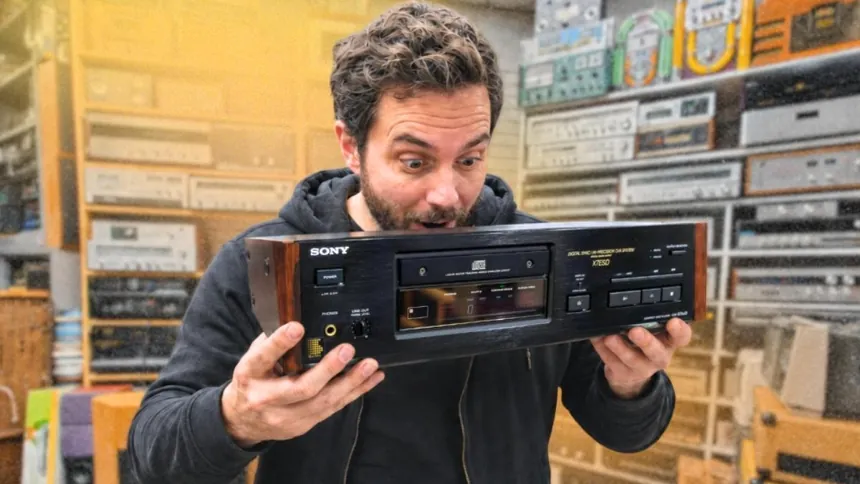
Vintage CD players are drawing renewed attention in the hi-fi market this week as audiophile communities continue favoring older transport systems and DAC designs over some modern entry-level hardware. Enthusiast rankings and collector discussions have highlighted models from the late 1980s through early 2000s that remain widely used in contemporary listening setups. The trend matters because it reflects a broader reassessment of durability, transport engineering, and digital conversion design during a period of renewed interest in physical media.
Transport Engineering Remains Central to Vintage CD Demand
Many of the most discussed legacy players rely on transport mechanisms no longer common in mass-market CD hardware. According to recent audiophile rankings, systems such as the Pioneer Stable Platter design and TEAC’s VRDS transport continue attracting attention for their disc stabilization methods and reduced servo correction requirements.
The renewed focus on transport architecture comes as compact disc playback experiences a modest resurgence alongside vinyl and cassette formats. Recent product launches, including new portable and transportable CD systems, suggest manufacturers see ongoing demand for dedicated disc playback hardware rather than purely streaming-focused audio systems.

Several vintage models cited by collectors use heavy metal chassis construction, separate power supplies, and isolated analog stages. Audiophile discussions frequently reference these engineering choices as factors influencing noise control and playback consistency, particularly in older flagship units from Sony, Philips, Linn, and Marantz.
DAC Design Differences Continue Fueling Debate
Digital-to-analog conversion remains another major factor behind interest in legacy CD players. Older systems using multi-bit DACs, Philips TDA1541A chips, Burr-Brown converters, and differential DAC configurations are often compared against newer integrated chipsets found in lower-cost modern players.
Some collectors argue that earlier CD players benefited from tightly integrated playback ecosystems in which transports, filters, and DACs were engineered together rather than sourced separately. Models such as the Philips CD-960 and Linn CD12 continue to appear in collector recommendations because of those integrated design approaches and oversampling filter implementations.
However, community discussions also note the practical limitations of older hardware. Aging laser assemblies, deteriorating capacitors, and compatibility issues with recordable media remain common concerns in secondhand purchases. Technicians and collectors frequently recommend servicing or external DAC upgrades to extend usability.
Physical Media Interest Expands Beyond Nostalgia
The continued discussion around vintage CD players reflects a wider physical media trend within the audio sector. While streaming remains dominant globally, collectors increasingly view CDs as stable ownership formats with predictable mastering quality and no subscription dependency.
■ Related News



Manufacturers have also begun responding to this niche demand with newer CD-oriented products featuring balanced outputs, high-resolution DAC support, Bluetooth codecs such as LDAC, and SACD compatibility. Recent releases indicate that the CD format is evolving into a specialist segment aimed at dedicated listeners rather than mainstream consumers.
Industry observers expect the secondary market for premium vintage CD players to remain active through 2026 as collectors continue comparing legacy transport engineering against newer digital playback ecosystems.