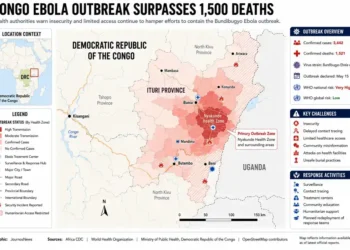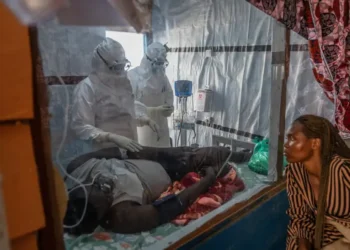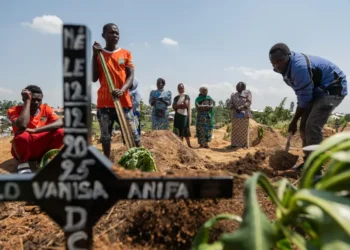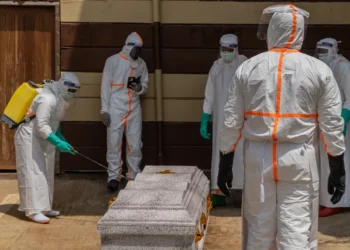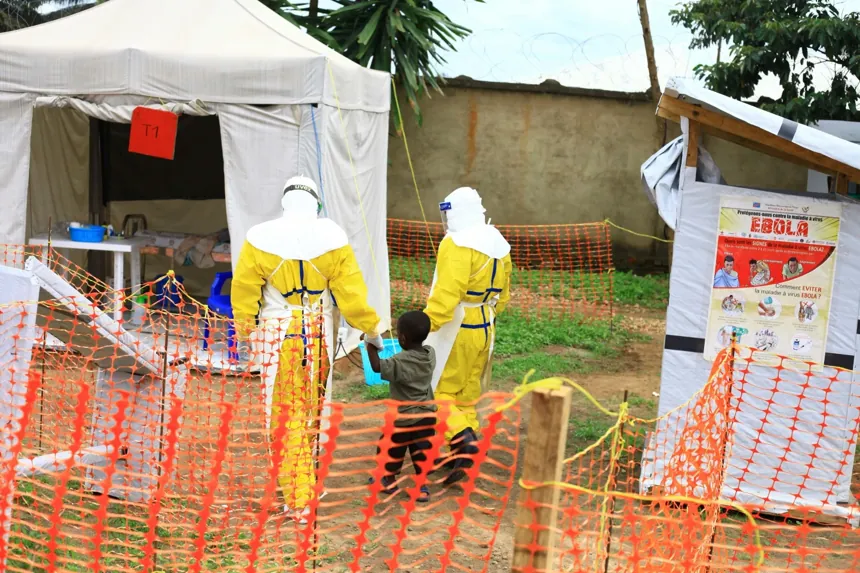
A new outbreak of Ebola has been confirmed in the eastern Democratic Republic of Congo, where health officials report at least 65 deaths in Ituri province, raising concerns about regional health security and the risk of wider transmission.
Health Authorities Mobilize Rapid Response
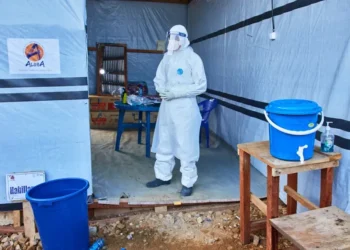
Government officials said the outbreak was identified in a remote area of Ituri, a region that has faced repeated Ebola flare-ups in recent years. According to international reports, emergency response teams have been deployed to trace contacts, isolate suspected cases, and begin vaccination campaigns.
Health authorities indicated that logistical challenges, including difficult terrain and limited infrastructure, could complicate containment efforts. Analysts noted that early detection remains critical to preventing the virus from spreading to more densely populated areas.

Regional Stability and Public Health at Risk
The outbreak comes amid ongoing instability in eastern Congo, where armed conflict and displacement have historically hindered public health interventions. Officials said insecurity in parts of Ituri may restrict access for medical teams and delay response measures.
According to statements from global health organizations, previous outbreaks in conflict zones have shown that community mistrust and restricted movement can accelerate transmission. Experts warn that without swift containment, the situation could pose risks beyond national borders.
International Response Intensifies
The World Health Organization and partner agencies are coordinating with Congolese authorities to contain the outbreak. Government statements indicate that surveillance systems have been strengthened, and additional resources are being mobilized to support frontline healthcare workers.
International health officials emphasized that while Ebola outbreaks are not uncommon in the region, rapid response capacity has improved in recent years. However, they cautioned that sustained funding and cooperation remain essential to prevent escalation.
Economic and Social Impact Emerging
Beyond the immediate health crisis, the outbreak is expected to strain local economies and disrupt livelihoods. Movement restrictions and fear of infection may affect trade and agriculture in affected communities.
■ Related News




Analysts noted that repeated outbreaks underscore the need for long-term investment in healthcare systems and infrastructure. Strengthening local capacity, they said, is key to reducing the impact of future epidemics.