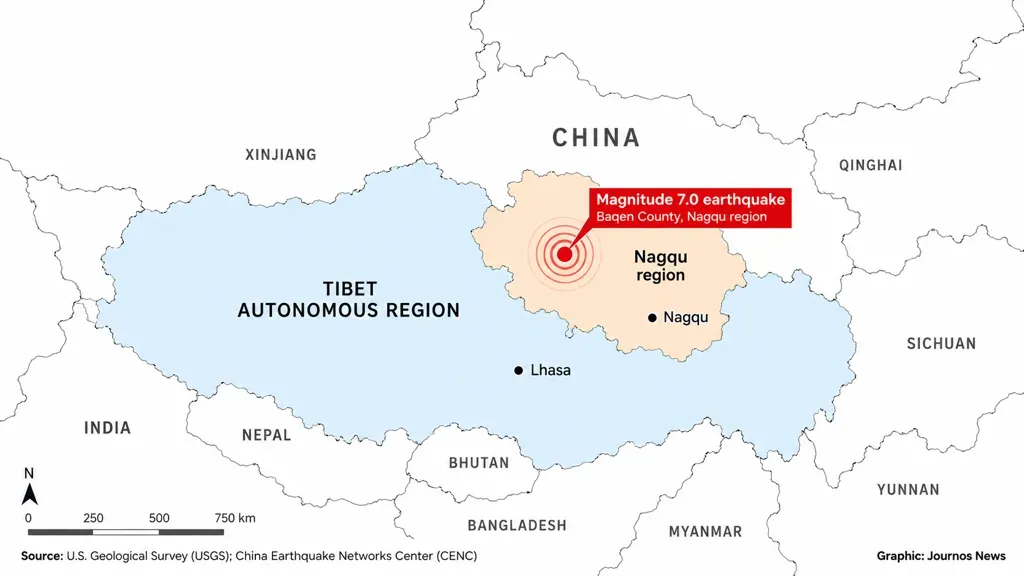
LHASA, TIbet – At least 16 people have died after a magnitude-7.0 earthquake struck Tibet’s Nagqu region on Thursday night, October 22. The quake damaged homes, disrupted transport and communications, and sent rescue teams into communities in the high-altitude area.
Local authorities reported 46 injuries in an update issued early Friday. A later report raised the number to 54, but the latest figure still requires confirmation from an official emergency-management statement. Rescue and damage assessments remain underway.
The earthquake struck Baqen County at 10:33 p.m. local time, according to the Tibet Earthquake Agency. The agency measured the quake at magnitude 7.0 and placed its depth at 10 kilometres.

The U.S. Geological Survey also recorded a magnitude-7 earthquake, but estimated its depth at 18 kilometres. The difference reflects the agencies’ separate measurements. Both place the event in the sparsely populated area of northern Tibet.
Injury Figures Remain Unclear
The injury count changed as officials gathered information after the quake.
An update from the Nagqu earthquake relief headquarters put the number of injured at 46 as of 5:20 a.m. Friday. Eleven people were seriously injured, while 35 had minor injuries.
A later report put the total at 54. The available information does not yet establish the exact timing and basis of that revised figure through a directly verified official statement.
The death toll stands at at least 16 in the reports reviewed for this article. Authorities have continued checking casualties and damage, so the figures may change as rescue workers reach affected communities.
■ Related News




Homes Damaged Across the Affected Area
Officials reported that 339 households had homes that collapsed or suffered damage. The figure does not mean that all 339 homes were destroyed. Authorities also reported damage to 20 livestock sheds.
The distinction matters as teams assess where residents can safely return and which families need temporary shelter. The extent of structural damage to individual buildings remains subject to local inspections.
The earthquake struck a remote region at an average elevation of about 4,800 metres, making rescue work more challenging. Some residents left buildings and waited outdoors because they feared further shaking.
Rescue Teams and Emergency Supplies
Rescue operations began during the night. Local fire and rescue personnel reached the affected area and searched damaged homes. Officials reported that rescuers pulled at least one person alive from a collapsed building.
The regional fire and rescue corps sent 347 rescuers, 82 fire engines and 15 search dogs, along with more than 4,200 pieces of equipment. Police also deployed more than 300 officers to check damaged homes, assess injuries and help move residents to safer areas.
Relief supplies included about 3,000 tents, 1,000 prefabricated housing units, folding beds, flashlights and winter clothing. These supplies are intended to help people whose homes were damaged or who cannot safely return to them.
The regional government activated a Level-II emergency response. National authorities also activated a Level-IV response and sent a working team to the disaster area.
Roads and Rail Services Disrupted
Rockfalls forced authorities to close part of National Highway 317. Officials restricted access to emergency, rescue and support vehicles while crews worked to clear debris.
Rail services were also disrupted. Railway authorities temporarily stopped trains in the affected area while staff inspected tracks and equipment. Some trains heading toward Golmud were delayed.
Communications failed in parts of the region, according to reports citing official statements. The full extent of the outage and the time needed to restore service have not been independently confirmed for this report.
The available information does not establish whether the quake caused widespread power outages. That remains an important point for authorities to clarify as they assess damage to essential services.
Aftershocks and Cold Weather Add to the Challenge
Several aftershocks followed the main earthquake. The Tibet Earthquake Agency recorded smaller tremors in Baqen County later on Thursday night, including events measuring magnitudes 3.6, 3.9 and 4.0.
The U.S. Geological Survey also reported aftershocks, including several stronger than magnitude 4. Rescue teams must continue to assess damaged buildings and watch for further ground movement.
Forecast snowfall could make the response more difficult over the coming days. Cold conditions increase the need for safe shelter, warm clothing and reliable access to affected communities.
Officials have urged emergency teams to prioritize search and rescue, medical support and the safe relocation of residents. The immediate focus remains on reaching people who may need help, assessing damaged structures and restoring disrupted transport and communications.
Damage Assessment Continues
The full extent of the earthquake’s impact remains unclear. Authorities are still checking casualties, inspecting homes and determining which communities need the most urgent assistance.
The injury figures reported so far differ, and the number of homes affected must not be confused with the number that collapsed. Further official updates should clarify both totals as field assessments continue.
For residents in the affected area, immediate needs include safe shelter, medical care, warm clothing and reliable access to transport and communications. The next official updates will be important in establishing how many people remain displaced and which services have been restored.
Reporting Credit: Tibet Earthquake Agency — official earthquake bulletin confirming the magnitude, location and depth recorded by the regional monitoring network, Nagqu earthquake relief authorities — casualty and household damage figures reported in early updates; the latest injury total and exact distinction between collapsed and damaged homes require further direct confirmation.