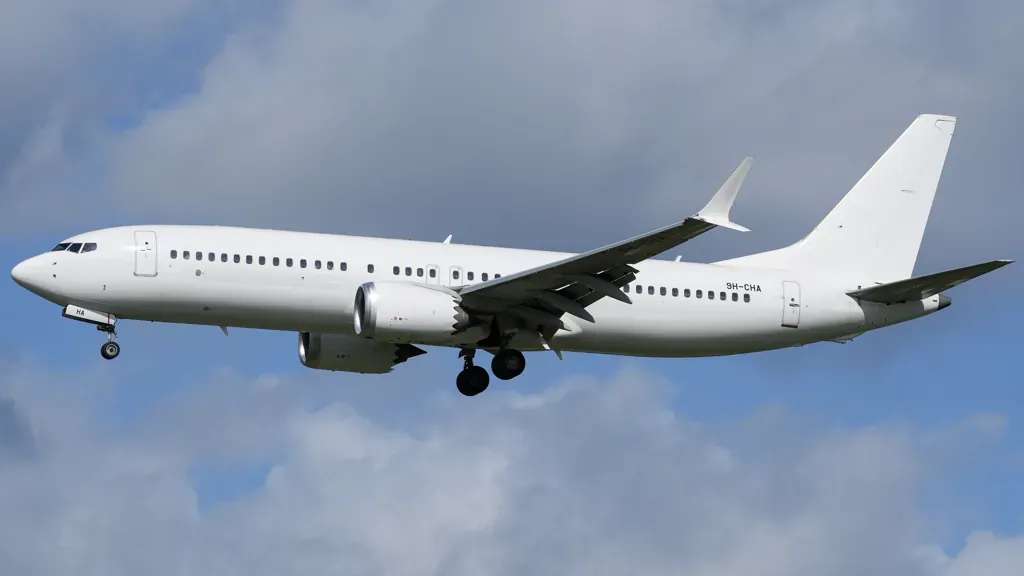
The Federal Aviation Administration has approved Boeing’s 737 Max 10 for passenger service, clearing a major regulatory hurdle for the aircraft nearly a decade after its unveiling and bringing the manufacturer closer to delivering thousands of ordered planes.
The certification marks a significant step in Boeing’s efforts to rebuild its commercial aircraft business after years of safety concerns, manufacturing problems and regulatory delays. The company expects to begin deliveries in 2027, giving airlines a larger single-aisle aircraft as they seek to manage operating costs and expand passenger capacity.
More than 30 customers worldwide have ordered a combined 1,555 Max 10 aircraft that Boeing has yet to deliver, according to the supplied Associated Press report. Those orders account for more than 30% of the company’s total 737 Max backlog, making certification an important milestone for its delivery pipeline and longer-term commercial growth.

Certification Advances Boeing’s Recovery
U.S. Transportation Secretary Sean Duffy said the approval followed extensive safety reviews and thousands of hours of test flights. Speaking during a visit to Boeing’s manufacturing plant in Everett, Washington, on Tuesday, Duffy described the certification as a significant achievement for American manufacturing.
Stephanie Pope, president and chief executive of Boeing Commercial Airplanes, said the approval marked another milestone in the company’s recovery and opened a path toward future growth.
The certification allows Boeing to move forward with the aircraft’s commercial rollout, but it does not remove the need for continued production oversight. The FAA has determined that the Max 10’s design meets applicable safety standards following engineering reviews and flight testing, while Boeing must continue demonstrating that aircraft are built consistently to the approved design.
Each completed plane must also receive the necessary clearance before carrying passengers.
A Larger Aircraft for Airline Operators
The Max 10 is the largest member of Boeing’s 737 Max family and is designed to carry more passengers than the smaller variants.
■ Related News


Boeing says the aircraft will typically accommodate 185 to 210 passengers. The 737 Max 9 generally seats 175 to 195, while the Max 8 accommodates 160 to 180.
For airlines, the additional capacity could help spread operating costs across more seats on suitable routes. The aircraft is also designed to consume less fuel than older planes, an important consideration for carriers facing volatile fuel expenses.
However, the commercial benefits will depend on how airlines configure and deploy the aircraft, the routes they serve and the competitive conditions in individual markets. Greater capacity does not automatically translate into lower ticket prices.
Airbus Competition Remains a Challenge
Boeing introduced the Max 10 at the Paris Air Show in 2017 to compete with Airbus in the single-aisle aircraft market. Its principal rival is the Airbus A321neo family, which entered service that year.
The Associated Press report notes that the largest A321neo can carry more passengers and fly farther without refueling than the Max 10. Those capabilities give airlines an alternative when evaluating capacity, range and operating economics.
The certification therefore addresses an important gap in Boeing’s product lineup, but it does not by itself resolve the competitive disadvantages the aircraft faces in some market segments.
Boeing’s ability to convert its substantial order backlog into deliveries will depend on execution as well as regulatory approval.
Safety Scrutiny Continues After Earlier Crises
Boeing’s certification milestone comes against a background of serious safety and manufacturing problems.
Two fatal crashes involving the smaller 737 Max 8 killed 346 people in 2018 and 2019. The crashes led to extensive scrutiny of the aircraft and Boeing’s safety practices.
In January 2024, a door plug separated from an Alaska Airlines 737 Max 9 during flight, renewing concerns about manufacturing quality and production controls.
Following the fatal crashes, the FAA overhauled its approach to certifying Boeing aircraft. During the subsequent recovery period, the regulator imposed restrictions on aspects of the company’s production and oversight.
Over the past 18 months, the agency has gradually eased some restrictions, including increasing the limit on Boeing’s aircraft production. In July, the FAA also said Boeing could again issue airworthiness certificates for its 737 Max and 787 aircraft at the end of production, restoring some responsibility for determining whether completed planes were ready to fly.
Those changes do not eliminate the regulator’s oversight responsibilities or Boeing’s obligation to meet safety requirements.
Orders Create a Potential Delivery Opportunity
The Max 10’s backlog represents a substantial potential source of future deliveries for Boeing. Major customers include United Airlines, Delta Air Lines, American Airlines and Ryanair.
Alaska Airlines added to the order book in January, placing an order for 105 Max 10 aircraft with options for another 35, according to the supplied Associated Press report.
The aircraft’s certification removes a major regulatory obstacle to fulfilling those orders. Nevertheless, Boeing does not expect deliveries to begin until 2027, meaning the company must still navigate the production and delivery process before the orders translate into completed transactions.
The timing also matters to airlines planning fleet expansion and replacement. Delays to new aircraft can complicate capacity planning, while the arrival of additional planes can give carriers more flexibility in managing routes and passenger demand.
Fuel Costs Add to the Aircraft’s Commercial Importance
The Max 10’s fuel-efficiency proposition has gained relevance as airlines contend with higher jet fuel costs amid the U.S. conflict with Iran.
Fuel is a major operating expense for airlines, and aircraft that carry more passengers while consuming less fuel than older models can offer potential efficiency gains. The extent of those gains will depend on operating conditions, seating configuration, route length and actual aircraft performance.
For Boeing, the aircraft offers an opportunity to compete for airline demand in the high-capacity single-aisle segment. For carriers, the decision will involve balancing passenger capacity, range, fuel consumption, acquisition costs and delivery schedules.
Certification makes those commercial considerations more immediate, but the aircraft’s market performance will ultimately depend on delivery execution and airline demand.
Max 10 Completes Boeing’s Four-Model Lineup
The approval completes the certification of the four aircraft variants in the 737 Max family. The FAA cleared the smaller Max 7 for airline operations in August, according to the supplied report.
Pope described the certification of both the Max 7 and Max 10 in the same year as evidence of Boeing’s resilience.
The approvals expand the range of aircraft Boeing can offer within its single-aisle family. Yet regulatory progress is only one part of the manufacturer’s broader recovery, which also depends on consistent manufacturing quality, safety compliance and the ability to deliver aircraft to customers on schedule.
What Comes Next for Boeing
The FAA’s approval is a major step toward commercializing the Max 10, but the next test is whether Boeing can turn regulatory progress into reliable production and deliveries.
The company faces a substantial backlog of orders, established competition from Airbus and continued scrutiny of its manufacturing standards. Airlines, meanwhile, must assess whether the aircraft’s capacity and operating economics fit their fleet strategies.
With deliveries expected to begin in 2027, the certification gives Boeing a clearer route toward fulfilling customer orders and strengthening its narrow-body portfolio. Its broader financial and reputational recovery, however, will depend on sustained performance beyond the certification milestone.
Reporting Credit: The U.S. Federal Aviation Administration (FAA) — official certification decision and aviation safety oversight concerning Boeing’s 737 Max 10; the U.S. Department of Transportation — official statements on the certification and federal aviation oversight; secondary source: The Associated Press — reporting on the approval, Boeing’s delivery plans, aircraft orders, competitive position against Airbus and the company’s ongoing recovery.