A fatal runway collision at LaGuardia Airport involving an Air Canada regional jet has intensified scrutiny on ground movement coordination and aviation safety protocols. The incident, which killed two flight crew members and injured dozens, led to a temporary airport shutdown and a federal investigation into operational procedures.
Authorities said the crash occurred late Sunday as a Bombardier CRJ aircraft operated by Jazz Aviation on behalf of Air Canada was landing after departing from Montréal-Pierre Elliott Trudeau International Airport. The aircraft struck a fire truck that had entered the runway to respond to a separate onboard issue reported by another flight.
Safety and Incident Overview
The pilot and copilot were killed in the impact, while 39 passengers and crew were transported to hospitals, with several initially reported in serious condition. Most have since been released, according to officials. Two personnel aboard the emergency vehicle sustained non-life-threatening injuries.

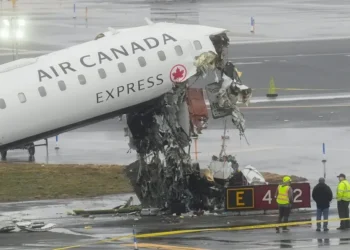
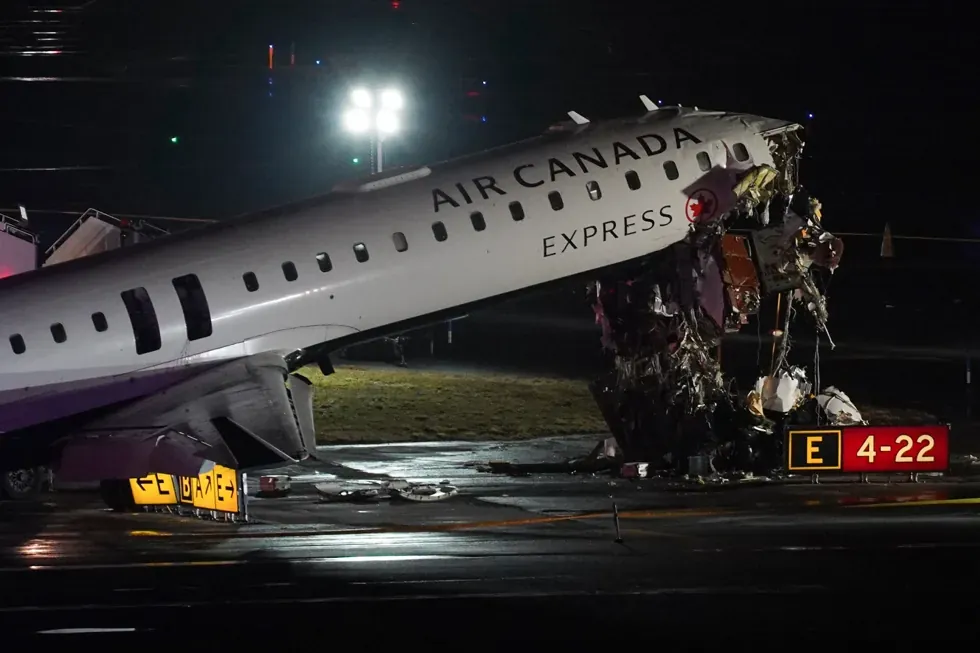
The collision caused severe structural damage to the aircraft’s cockpit, with images showing a crushed nose section and debris scattered across the runway. Emergency evacuation procedures were initiated, with passengers exiting via deployed stairways.
Air Traffic Coordination and Sequence of Events
Preliminary air traffic control audio indicates that a ground vehicle had been cleared to cross part of the runway before controllers attempted to halt its movement. A last-minute instruction to stop the vehicle was issued as the incoming aircraft approached, followed by an aborted landing instruction to another flight.
Officials have not confirmed whether communication breakdowns, visibility conditions, or procedural lapses contributed to the collision. The investigation will assess adherence to runway incursion prevention protocols and coordination between ground operations and air traffic control.
Operational Disruption and Airport Impact
The airport remained closed for several hours following the incident, with operations suspended until at least early afternoon Monday. The closure resulted in widespread flight cancellations and delays, affecting both domestic and regional networks.
According to U.S. aviation data, LaGuardia handled over 16.7 million passenger boardings in 2024, ranking among the busiest airports in the country. Even short-term disruptions at the facility can have cascading effects across airline schedules in the Northeast corridor.
■ Related News


Regulatory Investigation and Industry Implications
The National Transportation Safety Board has taken the lead in investigating the crash, with support from the Federal Aviation Administration. The inquiry will focus on runway access controls, vehicle clearance procedures, and situational awareness systems.
Analysts note that runway incursions involving ground vehicles remain a persistent safety concern, particularly at high-density airports where operational complexity is elevated. The findings could prompt renewed regulatory attention on ground movement surveillance technologies and training standards.
While aviation accidents involving collisions on active runways are rare, the incident underscores the importance of coordination between airside operations and emergency response units in maintaining safety margins at major transport hubs.