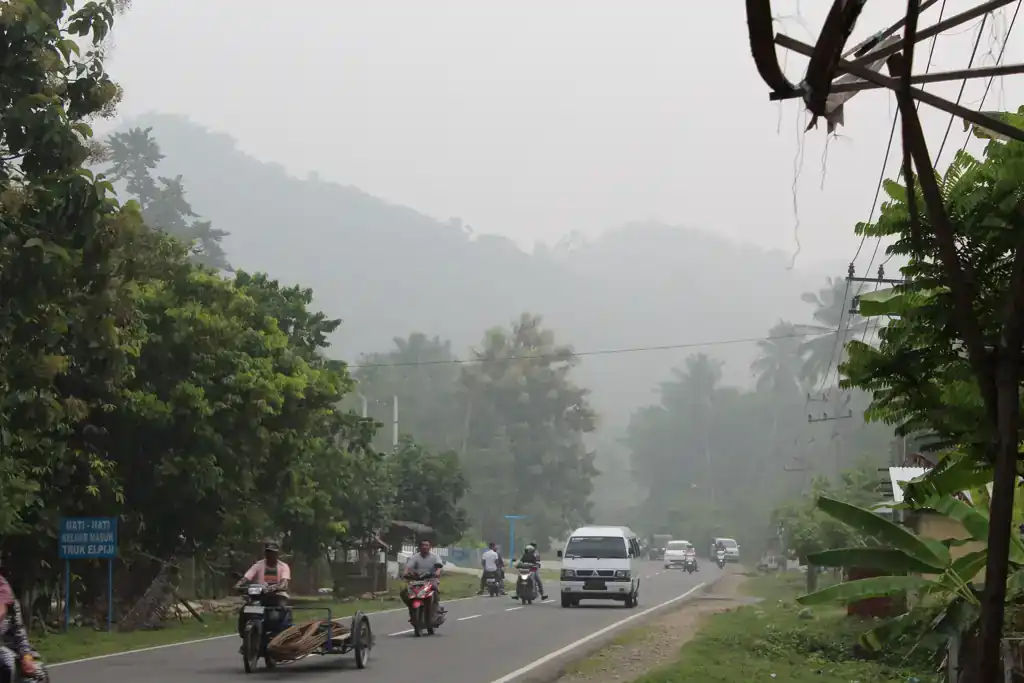
SINGAPORE – Singapore is expanding its crackdown on companies linked to fires in Indonesia, bringing the number targeted under its transboundary haze law to 10. The National Environment Agency (NEA) announced on October 19 that it would issue preventive measure notices to three more Indonesian companies after identifying fires in Kalimantan whose smoke may have reached Singapore.
The three companies are PT Buana Megatama Jaya, PT Mananjung Hayak and PT Baratama Putra Perkasa. The announcement follows notices sent on October 16 to seven other companies over fires in Sumatra.
Singapore says the notices require companies to fight fires on their land, stop burning activities and submit plans to prevent further fires. The government is also considering wider legal, regulatory and economic measures against companies found responsible for transboundary haze.

However, the notices are preventive measures, not final findings of legal liability. The available information does not establish that any of the three companies deliberately started a fire or intentionally caused smoke to reach Singapore.
Three more companies face preventive action
The NEA said there were indications that smoke from fires on concession lands held by the three companies in Kalimantan could have moved towards Singapore.
A concession gives a company rights to use or develop a designated area of land. The status of a concession alone does not prove that its holder started a fire or caused pollution across a national border.
The three new names join seven companies targeted on October 16:
- PT Bumi Andalas Permai
- PT Bumi Mekar Hijau
- PT Paramitra Mulia Langgeng
- PT Sumatera Alam Anugerah
- PT SBA Wood Industries
- PT Hutan Lestari Raya
- PT Bangkanesia
The NEA said it had issued notices to the first seven companies. In its October 19 announcement, the agency said it would send notices to the three additional firms.



Minister for Sustainability and the Environment Grace Fu confirmed the new round of action. She said the government was monitoring the first seven companies but had not heard from them by October 19.
Fu also said Singapore would continue investigating companies suspected of causing transboundary haze. Authorities would share the evidence they had collected with other agencies for their own investigations.
The government has not published a final finding of liability against the three newly named companies in the material reviewed for this article.
What the notices require
Under the notices, the companies must take three main steps.
First, they must deploy firefighting personnel to extinguish fires on land they own or occupy, or prevent those fires from spreading.
Second, they must stop any burning activities on the land. They must also refrain from starting new burning activities.
Third, they must submit action plans to the NEA. These plans must explain how the companies will put out fires and prevent them from recurring.
The public announcements do not specify individual compliance deadlines for the three new companies. The exact terms of each notice, including any company-specific timetable, were not available in the materials reviewed.
The notices also do not, by themselves, mean that a company has been convicted of an offence. They require preventive action while Singapore continues to assess possible responsibility for the haze.
How Singapore traces fires and smoke
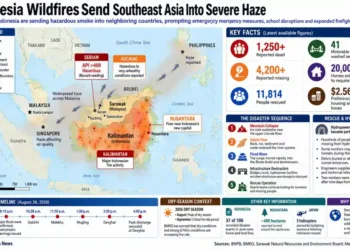
The NEA said it tracks fire hotspots and smoke plumes using satellite imagery, maps and meteorological data. These sources help authorities assess where fires are burning and whether winds and other weather conditions could carry smoke towards Singapore.
The agency used this approach when it announced the first seven notices on October 16. Its October 19 announcement identified three additional concession areas in Kalimantan that may have contributed to the haze affecting Singapore.
The evidence needs to answer two distinct questions: where fires occurred and whether smoke from those fires moved across the border. Establishing that a fire occurred on a company’s concession land does not automatically prove who started it, whether the company failed in its legal duties or whether its conduct caused pollution in Singapore.
Those questions require further evidence. Relevant findings could include the timing and location of fires, the movement of smoke, the company’s control over the affected land and its response to the fires.
The public announcements reviewed for this article did not include the underlying satellite images, individual hotspot records, detailed smoke-plume analyses or company-specific evidence files. As a result, JournosNews could not independently reproduce the NEA’s analysis for each concession.
Singapore considers wider pressure on companies
Singapore’s response may extend beyond the three new notices.
Senior Minister K. Shanmugam said on October 19 that the government was prepared to use legal, regulatory and economic measures against companies found responsible for the haze. He also said Singapore could amend existing laws or introduce new legislation if necessary to secure further cooperation.
Shanmugam said authorities would examine possible links between concession holders, larger corporate groups and people who ultimately control those businesses. He also said Singapore would consider pressure points such as access to financing, investor confidence and eligibility for government grants or incentives.
These are possible avenues for further action, not proof that all such measures have been adopted or applied to the 10 companies.
The government has also said it will continue pursuing the matter after the haze clears. That approach signals that enforcement may continue beyond the immediate fire season.
Singapore’s actions could also involve other regulators. Shanmugam said the Singapore Exchange had asked questions of seven agriculture companies listed in Singapore. Authorities were also examining the environmental and legal risks faced by banks that lend to companies with agricultural operations.
Any action against a wider corporate group would still require evidence linking that group or its relevant entities to conduct covered by the law. A commercial relationship with a concession holder, by itself, does not establish legal responsibility for a fire.
Corporate links draw further scrutiny
The identities of the companies have raised questions about their commercial relationships with larger businesses.
The Straits Times reported on October 19 that PT Buana Megatama Jaya, one of the three newly named firms, supplies Asia Pulp & Paper (APP). It reported that four of the 10 companies targeted by Singapore were identified as APP suppliers.
That reported supply-chain connection does not, on its own, establish that APP caused or directed any fire. Singapore’s broader inquiry, as described by Shanmugam, is intended to examine possible links between concession holders and the groups that buy from or control them.
The same distinction applies to other businesses named in public discussion of the haze. An association with a concession, supplier or corporate group should not be treated as proof of involvement in illegal burning.
The materials reviewed did not establish that any of the three newly named companies had publicly accepted the NEA’s assessment, disputed its evidence or submitted a fire-response plan by October 19. The agency’s statement that it had not heard from the first seven companies applied to those initial recipients, not necessarily to the three additional firms.
JournosNews could not verify direct responses from the three companies or their parent and related corporate groups for this article. It also could not verify a specific response from Indonesian national or provincial authorities to the October 19 notices.
What the law allows
Singapore issued the notices under Section 9 of the Transboundary Haze Pollution Act. The provision allows the Director-General to issue a preventive measures notice when fires outside Singapore may cause or contribute to haze pollution and available information indicates that smoke is likely to move towards Singapore.
The law allows a notice to require an entity to take or avoid specified actions intended to prevent, reduce or control haze pollution. The measures announced by the NEA fall within that preventive purpose.
The Act also provides for penalties following conviction for relevant offences. Under its provisions, an entity found guilty may face a fine of up to S$100,000 for each day, or part of a day, when the relevant haze pollution occurs, subject to an aggregate cap of S$2 million. A further fine of up to S$50,000 for each day of non-compliance with a preventive measures notice may apply where the statutory conditions are met, also subject to the aggregate cap.
These are potential legal consequences, not penalties already imposed on the 10 companies. A notice is not a conviction, and the application of the law depends on the facts and the relevant legal requirements.
Singapore’s enforcement effort also has a history. The Straits Times reported that three of the companies named in the initial group had received similar notices during the 2015 haze crisis and that those cases remained open. The status of those earlier cases should be distinguished from any future proceedings involving the 2026 notices.
Haze continues to affect air quality
The enforcement push comes amid a serious regional haze episode linked to fires in Indonesia.
In its October 19 update, the NEA forecast Singapore’s 24-hour Pollutant Standards Index (PSI) for October 20 at between 90 and 160, a range covering moderate to unhealthy air quality. At 6 p.m. on October 19, the agency reported one-hour PM2.5 readings of 51 to 79 micrograms per cubic metre and a 24-hour PSI range of 88 to 114.
The agency said air quality had improved because winds had turned to blow from the south-southeast and showers had fallen in nearby areas. The forecast nevertheless showed that unhealthy conditions remained possible.
The NEA advised people to use the latest one-hour PM2.5 readings when deciding whether to undertake outdoor activities. It also issued more cautious guidance for older people, pregnant women, children and people with chronic heart or lung conditions.
The figures describe Singapore’s air quality, not the total area burned in Indonesia. The official material reviewed for this article did not provide a current, verified total for the area burned that could be directly linked to the 10 companies.
Haze matters beyond the immediate loss of forest and land. Smoke particles can worsen air pollution and increase health risks, particularly for vulnerable people. Fires can also damage ecosystems and disrupt daily activities in affected communities across Southeast Asia.
Cross-border cooperation remains important
Singapore’s notices target companies whose concession lands may be linked to smoke reaching the city-state. But controlling the fires also depends on effective action in Indonesia, where the fires occur.
Singapore has said it will share evidence with other agencies and has expressed a willingness to cooperate in tackling the fires. Shanmugam said the government hoped for full cooperation from Indonesia in pursuing companies it considers responsible.
The public statements reviewed did not establish a specific new bilateral enforcement agreement tied to the three October 19 notices. Nor did they confirm that Indonesian authorities had completed separate findings against the named firms.
The next steps will depend on the companies’ responses, the evidence gathered by Singapore and any investigations undertaken by other authorities. Officials will also need to show whether the companies have extinguished fires, stopped burning and taken steps to prevent further incidents.
The case has renewed attention on Transboundary Haze Accountability and the challenge of enforcing environmental rules when fires occur beyond a country’s borders.
As of October 19, Singapore had announced preventive notices for three additional companies, following notices sent to seven firms on October 16. The NEA has outlined the actions required and described the evidence sources used to track fires and smoke. Singapore has also signalled that it may consider wider legal, regulatory and economic measures.
However, the public material reviewed did not establish final legal responsibility for the three new companies, confirm their compliance plans or provide a company-by-company account of the evidence. Those questions remain central to determining whether the enforcement effort will lead to lasting changes in fire prevention and corporate accountability.
Reporting Credit: Singapore’s National Environment Agency for its October 16 and October 19 notices and haze updates; the Ministry of Sustainability and the Environment for Minister Grace Fu’s October 19 remarks; Singapore’s Ministry of Home Affairs for Senior Minister K. Shanmugam’s statements on potential enforcement measures; and Singapore Statutes Online for the Transboundary Haze Pollution Act.