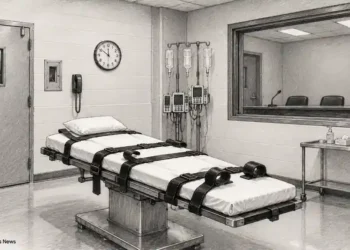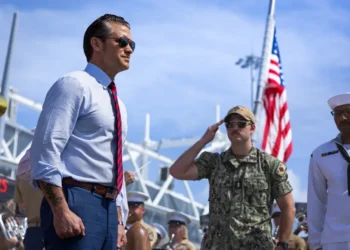
WASHINGTON, United States – US Vice President JD Vance has questioned whether the Pentagon will livestream the scheduled execution of Nidal Malik Hasan, adding uncertainty to a proposal that has drawn criticism from lawmakers and Catholic leaders.
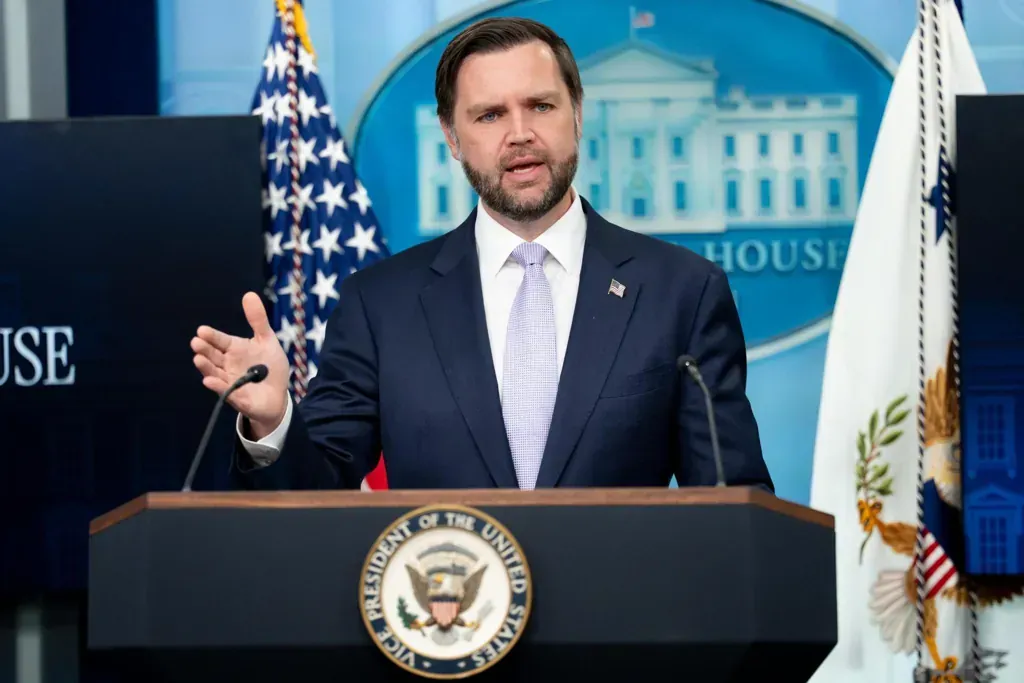
“I don’t know that that’s actually going to happen,” Vance told reporters on October 9. He also said he would not watch if officials broadcast the execution.
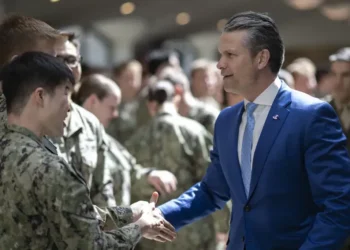
His remarks came one day after Defense Secretary Pete Hegseth announced plans to make Hasan’s December 3 execution by firing squad available for public viewing. The Pentagon had confirmed the livestream plan, but Vance’s comments raised questions about whether it would proceed.

The debate concerns the proposed broadcast, not an announced change to the execution itself. President Donald Trump has supported the death sentence and the use of a firing squad, but his position on the livestream has remained unclear.
Vance questions the broadcast
Vance said the controversy over the execution should not overshadow the crimes Hasan committed. He reminded reporters that Hasan killed 13 people and wounded 32 others in the 2009 shooting at Fort Hood, Texas.
However, the vice president expressed doubt about making the execution available to the public. He said he would not watch if the Pentagon went ahead with the broadcast.
Vance’s comments do not amount to a formal cancellation of the plan. The White House referred questions about the livestream to the Pentagon, leaving the department responsible for clarifying whether the proposal would proceed.
Trump separately reiterated his support for Hasan’s execution by firing squad. However, he did not clearly settle the question of whether the public would be able to watch it live.




Catholic leaders and lawmakers object
The proposed broadcast has drawn criticism from both Republicans and Democrats. Some lawmakers have questioned whether showing an execution to the public would serve a legitimate purpose or turn capital punishment into a spectacle.
Archbishop Paul S. Coakley, president of the US Conference of Catholic Bishops, also called on the government to reconsider the plan. He described the proposed livestream as a promotion of a “culture of death.”
The Catholic Church opposes capital punishment, making the proposal especially contentious among Catholic leaders and officials who support the death penalty in some circumstances.
Critics have also raised concerns about how a public execution could be used by extremist groups for propaganda. Others have questioned whether broadcasting the event would provide meaningful transparency or simply expose viewers to graphic violence.
These objections concern the public broadcast and its possible consequences. They do not change Hasan’s conviction or automatically alter the military’s execution arrangements.
Pentagon faces questions over public access
Hegseth announced the livestream as part of the Pentagon’s plan for Hasan’s execution. However, questions remain about how the broadcast would work, who would have access and whether television networks or online platforms could carry the footage.
Federal Communications Commission Chairman Brendan Carr said the decision over whether to air the execution would be left to the Pentagon. Legal experts have questioned whether the FCC could prohibit broadcasters from showing the event, particularly given the legal issues surrounding government control of broadcast content.
The proposed livestream also raises questions about the limits of public access to military executions. Military authorities have not routinely made such proceedings available to a broad public audience.
The Pentagon has not publicly resolved all the operational and legal questions surrounding the proposed broadcast. Vance’s remarks add political uncertainty, but the department’s formal position will determine whether the plan changes.
Hasan remains scheduled for execution
Hasan, a former Army psychiatrist and US Army major, was convicted by a military court in 2013 for the Fort Hood shooting. The attack killed 13 people and wounded 32 others.
His scheduled December 3 execution would be the first US military execution since 1961. It would also be the first execution by firing squad in the US military since 1945.
The execution remains a separate matter from the proposed livestream. Vance questioned the broadcast but did not announce that the death sentence would be withdrawn or postponed.
For now, the key unanswered question is whether the Pentagon will proceed with its plan to make the execution available for public viewing. Until officials clarify that decision, the livestream should be described as proposed rather than guaranteed.
Reporting Credit: Office of the Vice President of the United States; US Department of Defense; Federal Communications Commission; US Conference of Catholic Bishops.