NASHVILLE, United States – Christa Pike, the Tennessee death-row prisoner who survived a failed lethal-injection execution, was discharged from hospital on October 10 and returned to the Debra K. Johnson Rehabilitation Center, where she had been held for more than 30 years.
Her attorneys confirmed the transfer and said she would continue receiving medical care in prison. They said they would continue monitoring her recovery but did not declare that she had fully recovered.
Pike, 50, survived Tennessee’s attempt to execute her on September 30. The procedure was halted after officials administered two doses of the lethal-injection drug pentobarbital without killing her. She was taken to hospital for emergency treatment.

Her discharge marks a new stage in her recovery, but questions remain about the medical consequences, the circumstances of the failed procedure and whether Tennessee could attempt to execute her again.
Attorneys report progress in recovery
Pike’s legal team previously reported that she had regained consciousness after spending days in critical condition. Her attorneys said she had begun speaking, walking with assistance and eating a regular diet.
They also described continuing health concerns, including cognitive difficulties and injuries affecting her arms and hands. Her condition and recovery details have been reported primarily by her lawyers, rather than through a comprehensive public medical report.
The hospital discharge does not establish that all complications have resolved. Her attorneys said medical care would continue at the rehabilitation center and that they would monitor her progress.
The transfer also returns Pike to the prison where she had been incarcerated before the execution attempt. It does not change her death sentence or determine the state’s next legal steps.
■ Related News



Tennessee court orders evidence preserved
The failed execution has prompted a legal challenge over how the procedure was conducted and what evidence is available to determine why it did not result in Pike’s death.
On October 7, Davidson County Chancery Court Chancellor I’Ashea Myles ordered Tennessee officials to preserve evidence related to the execution. The order followed a request from Pike’s attorneys, who argued that the evidence was needed to investigate the procedure and protect their client’s legal rights.
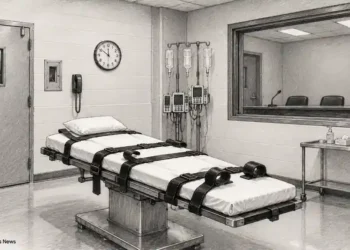
The material includes evidence related to the execution chamber and the administration of the drug. The preservation order is intended to ensure relevant evidence remains available while the legal dispute and investigation continue.
Pike’s lawyers have raised concerns about intravenous access and the handling of the procedure. Those concerns have not been established as the final cause of the failure. Tennessee officials have not released a complete public explanation of what went wrong.
The Tennessee Department of Correction said after the September 30 attempt that officials had followed the state’s established execution protocol, which had been approved by the attorney general’s office. The department said the protocol did not permit additional procedures beyond those carried out that evening.
The state’s account and the questions raised by Pike’s lawyers remain central to the ongoing review.
Governor suspends executions as review begins
Governor Bill Lee ordered an independent review following the failed procedure and suspended scheduled executions in Tennessee for the remainder of 2026. The state’s correctional commissioner, Frank Strada, resigned after the incident.
The review follows another failed execution attempt in Tennessee earlier in the year involving Tony Von Carruthers. In that case, officials were unable to establish a suitable backup intravenous line and halted the procedure.
The two incidents have brought renewed scrutiny to Tennessee’s execution protocols, staff procedures and oversight. However, the specific causes and circumstances of the two cases differ, and the findings of the review into Pike’s execution have not yet been made public.
The suspension of scheduled executions provides time for the state to examine its procedures. It does not, by itself, resolve Pike’s individual legal case or determine whether another execution attempt would be permitted in the future.
Clemency request and death sentence remain unresolved
Pike was sentenced to death for the 1995 murder of her classmate, Colleen Slemmer. The killing occurred when Pike was 18, and she was convicted of first-degree murder in 1996.
Her attorneys have renewed their request for clemency, asking Tennessee to commute her death sentence to life imprisonment without the possibility of parole. They have cited her medical condition and concerns arising from the failed execution.
Clemency would require action by the state’s authorized officials. The request does not automatically change her sentence, and her return to prison does not mean that the death sentence has been overturned.
No new execution date was identified in the official statements reviewed for this article. The state has suspended scheduled executions for the rest of 2026 while the independent review proceeds, and any future attempt involving Pike would raise further medical and legal questions.
Her case may also require courts to address issues arising from the failed procedure, including the evidence available, the state’s obligations and any legal limits on another attempt. Those questions remain unresolved.
Investigation leaves key questions unanswered
Pike’s discharge ends her hospital stay, but it does not close the investigation into the September 30 execution attempt. Her medical recovery, the court-ordered preservation of evidence and the state’s independent review are continuing on separate tracks.
Investigators still need to establish why the procedure failed and whether any protocol or operational problems contributed. The state has said its personnel followed the established procedure, while Pike’s lawyers have questioned aspects of the intravenous access and drug administration.
Until the review produces findings and the legal proceedings advance, the cause of the failure and the possibility of another execution remain unsettled.
Reporting Credit: Christa Pike’s legal team; Tennessee Department of Correction; Office of Tennessee Governor Bill Lee; Davidson County Chancery Court records.