DOROHUSK, Poland – Poland is increasing security around its border with Ukraine as officials warn that Russian attacks on Ukrainian infrastructure could increasingly threaten crossings, transport routes and Polish territory.
The concern has moved beyond general warnings.
Polish authorities have placed six border crossings in heightened readiness, strengthened security infrastructure and increased military activity in the region after a series of Russian attacks on western Ukraine close to the frontier.

Prime Minister Donald Tusk has also warned that Polish and allied intelligence assessments indicate Russia could attempt hybrid attacks using drones or missiles against countries supporting Ukraine, including Poland.
He told parliament on September 17 that such attacks could be presented as accidental incidents intended to complicate any NATO response. Tusk said there was a real risk that drones or other projectiles could enter NATO territory and cause damage.
There is no indication that Poland is currently under a sustained Russian attack. The concern is that repeated incidents near the frontier could create opportunities for disruption without immediately producing the conditions of a conventional military attack.
Border crossings become a security concern
The Polish government has focused particular attention on crossings linking Poland and Ukraine.
Tusk said Russian strikes were increasingly occurring near Ukrainian installations and infrastructure close to the border. He said intelligence assessments suggested Moscow could seek to disrupt roads, railways and border crossings that are important for moving supplies into Ukraine.
■ Related News



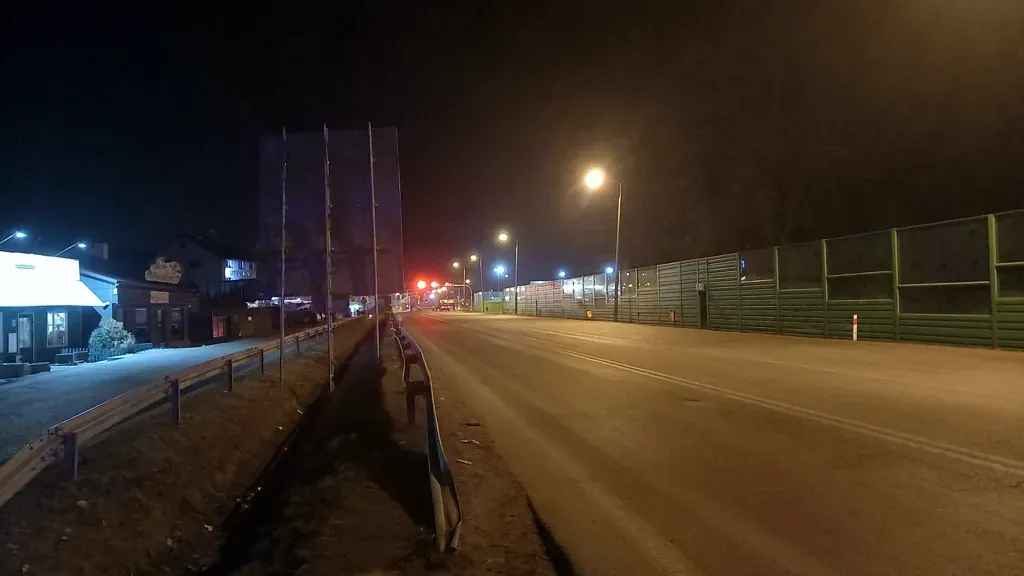
On September 10, Tusk said Polish and Ukrainian services had prevented a direct threat to one Polish-Ukrainian border crossing. He did not publicly provide details of the incident or evidence identifying the planned attack. His remarks followed a Russian drone strike on a Ukrainian-Moldovan border crossing that killed two people.
The Polish government subsequently strengthened protection around its own crossings.
Six crossings in the Lublin and Podkarpackie regions were placed on heightened readiness after Russian attacks on western Ukraine. Authorities introduced procedures limiting the number of people and vehicles simultaneously present at the crossings and deployed additional military personnel.
The locations include Dorohusk, Zosin, Budomierz, Korczowa, Medyka and Krościenko.
Recent attacks have brought the war closer
The security measures followed several incidents in which Russian attacks struck close to Poland’s frontier.
On September 13, Polish authorities reported attacks on a fuel station or nearby area and a railway freight facility about 2 kilometers from the Polish-Ukrainian border. Tusk said the incidents showed an escalation and warned that attacks could increasingly affect Polish territory.
On September 17, Tusk told parliament that armed Russian drones had been used in attacks only a few kilometers from the Polish border.
He also said Russia was deploying jet-powered drones capable of flying faster and at higher altitude than many earlier systems, creating additional challenges for air defenses.
The Polish government has responded by strengthening air-defense arrangements near the crossings and increasing military aviation activity.
Poland has increased air surveillance and readiness
Poland began preventive military aviation operations on September 21 while Russia was conducting further attacks on Ukraine, according to the Polish military.
Ground-based air-defense systems and radar reconnaissance units were also placed on heightened readiness. The Polish military described the operations as measures to secure Polish airspace rather than evidence that Polish territory was under direct attack.
A separate warning was issued to residents in the Lublin region on September 23 during a Russian air attack on Ukraine.
Poland’s Government Centre for Security sent an alert stating that Polish aircraft were operating in national airspace while the Ukrainian attack was underway. The warning was later withdrawn after authorities determined there was no continuing threat to Polish territory.
Such alerts illustrate the difficulty for Polish authorities along the border: Russian attacks in western Ukraine can require an immediate defensive response even when no projectile has entered Polish territory.
Warsaw is preparing for what it calls hybrid attacks
Tusk’s warning is broader than the possibility of an accidental spillover.
He said intelligence assessments indicate Russia could deliberately conduct drone or missile attacks against countries supporting Ukraine while presenting individual incidents as accidents.
According to Tusk, the purpose would be to create uncertainty about whether an incident constitutes an attack requiring a collective NATO response. He said the objective could be to weaken political willingness among alliance members to respond.
These are assessments presented by the Polish government, not independently established evidence that Russia has decided to carry out a specific attack against Poland.
Moscow has not publicly accepted Tusk’s characterization of Russian intentions.
NATO has separately condemned Russian airspace violations and drone-related incidents involving allied territory. In August, the alliance said Russia bore responsibility for recent violations and that NATO was strengthening integrated air and missile defenses along its eastern flank.
The concern extends beyond drones
For Poland, the vulnerability is not limited to aircraft crossing the border.
Road and rail crossings are critical to Ukraine’s wartime logistics and to Poland’s ability to move humanitarian and other assistance into the country.
Tusk told parliament that repeated attacks on Ukrainian railway infrastructure and border facilities could make it more difficult to maintain those supply routes during the coming winter.
Poland has therefore prepared not only defensive forces but also engineering capabilities intended to restore damaged infrastructure.
The government said military engineers were reinforcing positions around border crossings and preparing to support emergency repairs if roads, railway facilities or other infrastructure were damaged. It also said air-defense capabilities had been expanded around six crossings.
The objective is to limit the duration of any disruption rather than assume that every threatened facility can be protected from attack.
A difficult line for NATO
Poland’s warnings also highlight a broader problem for NATO.
A conventional attack on an alliance member would present a different legal and military situation from an isolated drone incident, an airspace violation or sabotage operation whose origin and intent remain disputed.
That distinction is central to the hybrid-threat scenario described by Tusk.
NATO has repeatedly emphasized that its eastern members are protected by the alliance while also strengthening defenses in response to Russian activity. The alliance said in August that recent airspace violations were dangerous and unacceptable and that it remained ready to deter and defend against aggression.
For Poland, the immediate task is therefore to prevent incidents near the border from becoming larger security failures while keeping critical routes to Ukraine operating.
The government is preparing for the possibility that future incidents could involve more advanced drones, missiles or attacks against infrastructure.
But the warnings do not establish that a Russian attack on Polish territory is imminent.
What has changed is the level of preparation.
For communities living near Poland’s Ukrainian border, Russian strikes once heard across the frontier are increasingly accompanied by air-raid alerts, military aircraft and reinforced border posts.
For Warsaw, the challenge is to protect the frontier without allowing individual incidents to produce a wider escalation between Russia and NATO.
Reporting Credit: Polish Prime Minister’s Office — government assessment of potential Russian hybrid attacks and measures around the Ukrainian border; Polish Ministry of National Defence — military readiness and air-defense measures; Polish Government Centre for Security — September air-threat alerts; Polish Ministry of Interior and Administration — heightened readiness at six Ukrainian border crossings; NATO — allied assessment of Russian airspace violations and eastern-flank defense measures.