NEW YORK, United States – U.S. stocks ended higher Friday as a retreat in oil prices eased some pressure on markets after a turbulent week marked by swings in energy prices, rising Treasury yields and uncertainty over the Iran war.
The S&P 500 rose 0.5% to 7,743.41, while the Dow Jones Industrial Average gained 478.64 points, or 0.9%, to 51,828.62. The Nasdaq Composite advanced 0.5% to 27,068.72.
The gains helped the major indexes finish the week on firmer footing. The S&P 500 rose 1.2% for the week, the Nasdaq gained 2.1% and the Dow added 0.3%. The S&P 500 also ended Friday within 0.7% of its record high reached last month.

Oil prices retreat after sharp swings
Crude prices had been a major source of market volatility throughout the week as investors assessed the effect of the Iran war on global energy supplies.
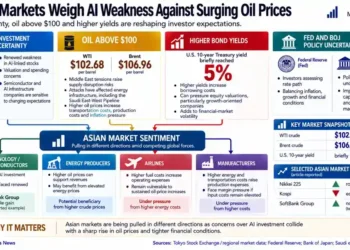
Brent crude futures fell $2.28, or 2.1%, on Friday to settle at $104.32 a barrel. West Texas Intermediate crude fell $2.20, or 2.3%, to $92.41. Brent gained less than 1% for the week, while WTI fell about 8%.
The decline in crude prices provided some relief to investors concerned that prolonged energy disruptions could push inflation higher.
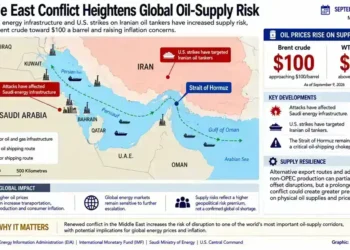
Oil had moved sharply higher on Thursday after Houthi attacks on Saudi Arabia renewed concerns about supply disruptions. Brent settled at $106.60 that day, its highest close since September 15, while WTI settled at $94.61.
Friday’s decline followed reports that U.S. and Iranian negotiators were exploring a phased path toward ending the conflict, including a possible reopening of the Strait of Hormuz. Those discussions remained exploratory rather than a completed agreement.




Technology stocks support the advance
Technology shares helped lead Friday’s gains.
Microsoft rose after announcing new capabilities for its Copilot products, while other AI-related companies also contributed to the technology sector’s strength. Akamai Technologies surged after announcing an $11.6 billion deal involving AI company Anthropic.
The technology-heavy Nasdaq therefore finished the week with a larger gain than the Dow, despite the broader market’s concerns about interest rates and energy costs.
The performance also came amid continued investor attention to valuations and the earnings outlook for large technology companies.
Bond yields remain a market concern
The improvement in stocks did not eliminate pressure from the bond market.
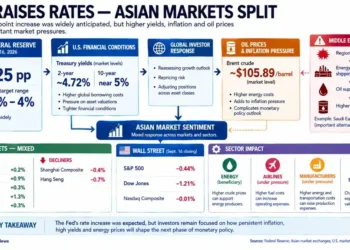
Treasury yields had risen sharply during the week as investors considered the possibility that persistent energy-driven inflation could keep the Federal Reserve’s interest rates higher for longer.
The 10-year Treasury yield briefly approached levels not seen since the global financial crisis, adding another source of pressure to equities.
Higher long-term yields can make bonds more attractive relative to stocks while also increasing financing costs for companies and households.
That dynamic has made oil prices particularly important for markets. Higher crude prices can feed into inflation expectations, potentially putting additional pressure on monetary policy and interest rates.
Markets remain tied to the Iran war
The week’s trading showed how closely financial markets remain linked to developments in the Middle East.
On Thursday, a Houthi missile attack on Saudi Arabia pushed oil prices higher before reports of possible U.S.-Iran discussions helped reverse some of the gains. The S&P 500 ended that session nearly unchanged, while the Dow fell 0.3%.
By Friday, the prospect of a diplomatic path out of the conflict helped push crude prices lower.
The improvement remained tentative. Saudi Arabia continued to face security risks from Houthi attacks, while the Strait of Hormuz remained central to concerns about the movement of oil and other energy shipments.
As a result, investors continued to watch energy prices alongside Treasury yields and developments in the conflict.
A stronger week despite continued uncertainty
Friday’s gains gave Wall Street its first winning week in three, according to the Associated Press. The move higher came despite the sharp swings earlier in the week and continued concerns over borrowing costs.
The weekly performance was led by technology stocks, while the Dow’s smaller gain reflected greater pressure from the broader interest-rate and economic environment.
The market’s response to lower oil prices also demonstrated how quickly sentiment can change when investors see signs that the energy shock may ease.
For now, however, crude remains elevated compared with levels before the conflict, and the market continues to depend heavily on developments affecting Middle Eastern supply.
Friday’s rally therefore closed a volatile week without resolving the forces that drove it: the war’s effect on energy flows, the inflation implications of higher oil prices and the resulting uncertainty over U.S. monetary policy.
Reporting Credit: S&P Dow Jones Indices — S&P 500 index data; Nasdaq — Nasdaq Composite index data; CME/NYMEX — WTI crude-oil futures data; ICE Futures Europe — Brent crude-oil futures data; U.S. Treasury — Treasury market data.