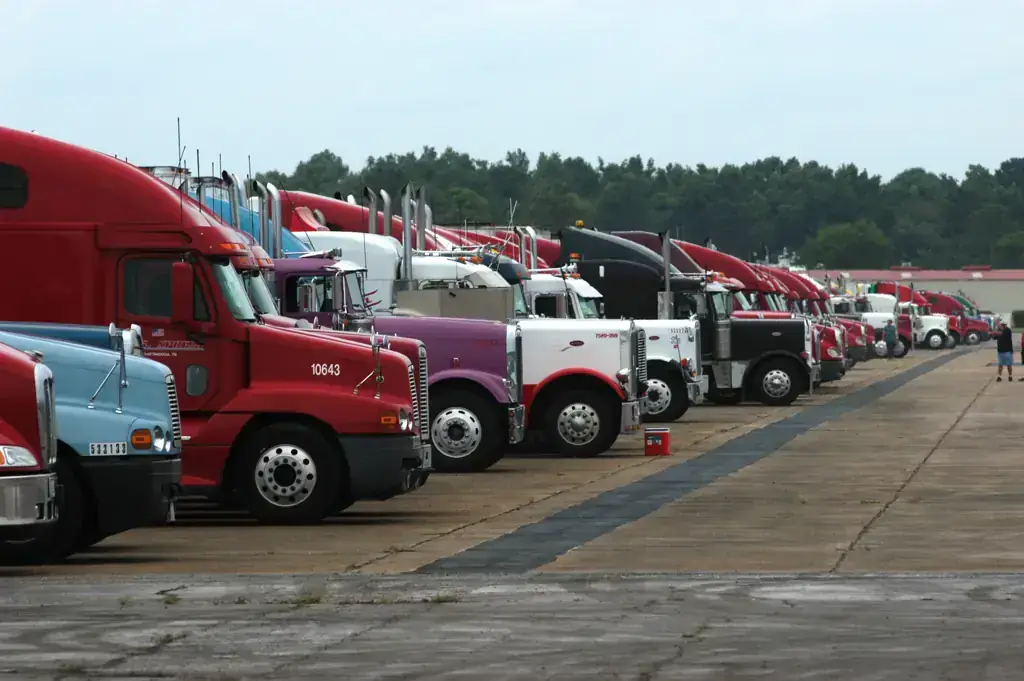
WASHINGTON, United States – Record U.S. diesel prices are becoming a political issue for Republicans ahead of November’s midterm elections, with lawmakers in agricultural states pressing the Trump administration for action as fuel costs raise expenses for farmers, truckers and other businesses.
The national average price for diesel reached $6.5276 a gallon on Sept. 22, according to AAA, the highest recorded average in its current series. The price was $3.6933 a year earlier and has risen by more than 73% since then.
The increase has coincided with a wider disruption in global refined-fuel markets following the war involving Iran and continuing disruption affecting Russian energy supplies.

The political response has been particularly visible among Republicans representing rural and agricultural constituencies. Several have called for measures intended to increase domestic diesel availability, including restricting exports.
The administration, however, has not adopted a blanket export ban.
Diesel has become a broader economic problem
Diesel is used extensively by the trucking, farming, construction, manufacturing and logistics industries.
That gives the price of diesel a wider economic effect than the cost of filling a passenger vehicle. Higher fuel expenses can increase the cost of transporting food and manufactured goods, operating agricultural equipment and moving freight.
The Energy Information Administration said the current increase is being driven by tight global distillate supplies and elevated crude-oil prices.




Global refining activity has been reduced in Russia, China and the Middle East, according to the EIA. Lower international production has raised global distillate prices and increased demand for U.S. diesel exports.
U.S. refineries have responded with high production.
Domestic distillate production averaged about 5.1 million barrels a day from January through August, the highest level for that period since 2019. Refinery utilization reached 97% during the week ending Sept. 11.
But high production has not eliminated the supply pressure.
U.S. distillate inventories were 13% below their five-year seasonal average as of Sept. 11, according to EIA. The agency expects inventories to remain below the five-year range through the end of 2026 and most of 2027.
Rural Republicans demand intervention
The price increase has created an unusual political problem for Republicans representing farming and trucking regions.
Iowa Sen. Chuck Grassley called on President Donald Trump to suspend diesel exports, arguing that domestic fuel supplies should receive priority.
Republican Reps. Ashley Hinson and Mariannette Miller-Meeks of Iowa also called for government action to reduce fuel costs. Their proposals included restricting exports and providing assistance to farmers and truckers.
Other Republicans have similarly focused on the cost of diesel in agricultural states.
The issue is particularly significant for farmers because diesel is used to operate tractors, combines and other heavy equipment. Harvest-season demand can also increase at the same time that refineries traditionally enter seasonal maintenance periods.
EIA expects that combination to contribute to continued price pressure during the fall and winter.
The administration faces a trade-off over exports
The debate over diesel exports reflects a basic problem in the U.S. fuel market.
American refiners produce more distillate than the domestic market consumes at some times of the year, allowing the United States to export substantial quantities.
Those exports also connect U.S. refiners to international prices.
EIA said U.S. distillate net exports have remained near or above the previous five-year high during every month of 2026 since February. Rising exports have contributed to declining domestic inventories.
Republicans seeking an export restriction argue that retaining more fuel inside the United States could increase domestic supply and reduce costs for American consumers.
But the policy has potential international and domestic consequences.
The Congressional Research Service has previously noted that restricting refined-petroleum exports could tighten international markets and potentially increase prices for foreign supplies imported into the United States. The United States normally exports more distillate than it imports.
The Trump administration has therefore faced pressure from lawmakers seeking immediate domestic relief while also considering the broader effects of restricting exports.
A blanket export ban remains off the table
Trump has indicated support for efforts to restrict diesel exports, but Energy Secretary Chris Wright said Wednesday that the administration would not impose a blanket ban.
The administration’s position leaves open the possibility of more targeted measures while rejecting a complete prohibition on exports.
The distinction matters because the United States is itself part of the global diesel supply system.
A broad restriction could increase domestic availability under some market conditions, but it could also reduce supplies available to international buyers and change incentives for refiners.
The effectiveness of an export restriction would also depend on refinery capacity, crude availability, inventories and the duration of the Middle East disruption.
Iran war remains central to the price shock
The current diesel surge is not caused by a single factor.
The EIA identifies global distillate production, crude prices, refining margins, inventories and international trade flows as major components of the market.
The war involving Iran has nevertheless disrupted one of the world’s most important oil-producing regions and affected transportation through the Middle East.
EIA’s September outlook assumes that normal tanker traffic through the Strait of Hormuz will resume in the near term. Under that assumption, additional Middle Eastern distillate exports and increased crude availability for Asian refineries would gradually reduce global refining pressure. If those flows remain constrained beyond 2026, the agency says global distillate crack spreads could be higher than its current forecast.
The longer the disruption lasts, the harder it becomes for U.S. refiners and other producers to compensate for the missing supply.
Republicans are now confronting the issue on the campaign trail
The fuel crisis arrives as candidates prepare for the November midterm elections.
Republicans in competitive races have increasingly spoken about the war’s economic consequences, with some calling for an end to the conflict and others demanding domestic measures to reduce fuel costs.
The issue reaches beyond gasoline.
Diesel is particularly important in rural areas because of its role in agriculture and freight transportation. A sustained increase can therefore affect both the operating costs of businesses and the prices consumers eventually pay for transported goods.
Recent polling has also found that fuel affordability is a concern among Republican voters. An earlier AP-NORC survey found that about six in 10 Republicans were at least somewhat concerned about their ability to afford gasoline in the following months as the Iran war pushed energy prices higher.
That polling predates the latest diesel record and should not be interpreted as a direct measure of current voter attitudes toward diesel or the midterms.
The political response is becoming more visible
The difference between the administration’s position and the demands of some Republican lawmakers illustrates the difficulty of managing the price shock.
Republican candidates and lawmakers are not taking a single position.
Some have called for ending the Iran war. Others are seeking export restrictions or financial assistance for affected industries. The administration has pursued additional measures while resisting a blanket diesel-export ban.
The policy debate is therefore shifting from whether fuel prices are a problem to which costs should be absorbed by which part of the economy.
Restricting exports could potentially increase domestic availability, but it could also affect international supplies.
Subsidies or direct assistance could reduce costs for farmers and truckers but would shift some of the burden to taxpayers.
Increasing domestic production could add supply over time, but it cannot immediately replace barrels disrupted by international conflicts or refinery constraints.
The pressure could persist into 2027
The immediate political question is whether diesel prices will ease before voters go to the polls.
The market outlook provides no simple answer.
EIA expects global distillate production to remain below last year’s levels in coming months and U.S. inventories to remain unusually low. The agency expects prices to remain elevated, particularly during the period of seasonal refinery maintenance and higher agricultural demand.
The agency’s forecast also depends on an assumption that Middle Eastern tanker traffic normalizes.
A prolonged disruption would create additional pressure.
The political consequences will depend not only on the price at the pump but also on how voters experience the broader effects — from farm operating costs to freight rates and food prices.
For Republicans, the diesel surge has therefore become a concrete economic issue during an election year in which the cost of living is already central to the political debate.
The November elections will not be determined by diesel prices alone. But the record cost of the fuel is forcing Republican lawmakers and candidates to address a problem that is particularly visible in some of the constituencies most dependent on it.
Reporting Credit: U.S. Energy Information Administration — diesel pricing, distillate production, inventories, exports and market outlook; U.S. Department of Energy — administration policy and fuel-market actions; AAA — current U.S. retail diesel price data; U.S. Congress/ Congressional Research Service — analysis of diesel exports and potential domestic and international effects.