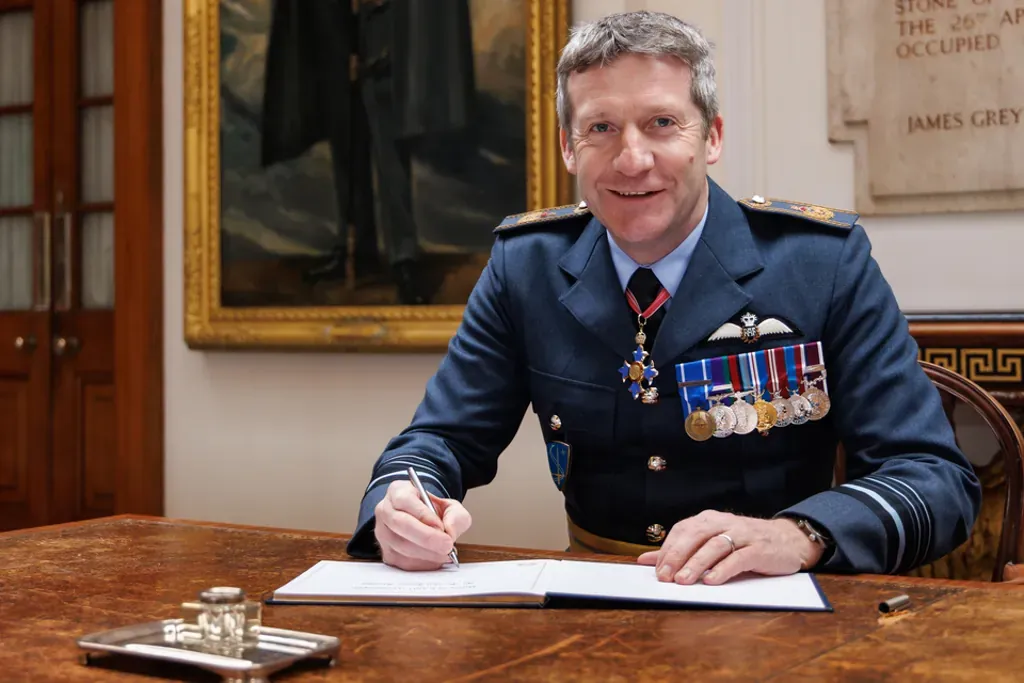
TALLINN, Estonia – NATO’s deputy commander in Europe has warned that Russian President Vladimir Putin is becoming increasingly willing to accept risk as the war in Ukraine continues, raising concerns about Moscow’s expanding use of actions that could test the alliance without immediately triggering a direct military confrontation.
Air Chief Marshal Sir John Stringer, NATO’s deputy supreme allied commander for Europe, made the assessment Tuesday at a security conference in Tallinn. He said NATO members needed to recognize what he described as a highly tense security environment and respond carefully to Russian actions.
Stringer said Putin was becoming “increasingly cavalier, dangerous and risk accepting” and argued that Russia was looking for ways to create divisions among NATO members.

He also warned that Moscow could seek to provoke the alliance into an excessive response, making the management of individual incidents increasingly important as Russian activity occurs closer to NATO territory.
Concern centers on actions below the threshold of open war
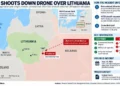
The warning comes as European governments report a series of incidents involving drones, sabotage, espionage and other forms of covert activity.
Stringer said the distinction between an accidental and deliberate incident can be difficult to establish, particularly when Russian electronic warfare or other countermeasures cause drones to deviate from their intended paths.
He said Russia could escalate such activity, but stressed that this did not mean Moscow had decided to do so.
That distinction is significant for NATO.
■ Related News



An incident involving a Russian drone or other military asset entering Allied territory does not automatically mean Russia has begun a direct military campaign against NATO. But repeated incidents can increase the risk of miscalculation, particularly when the circumstances surrounding an incursion are unclear.
NATO has already described recent Russian airspace violations as dangerous and capable of creating such risks.
European officials are watching for further escalation
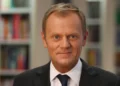
Stringer’s comments came after Polish Prime Minister Donald Tusk warned last week that Russia could potentially use drones or missiles against NATO countries while presenting the attacks as accidental.
French President Emmanuel Macron subsequently asked his government to prepare measures to protect critical infrastructure against possible drone and cyberattacks.
The warnings followed a series of incidents across Europe.
The United Kingdom said this month that Germany had determined Russia was responsible for a drone attack at Leipzig/Halle Airport in August. The British government said the incident formed part of a wider pattern involving drones, arson and sabotage across Europe.
Not every incident has been publicly attributed to Russia.
Stringer and other European officials have therefore emphasized the difficulty of distinguishing deliberate Russian activity from incidents caused by electronic interference, battlefield spillover or other circumstances.
NATO says Russia is already testing its defenses
NATO has strengthened its eastern-flank posture in response to recent Russian airspace violations.
The alliance launched Eastern Sentry to increase surveillance and deterrence along its eastern flank, adding capabilities including fighter aircraft, air-defense systems, surveillance aircraft and other military assets.
NATO Secretary General Mark Rutte said earlier this month that Russia was becoming increasingly reckless as its war in Ukraine continued, including through attacks near NATO territory.
Rutte said the alliance had response options available for hybrid activity and would continue supporting Ukraine while maintaining its collective-defense commitments.
The alliance’s response has therefore combined military vigilance with efforts to avoid allowing individual incidents to escalate into a direct NATO-Russia confrontation.
Some officials see a serious threat but not an imminent war with NATO
Stringer’s assessment does not mean NATO believes Russia has decided to launch a conventional attack on the alliance.
A British defense official, speaking anonymously because of the sensitivity of the assessment, told the Associated Press that the U.K. does not believe Putin is seeking a direct confrontation with NATO. Officials in Estonia, Latvia and Lithuania have likewise urged caution about interpreting Russia’s activities as evidence of an imminent conventional attack.
Estonian Prime Minister Kristen Michal said a conventional Russian attack on Europe was currently improbable, citing the potential NATO response and the continued commitment of Russian forces to the war in Ukraine.
At the same time, Michal said the level of Russian covert activity was likely to remain high while Moscow maintained its current military objectives.
The differing assessments illustrate the central problem for NATO: governments can agree that Russian activity presents a security concern without agreeing that Moscow is preparing for an immediate conventional attack on the alliance.
The risk of miscalculation is becoming a central concern
For NATO commanders, the danger is not limited to deliberate escalation.
An incident can become more dangerous when neither side is certain about the other’s intentions.
A drone crossing an Allied border may have been deliberately sent there, may have been diverted by electronic warfare, or may have resulted from navigational failure. The response can nevertheless create a new military interaction.
NATO’s response to previous airspace violations has emphasized that such incidents risk miscalculation and endanger lives. The alliance has also said Russia bears responsibility for actions that violate Allied airspace.
Stringer’s warning adds another dimension: Russia may increasingly be prepared to accept that risk.
That does not establish that Moscow intends to trigger a direct confrontation. It indicates, instead, that NATO commanders are assessing a Russian leadership that may be more willing to operate close to the boundaries of what the alliance considers acceptable.
Ukraine remains at the center of the confrontation
Stringer linked Russia’s broader activity to the war in Ukraine and Moscow’s effort to weaken Western support for Kyiv.
He said Putin was looking at multiple ways to create divisions among NATO members, particularly as the alliance continues supporting Ukraine.
The assessment comes as Russia continues its war against Ukraine and European countries increase efforts to protect their own infrastructure from potential spillover.
NATO maintains that support for Ukraine is directly connected to Allied security and that its collective-defense commitment remains in place.
For Russia, meanwhile, European support for Ukraine remains a central obstacle to achieving its objectives in the war.
The resulting confrontation increasingly extends beyond the battlefield itself.
A more complicated security environment
The warning from Stringer reflects a security environment in which the boundary between conventional and unconventional conflict is becoming harder to define.
Drone incursions, sabotage, cyber operations, espionage and electronic warfare can create pressure without producing the kind of unmistakable attack that would immediately force a conventional military response.
That creates room for governments to respond incrementally while also creating uncertainty about where the next escalation might occur.
For NATO, the immediate challenge is therefore not simply detecting Russian activity.
It is determining the appropriate response without either underestimating a genuine escalation or turning an ambiguous incident into a larger confrontation.
Stringer’s assessment that Putin is becoming more willing to accept risk underscores that dilemma.
But his warning also came with an important qualification: the possibility that Russia could escalate does not mean Moscow has decided to do so.
For NATO, that distinction remains central as the alliance monitors Russia’s actions along Europe’s eastern flank.
Reporting Credit: NATO — official statements on Russian airspace violations, Eastern Sentry and the Alliance’s eastern-flank posture; United Kingdom Foreign, Commonwealth & Development Office — September 2026 statement concerning Russian activity and the Leipzig/Halle Airport incident; NATO Deputy Supreme Allied Commander Europe Air Chief Marshal Sir John Stringer — September 22, 2026 assessment of Russian risk-taking and NATO security conditions.