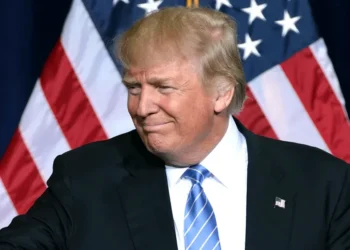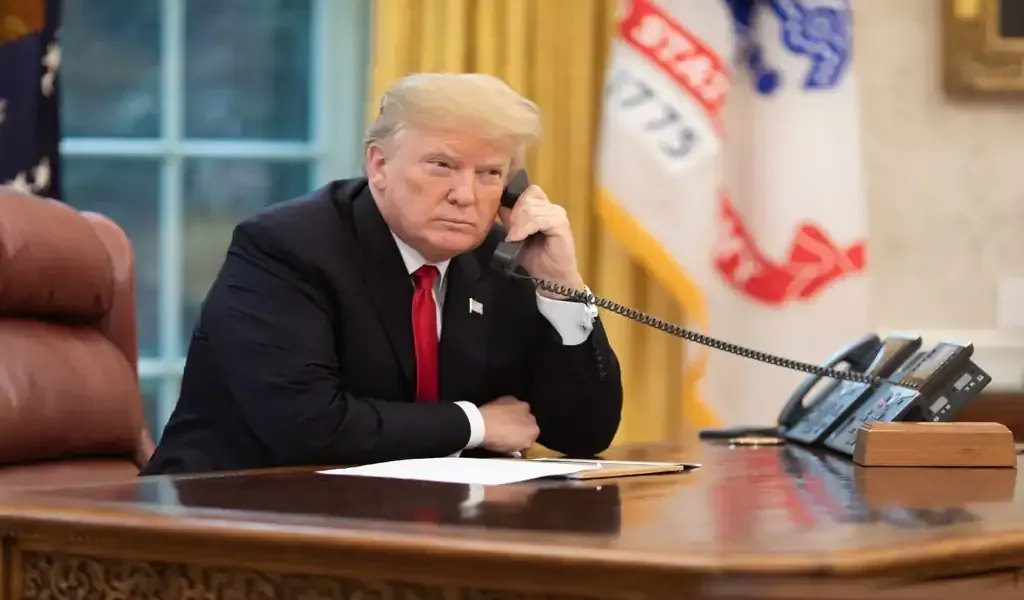
DALLAS, UNITED STATES — President Donald Trump has promised to give $5,000 to every adult U.S. citizen if Republicans retain control of both the House of Representatives and Senate in November’s midterm elections, introducing an extraordinary cash-payment proposal without providing details on how it would be funded or authorized.
Trump announced what he called the “Trump dividend” during a speech Wednesday at the Republican Party’s first midterm convention in Dallas.
“If the Republicans win, you win with us and you get $5,000,” Trump said, describing the payment as a dividend tied to what he characterized as the country’s economic success. He added that the money would have to be spent in the United States.

The proposal would apply only if Republicans maintain control of both chambers of Congress after the Nov. 3 election, according to Trump’s remarks.
Cost could exceed $1 trillion
The scale of the proposal would be substantial.
With roughly 270 million U.S. adults, a $5,000 payment to every adult would cost about $1.35 trillion, according to an estimate cited by Reuters.
The figure could be lower if the administration ultimately imposed an income limit. Vice President JD Vance indicated after Trump’s speech that wealthy Americans might be excluded, although no eligibility threshold has been established. An estimate cited by Business Insider put the cost at about $1.15 trillion if households earning more than $400,000 were excluded.
Trump did not explain in his speech where the money would come from.
■ Related News



He has previously floated the idea of using tariff revenue to finance payments to Americans. But the proposed $5,000 dividend would be far larger than the revenue available from tariffs, according to fiscal analysts cited by The Associated Press.
Congress would face a central role
The proposal also raises questions about presidential authority.
Trump does not have unilateral authority to send more than $1 trillion in new federal payments to Americans without congressional authorization, according to Marc Goldwein, senior policy director at the Committee for a Responsible Federal Budget, who was cited by AP.
That means the proposal would require Congress to approve the necessary spending or establish another legal mechanism for distributing the money.
No legislation implementing the proposed dividend had been announced when Trump made the pledge.
The White House also had not provided details on eligibility, timing or the mechanism for distributing the payments.
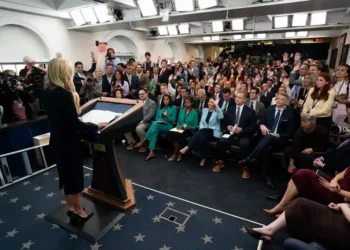
The administration’s broader economic messaging has emphasized tax cuts, domestic energy production and increased economic activity. A White House statement released Wednesday highlighted the administration’s claims of economic gains and said Trump had cut taxes for working families and expanded U.S. energy production.
Those claims, however, do not establish a funding source for the proposed payments.
Proposal puts economy at center of midterms
Trump’s pledge came as Republicans prepare for a competitive midterm election in which control of both chambers of Congress is at stake.
The president used his convention speech to portray the election as a referendum on his administration and urged Republican voters to treat him as if he were personally on the ballot. Republicans are seeking to preserve their congressional majorities while facing political pressure over the cost of living and other issues.
The proposed dividend gives Trump’s campaign message a direct financial component, but it also creates immediate questions over whether Congress would support a program costing more than $1 trillion.
Trump has previously proposed direct payments funded by tariff revenue. His earlier proposal for $2,000 “tariff dividend” payments did not become a federal payment program.
The new proposal is therefore still a political pledge rather than an enacted federal benefit.
Its implementation would depend on the outcome of the November elections, congressional action and the administration’s ability to establish a legally authorized funding mechanism.
Reporting Credit: The White House — official statements and administration positions on the U.S. economy and President Trump’s policy agenda.