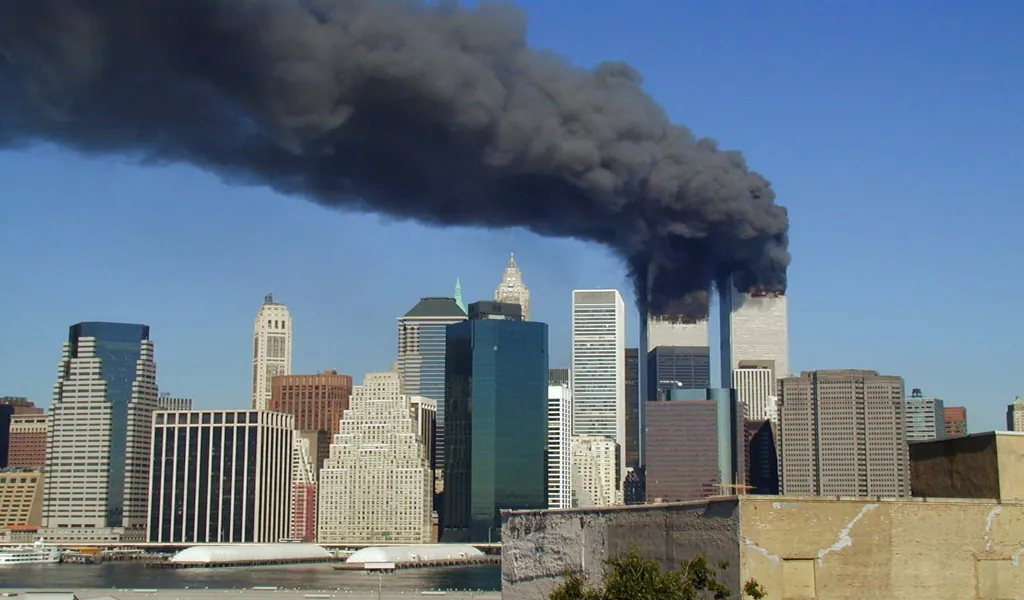
The attacks of September 11, 2001, lasted less than two hours. Their consequences have continued for a quarter century, transforming how America understands security, how governments fight terrorism, how societies respond to fear and how the world defines threats in an interconnected age.
NEW YORK, UNITED STATES — At 8:46 a.m. on September 11, 2001, the United States entered a different era.
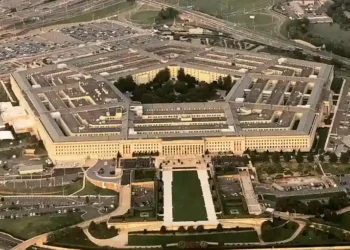
American Airlines Flight 11 struck the North Tower of the World Trade Center. Seventeen minutes later, United Airlines Flight 175 hit the South Tower. American Airlines Flight 77 struck the Pentagon at 9:37 a.m. At 10:03 a.m., United Airlines Flight 93 crashed in Pennsylvania after passengers attempted to retake control of the aircraft.

Nearly 3,000 people were killed.
The physical destruction was concentrated in New York, Washington and Pennsylvania. The political consequences were not. Within months, the United States had created new institutions, expanded intelligence and law-enforcement powers, transformed aviation security and begun a war in Afghanistan. Within two years, it had invaded Iraq.
Twenty-five years later, September 11 is no longer only an event remembered through images of burning towers. It is also a framework through which an entire generation understands national security, terrorism, war, immigration, surveillance, public health and America’s role in the world.
The 9/11 Commission later concluded that the United States had been unprepared for the attack and identified failures involving imagination, policy, capabilities and management. It also documented failures in intelligence sharing, aviation security, emergency communications and the coordination of agencies responsible for defending the country.
The central question at the 25th anniversary is therefore larger than what happened that morning.




It is what happened afterward.
A country that discovered its vulnerability
Before September 11, the United States had experienced terrorist attacks, including the 1993 bombing of the World Trade Center, the 1998 U.S. embassy bombings in Kenya and Tanzania, and the 2000 attack on the USS Cole.
But the possibility that commercial passenger aircraft could be deliberately transformed into weapons against major American landmarks had not been adequately incorporated into national defense planning.
The 9/11 Commission found that warnings about al-Qaida and its intentions existed before the attacks but were not transformed into effective action. Intelligence agencies possessed pieces of information without developing a sufficiently comprehensive understanding of the threat. Domestic and foreign intelligence systems were poorly integrated, while aviation security remained oriented toward a different conception of hijacking.
The problem was therefore not simply that the United States lacked information.
It was that institutions struggled to recognize what the information meant.
The commission described this as a failure of imagination as much as a failure of intelligence. Government agencies had developed systems designed around traditional threats but were less prepared for a small non-state organization using civilian infrastructure against the homeland.
That lesson became one of the foundations of the post-9/11 security state.
The United States would spend the following decades trying to make sure that a similar intelligence failure could not happen again.
The birth of the homeland-security state
One of the most visible institutional changes was the creation of the Department of Homeland Security.
The Homeland Security Act of 2002 brought 22 agencies and offices together under a new Cabinet-level department. DHS began operations in 2003 with a mission centered on protecting the United States from terrorism and other threats.
The transformation extended beyond DHS.
Federal intelligence and law-enforcement agencies changed how they shared information. Counterterrorism became a central organizing principle of national security policy. Airports, ports, borders, financial institutions and critical infrastructure were increasingly viewed as components of a national security system rather than separate civilian systems.
The Transportation Security Administration became another permanent feature of everyday American life.
The Aviation and Transportation Security Act, enacted in November 2001, formally established the TSA. Federal officers subsequently took responsibility for security screening at airports across the country.
The consequences are now mundane enough to be almost invisible.
Passengers remove shoes. Bags are screened. Cockpit doors are reinforced. Access to secure airport areas is tightly controlled. Security procedures that would have seemed extraordinary before 2001 became ordinary.
The greatest measure of their transformation is precisely how normal they now appear.
Surveillance and the new balance between security and liberty
September 11 also changed the legal architecture of American counterterrorism.
Congress passed the USA PATRIOT Act in 2001, expanding the government’s investigative authorities and facilitating information sharing between intelligence and law-enforcement agencies. The Justice Department said the legislation helped eliminate barriers that had previously hindered cooperation between investigators and intelligence personnel.
Supporters argued that the expanded powers were necessary to identify and disrupt terrorist plots.
Critics warned that extraordinary authorities could become permanent and could weaken privacy and civil liberties.
That tension never disappeared.
The post-9/11 era established a recurring question for democratic governments: how much freedom should societies surrender in exchange for greater security, and who decides when the emergency has ended?
Twenty-five years later, the question remains unresolved.
The technologies have changed dramatically. Digital communications, artificial intelligence, facial recognition, mass data collection and encrypted messaging have expanded both the ability of governments to identify threats and the scale of information they can potentially access.
The underlying dilemma is much older.
September 11 simply made it urgent.
The wars that followed
The most consequential response to 9/11 was military.
On October 7, 2001, the United States began airstrikes against al-Qaida and Taliban targets in Afghanistan after the Taliban refused to hand over Osama bin Laden and close terrorist training camps. NATO had already invoked Article 5 of the North Atlantic Treaty for the first and only time in its history in response to the attacks.
The Afghanistan war became America’s longest major war.
But the post-9/11 military campaign did not remain confined to Afghanistan.
In 2003, the United States invaded Iraq, linking the war to broader claims about weapons of mass destruction and the post-9/11 security environment. Iraq was not responsible for the September 11 attacks, and the subsequent war became one of the most consequential and contested decisions of the era.
The broader military campaign eventually stretched across multiple countries and theaters.
Brown University’s Costs of War Project estimates that U.S. post-9/11 wars and related government programs have cost more than $8 trillion through 2021, while estimating hundreds of thousands of direct war deaths and millions of indirect deaths across post-9/11 conflict zones. The project emphasizes that mortality estimates remain uncertain and that the human consequences extend beyond battlefield deaths.
The financial consequences have also continued long after major combat operations ended.
Brown estimates that future and accumulated costs include veterans’ medical care, benefits and interest on borrowing used to finance the wars. Its current analysis estimates that post-9/11 veterans’ care could ultimately cost between $2.2 trillion and $2.5 trillion through 2050.
The war in Afghanistan formally ended for the United States in 2021.
The consequences did not.
A new era for NATO and America’s allies
September 11 also changed the strategic purpose of America’s alliances.
NATO’s decision to invoke Article 5 was historically significant because the alliance had been created principally around collective defense against state-based threats. After 9/11, a terrorist attack by a non-state organization triggered the alliance’s collective-defense mechanism for the first time.
NATO subsequently expanded intelligence cooperation, counterterrorism capabilities and operations beyond its traditional Euro-Atlantic area.
The attacks therefore helped accelerate a broader transformation already underway after the Cold War: terrorism became a central international security concern, and threats originating far beyond national borders were increasingly understood as threats to domestic populations.
The distinction between foreign and domestic security became harder to maintain.
A conflict in Afghanistan could affect European cities. Intelligence gathered in one country could become relevant to an investigation in another. Financial transactions moving through international systems could become part of counterterrorism investigations thousands of miles from the battlefield.
September 11 demonstrated the strategic consequences of globalization from the perspective of national security.
The world responded collectively — and then diverged
Immediately after the attacks, international condemnation was unusually broad.
The United Nations Security Council unanimously adopted Resolution 1368 on September 12, 2001, condemning the attacks and calling on states to cooperate in bringing those responsible to justice and preventing further terrorism.
For a time, the United States enjoyed extraordinary international sympathy.
But the unity surrounding the attacks did not last indefinitely.
The invasion of Iraq in 2003 divided traditional American allies and generated widespread international opposition. Questions over the legal basis for the war, intelligence concerning weapons of mass destruction, civilian casualties, detention practices and the treatment of prisoners damaged America’s international standing.
The post-9/11 period therefore contained two very different forms of American power.
The first was the ability to mobilize allies after an attack.
The second was the ability — and willingness — to act unilaterally when Washington believed its security required it.
The tension between those approaches became one of the defining foreign-policy debates of the following decades.
The people who were targeted by association
The consequences of 9/11 were not experienced equally.
Muslim Americans, Arab Americans and people perceived to be Middle Eastern or Muslim faced suspicion, discrimination and, in some cases, violence in the years following the attacks.
Pew Research Center’s 2026 review of 25 years of polling found that the FBI recorded 481 anti-Muslim hate crimes in 2001, compared with 28 in 2000. Pew also found that attitudes toward Islam remain significantly shaped by perceptions formed after 9/11.
The evolution is particularly striking.
In the months immediately following the attacks, many Americans responded to calls for tolerance. A December 2001 Pew survey found that favorable views of Muslim Americans had risen from 45% in March to 59%.
But that initial solidarity did not prevent a longer-term backlash.
By 2026, Pew found that 51% of Americans surveyed said Islam was more likely than other religions to encourage violence, compared with 25% who held that view in March 2002. The center also found that 59% of Muslim Americans surveyed said there was a lot of discrimination against Muslims.
The history illustrates one of the most complicated legacies of September 11.
The attacks were committed by al-Qaida.
Yet millions of people who had no connection to the organization subsequently found themselves judged through the identity of the perpetrators.
At the same time, Muslim Americans became increasingly integrated into American political and civic life. Pew’s 2026 research notes that the number of Muslim members of Congress has risen from none in 2001 to several today, while Muslim political representation has expanded at the local and national levels.
The legacy of 9/11 therefore includes both exclusion and adaptation.
The war came home in another way: health
The consequences of the attacks did not end when the fires were extinguished.
Hundreds of thousands of people were exposed to dust, debris and other hazards in New York, at the Pentagon and near the Pennsylvania crash site. The Centers for Disease Control and Prevention says an estimated 400,000 people were exposed to toxic contaminants, physical injury risks and physically or emotionally stressful conditions in the aftermath.
Responders and survivors developed respiratory illnesses, cancers and other physical and mental health conditions.
Recognition of these effects took years.
Congress eventually established the World Trade Center Health Program through the James Zadroga 9/11 Health and Compensation Act. The program now provides medical monitoring and treatment for certified 9/11-related conditions and is authorized through 2090.
The program now serves nearly 150,000 members across the United States and its territories.
That number is an important reminder that the 9/11 population did not disappear with the recovery operation.
People who were children in Lower Manhattan, firefighters who spent months at Ground Zero, construction workers who cleared debris, police officers who searched for victims and residents who breathed the air around the disaster continued to live with consequences that emerged years later.
The disaster became a public-health event as well as a terrorist attack.
The memory of 9/11 has changed with the generations
Perhaps the most profound change is demographic.
A growing proportion of Americans have no personal memory of September 11.
The National September 11 Memorial & Museum estimates that 100 million Americans are now too young to remember the attacks directly.
For people who experienced the day, memory is often sensory: the sound of news coverage, the sight of smoke over Manhattan, grounded aircraft, empty streets, phone calls to relatives and the sudden realization that the country was under attack.
For younger Americans, 9/11 increasingly belongs to history.
That creates a challenge for remembrance.
The meaning of September 11 cannot depend entirely on reproducing the shock of the original images. A historical understanding must explain what happened before the attacks, what failed that morning, what decisions followed and how those decisions affected people who were not yet born.
Otherwise, remembrance risks becoming ritual without understanding.
The 25th anniversary is therefore also a generational turning point.
The United States is moving from a society that remembers 9/11 to one that must teach it.
New York changed — but did not remain frozen in 2001
Lower Manhattan became the physical center of the tragedy.
The World Trade Center site eventually became a memorial, museum and rebuilt urban district. One World Trade Center restored a major presence to the skyline, while the memorial pools established a permanent place for the names of those killed.
But New York’s recovery also demonstrated something that was easy to miss in the years immediately after the attacks.
The city did not remain defined by destruction.
It rebuilt.
The memorial became a place of remembrance rather than permanent mourning alone. Lower Manhattan developed into a major residential, commercial and cultural district. The skyline changed, but the city continued to evolve.
The physical scars became less dominant.
The psychological and political ones proved harder to erase.
The meaning of security changed
Before 9/11, security was often treated as a specialized government responsibility.
After 9/11, security became part of ordinary life.
Airport screening is the obvious example, but the transformation is broader.
Buildings changed evacuation procedures. Businesses reconsidered continuity planning. Governments expanded emergency-management systems. Cities conducted terrorism exercises. Infrastructure operators assessed vulnerabilities. Intelligence agencies built new systems for sharing information.
The idea of resilience also changed.
Security was no longer simply about preventing an attack. It increasingly meant preparing for an attack, responding to it and recovering afterward.
The 9/11 Commission itself emphasized the need for better information sharing, stronger institutional coordination and a more integrated approach to homeland protection.
Some of these reforms worked.
The United States has not experienced another attack on the scale of September 11 on its territory.
But the absence of another 9/11-sized attack cannot by itself answer whether every post-9/11 policy was necessary, proportionate or successful.
That judgment requires weighing lives protected against freedoms restricted, threats disrupted against resources spent, and security gains against the consequences of prolonged war.
The threat itself evolved
The terrorist threat that shaped the early 2000s did not remain static.
Al-Qaida’s central role declined, while other organizations and movements emerged. The Islamic State developed a different model of recruitment and territorial control. Lone actors and small cells became more significant. Online propaganda changed the speed and geography of radicalization.
At the same time, governments increasingly shifted attention toward other strategic threats, including state competition, cyber operations and geopolitical rivalry.
The 25th anniversary therefore arrives at an unusual moment.
The security architecture created after 9/11 remains deeply embedded in American government, while the threat environment that originally produced it has changed.
That raises another question: how much of the post-9/11 system should remain, and how much should be redesigned for threats that look very different from those of 2001?
There is no simple answer.
The 9/11 Commission’s warning remains relevant precisely because it was not only about one terrorist organization. It was about the danger of institutions failing to imagine how an adversary could exploit vulnerabilities that seemed unrelated when considered separately.
What September 11 ultimately changed
The simplest way to understand 9/11’s legacy is to divide it into several transformations.
America changed how it defines security.
Terrorism moved from a relatively specialized national-security concern to a central organizing principle of federal policy.
America changed how it travels.
Airport security became a permanent part of everyday life.
America changed how intelligence agencies cooperate.
Information sharing and the integration of intelligence and law enforcement became national priorities.
America changed its institutions.
The Department of Homeland Security became one of the largest institutional responses to the attacks.
America changed its laws.
The USA PATRIOT Act expanded counterterrorism investigative authorities and generated a continuing debate over privacy and civil liberties.
America changed its foreign policy.
Afghanistan became a two-decade war, Iraq became another major conflict, and the United States expanded counterterrorism operations far beyond the original battlefield.
America changed socially.
Muslim Americans and other communities associated with the Middle East experienced increased suspicion and discrimination, while also becoming more politically visible and institutionally established.
America changed medically.
The long-term illnesses of responders and survivors established that the health consequences of a terrorist attack can continue for decades.
The world changed strategically.
NATO invoked Article 5 for the first time. Governments expanded counterterrorism cooperation. International terrorism became a central security concern.
And perhaps most importantly, America changed psychologically.
The attacks ended a period in which many Americans could imagine the mainland United States as physically insulated from major foreign attacks.
That assumption never fully returned.
Twenty-five years later, the lesson is more complicated than the slogan
The phrase “Never Forget” has endured because forgetting would diminish the lives lost.
But remembering September 11 requires more than remembering the attacks.
It means remembering the 2,977 people killed in the attacks themselves. It means remembering the passengers who resisted aboard Flight 93, the firefighters and police officers who entered the towers, the Pentagon responders and the people who survived.
It also means remembering those who became sick afterward.
It means remembering Afghans and Iraqis caught in wars that followed.
It means remembering Muslim and Arab Americans who faced suspicion because of the actions of people they did not know.
It means remembering the civil-liberties debates that followed.
And it means remembering the institutional failures that allowed a known threat to become a catastrophe.
The 9/11 Commission’s conclusion was not that America lacked brave people. Quite the opposite. The report documented extraordinary courage among civilians, firefighters, police officers, emergency workers and others who responded under unimaginable conditions.
Its warning was institutional.
The United States had information but failed to connect it effectively. Agencies had responsibilities but struggled to coordinate. Systems existed but were designed for assumptions that no longer held.
That may be the most enduring lesson of September 11.
Security is not simply the accumulation of more surveillance, more weapons or more institutions.
It is the ability to recognize change before catastrophe forces recognition.
Twenty-five years after the towers fell, the physical landscape of Lower Manhattan has largely recovered. The wars launched in response have ended or evolved. The agencies created after the attacks have become part of the permanent government. A generation has grown up knowing September 11 principally as history.
But the decisions made in the aftermath continue to shape the present.
The attacks lasted a morning.
Their consequences became an era.
And at 25, the question is no longer only how America remembers September 11.
It is what America has learned from it.
Reporting Credit: National Commission on Terrorist Attacks Upon the United States — investigation and findings on the September 11 attacks; Federal Bureau of Investigation — victim and investigative record; U.S. Department of Homeland Security — post-9/11 homeland-security structure; National Institute of Standards and Technology — World Trade Center structural investigation and building-safety recommendations; NATO — alliance response and Article 5 history; U.S. Department of State — 25th-anniversary historical record.