Fighting between Israel and Hezbollah has intensified in southern Lebanon after Israeli airstrikes killed at least 12 people, including two children, in Kfar Rumman, according to Lebanon’s Health Ministry, following Hezbollah drone attacks toward Israeli forces, according to the Israeli military.
The deaths mark one of the deadliest episodes since the ceasefire framework took effect and underscore the fragility of the arrangement. Israeli forces remain active in parts of southern Lebanon, while Hezbollah continues to oppose Israel’s military presence and launch attacks against its forces.
The escalation is increasing pressure on Lebanon’s government and international mediators to prevent continued exchanges from developing into a broader confrontation.

Deadly Strikes Hit Kfar Rumman
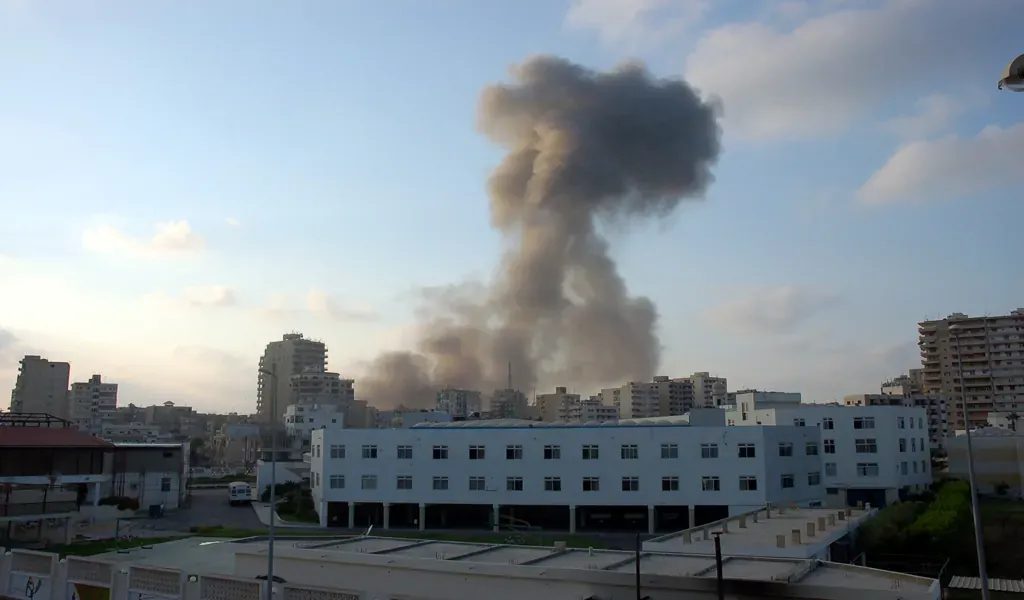
Two Israeli airstrikes struck Kfar Rumman near Nabatieh in southern Lebanon.
Lebanon’s Health Ministry said one strike hit a building and killed 11 people, including two children and four women. A separate strike killed a paramedic, bringing the reported death toll to at least 12.
The strikes came amid continuing military activity in southern Lebanon despite the ceasefire. Israeli forces and Hezbollah have continued to exchange attacks, leaving the truce exposed to further escalation.
The civilian casualties have intensified concerns about the humanitarian consequences of continued military operations and increased pressure on Lebanese authorities and mediators to contain the violence.
Israel Links Strikes to Hezbollah Drone Attacks
The Israel Defense Forces (IDF) said the Israeli strikes followed two explosive-drone attacks launched by Hezbollah toward Israeli troops operating in southern Lebanon.
■ Related News


The Israeli military said it targeted Hezbollah personnel and infrastructure associated with weapons transfers and military activity. The IDF has described its continuing operations in southern Lebanon as efforts to prevent Hezbollah from rebuilding its military capabilities and threatening Israeli forces and communities.
The Israeli military has also said it takes measures intended to limit civilian casualties.
Lebanon’s reported casualty figures provide a sharply different picture of the immediate impact of the strikes, particularly because civilians were among those killed.
Strategic Tensions Around Ali al-Taher
The latest escalation follows growing tensions around the Ali al-Taher ridge, an elevated strategic position near Nabatieh.
Israel has said its forces established operational control of the ridge after clearing Hezbollah personnel from underground positions and tunnels. The IDF has described military infrastructure in the area as being used by Hezbollah for operations.
Hezbollah has continued to challenge Israeli military activity around the area, including through drone attacks.
The dispute over the ridge is linked to wider disagreements about military positions, security arrangements and the future presence of Hezbollah and Israeli forces in southern Lebanon.
Ceasefire Remains Under Severe Strain
The violence is taking place despite a U.S.-brokered ceasefire framework intended to reduce fighting and establish longer-term security arrangements between Israel and Lebanon.
The framework has reduced the intensity of the conflict compared with earlier fighting, but military activity has continued. Israel has maintained positions inside a security zone in southern Lebanon, while Hezbollah has resisted demands that would require it to surrender its military capabilities in the south.
Those unresolved issues have left the ceasefire vulnerable to attacks and retaliatory operations.
The latest deaths do not by themselves establish that the ceasefire has formally collapsed, but the continuing exchanges demonstrate the difficulty of maintaining the arrangement.
Conflicting Accounts Complicate Assessment
Israel says Hezbollah’s drone attacks constitute violations requiring a military response. Lebanese authorities, by contrast, say continued Israeli strikes are undermining the ceasefire and placing civilians and civilian infrastructure at risk.
Hezbollah continues to reject Israeli military control of Lebanese territory and opposes arrangements that would remove its armed presence without broader political and security guarantees.
The available material does not establish the intent behind any individual Israeli strike. JournosNews therefore does not characterize the Kfar Rumman strikes as deliberate attacks on civilians.
What the casualty information establishes is that civilians, including children, were among those killed.
Lebanon Faces Pressure Over Security Control
The renewed fighting also presents a challenge for the Lebanese government and military as Beirut seeks greater state control over security in southern Lebanon.
Lebanese authorities face competing demands: preventing Hezbollah from using Lebanese territory to launch attacks while pressing Israel to end military operations and withdraw from Lebanese territory.
That tension limits the Lebanese government’s room for maneuver as it attempts to manage the security situation and uphold the ceasefire framework.
The broader dispute over Hezbollah’s weapons and Israel’s military presence remains unresolved.
Wider Regional Security Risks
The continued exchanges create a risk of a wider cycle of retaliation.
Repeated Hezbollah drone attacks followed by Israeli strikes could further undermine the ceasefire, particularly if military operations expand around strategically important positions in southern Lebanon.
The dispute is also connected to larger negotiations over Israeli withdrawal, Hezbollah’s armed presence and the authority of the Lebanese state in the south.
The latest escalation therefore carries significance beyond Kfar Rumman. The durability of the ceasefire depends on unresolved security and political questions that neither side has yet settled.
The Next Test for the Ceasefire
The Kfar Rumman deaths have added a serious humanitarian dimension to an already fragile security arrangement.
The immediate developments to watch are further Hezbollah attacks, Israeli military operations in southern Lebanon and efforts by Lebanese authorities and international actors to prevent the violence from escalating.
The latest strikes do not formally establish the collapse of the ceasefire. But the combination of continuing military activity, retaliatory attacks and civilian deaths demonstrates how vulnerable the arrangement remains while the underlying disputes over territory, weapons and security control remain unresolved.
Reporting Credit; Lebanon Ministry of Public Health — official casualty information concerning the Kfar Rumman strikes; Israel Defense Forces (IDF) — official account of Hezbollah’s drone attacks, Israeli strikes, stated targets and operations against Hezbollah infrastructure; Government of Lebanon / Lebanese Presidency — official Lebanese position on Israeli military operations, sovereignty and implementation of the ceasefire framework; Lebanese Armed Forces — official information concerning security conditions and the state’s military presence in southern Lebanon, where applicable; United Nations Interim Force in Lebanon (UNIFIL) — official monitoring and reporting concerning Security Council-mandated arrangements and security developments in the Israel-Lebanon area; Hezbollah — official statements and claims concerning its military operations and position on Israeli forces in southern Lebanon, where directly relevant and verifiable.