NEW YORK — Six months after the United States and Israel launched their war against Iran, the global economy has avoided the worst-case scenario that many economists feared at the beginning of the conflict. There has been no worldwide recession or sustained collapse in financial markets, but the economic consequences have been sharply uneven.
Financial markets recovered from the initial shock, while higher energy and transportation costs have continued to affect consumers. Oil producers and some defense and energy companies have benefited from the disruption, while households, airlines, farmers and poorer countries have absorbed much of the cost.
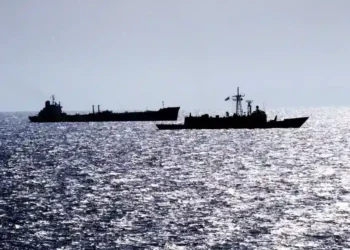
The war began on February 28, 2026, and quickly disrupted energy supplies and commercial shipping through the Strait of Hormuz, one of the world’s most important oil and gas routes.

Financial markets recovered
The initial reaction on Wall Street was severe.
Oil prices surged as investors assessed the possibility of a prolonged disruption in the Middle East. The Dow Jones Industrial Average and Nasdaq entered correction territory, while the S&P 500 recorded its worst monthly performance since 2022.
But markets subsequently recovered.
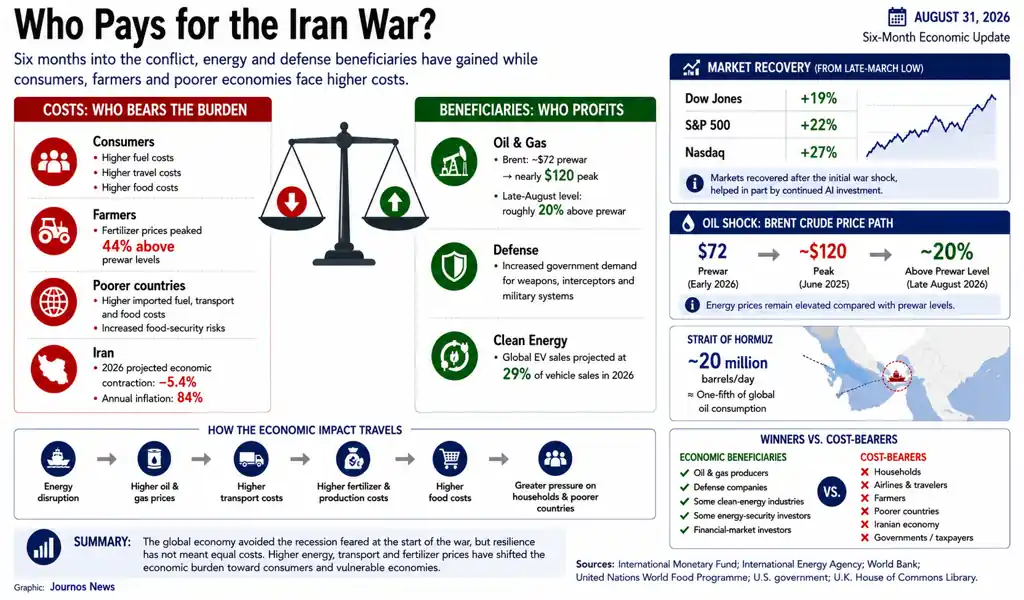
Since reaching their lows in late March, the Dow has risen nearly 19%, the S&P 500 about 22% and the Nasdaq about 27%, according to figures reported at the six-month mark.
One reason has been the continuing strength of the artificial-intelligence investment boom.


The International Monetary Fund said in July that the global economy was being shaped by two opposing forces: the war was weighing on growth while enthusiasm surrounding AI was helping offset some of the damage.
For investors who remained in the market through the initial sell-off, the recovery has therefore turned a period of geopolitical uncertainty into substantial gains.
Oil remains the biggest economic shock
The clearest economic consequence of the war has been the disruption to energy markets.
Before the conflict, Brent crude closed at roughly $72 a barrel. It subsequently climbed to nearly $120 before falling back.
As of late August, Brent remained roughly 20% above its prewar level, according to figures cited by the Associated Press.
The International Monetary Fund said the Strait of Hormuz disruption effectively removed about 20 million barrels a day of crude and refined products from normal shipping routes, equivalent to roughly one-fifth of global consumption.
Alternative routes, production adjustments and weaker demand have prevented an even larger price shock.
But the disruption has not disappeared.
A Reuters survey published Monday found analysts expect Brent crude to average about $85.08 a barrel during 2026, with supply disruptions continuing to support prices despite weaker demand, particularly in China.
Consumers are paying more to travel
Higher oil prices have been particularly damaging to transportation.
Jet fuel prices are expected to average about 70% higher than in 2025, according to the International Air Transport Association.
Airlines have responded by increasing ticket prices, adding fuel surcharges and baggage fees, while some have reduced or canceled flights.
Lufthansa Group, for example, has cut thousands of short-haul flights.
For consumers, that means the economic impact of the war is visible even when they are far from the battlefield.
A family booking an international flight, a commuter filling a car with gasoline or a business transporting goods by truck can all face higher costs because of the energy shock.
Food costs are another pressure point
The effects of the conflict extend beyond gasoline and airfares.
The Gulf region is also an important source of fertilizer production, meaning disruptions to energy and chemical markets have increased agricultural costs.
The World Bank’s fertilizer price index reached a peak in April that was 44% above its prewar level, according to figures cited by the Associated Press.
Some farmers have responded by reducing fertilizer use.
That may lower costs in the short term but could reduce crop yields and soil productivity in future growing seasons.
The impact can eventually reach consumers through higher prices for food.
Poorer countries face the greatest risks
The economic burden is particularly severe for countries that depend heavily on imported fuel and food.
The United Nations World Food Programme has warned that disruptions to fertilizer exports and higher transportation costs could push tens of millions of people toward hunger.
Higher oil prices increase the cost of transporting food while fertilizer shortages can reduce agricultural production.
That creates a chain reaction:
Higher energy prices → higher transportation costs → higher fertilizer costs → higher food costs.
The consequences are especially serious in countries where households already spend a large share of their income on food.
Clean energy gets a boost
The disruption has also created economic winners outside traditional energy industries.
Countries heavily dependent on Middle Eastern oil have accelerated efforts to reduce their exposure to fossil-fuel markets.
Some governments have expanded renewable-energy programs, considered nuclear power and invested in domestic energy production.
Electric-vehicle sales have also accelerated in several markets.
Global EV sales are projected to represent 29% of total vehicle sales in 2026, up from 25% in 2025, according to the International Energy Agency.
The growth has been particularly strong in countries including Singapore, New Zealand and Colombia.
The war has therefore strengthened the economic argument for reducing dependence on imported fossil fuels.
Fossil-fuel producers benefit
While consumers have faced higher costs, oil and gas producers have benefited from higher prices.
The conflict has increased the value of existing energy production and encouraged companies and investors to seek additional supplies.
Global natural-gas dealmaking has also accelerated. More than $32 billion was spent on gas-production acquisitions during the first half of 2026, according to the Financial Times, as investors responded to stronger demand and concerns about energy security.
The pattern illustrates one of the defining features of wartime economics: a cost for one part of the economy can become revenue for another.
Defense companies are another beneficiary
Military spending has created another group of beneficiaries.
The United States has spent tens of billions of dollars on the war and on replenishing weapons stocks.
Companies producing missiles, drones, interceptors and other military equipment have benefited from increased government demand.
The Associated Press reported that Powerus, a military contractor preparing for a public offering involving Eric Trump and Donald Trump Jr., received an Air Force contract worth up to $90 million for interceptors.
Other defense companies, including Anduril and Firehawk Defense, have also received contracts connected to the broader regional military environment.
The increased defense spending provides revenue for companies and investors but represents a substantial cost for governments and taxpayers.
Trump’s finances have also benefited
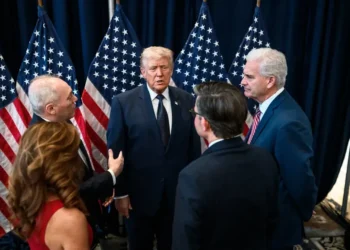
The economic consequences have also reached the president’s personal finances.
According to a Democratic congressional report cited by the Associated Press, President Donald Trump’s holdings in oil and gas companies have increased in value by as much as $15.5 million since the war began.
His portfolio, managed by outside financial managers, also includes investments in defense companies such as Lockheed Martin, General Dynamics and Northrop Grumman.
The White House has rejected allegations of conflicts of interest.
A White House spokeswoman said Trump acts in the best interests of the American public, while a spokeswoman for 1789 Capital said Donald Trump Jr. was not involved in investment decisions involving defense companies connected to the war.
Iran has suffered a far deeper economic shock
The economic consequences inside Iran are considerably more severe.
Iran was already facing sanctions, inflation and structural economic problems before the war.
The conflict and the U.S. blockade of Iranian ports have further restricted oil exports, trade and access to foreign currency.
Iran’s currency reached a record low against the U.S. dollar in August, while annual inflation reached 84%, according to the U.K. House of Commons Library.
The International Monetary Fund projects Iran’s economy will contract by 5.4% in 2026, assuming the conflict eventually allows conditions for recovery in 2027.
Iran has therefore been unable to fully benefit from higher global oil prices because sanctions and the blockade have restricted its ability to export crude.
The global economy has proved more resilient than feared
The absence of a global recession is one of the most important economic developments of the war.
Governments and companies adapted quickly to the energy disruption.
Oil producers increased or redirected supplies where possible, alternative transportation routes were used and weaker demand helped offset part of the supply shock.
Financial markets also adjusted rapidly.
But resilience does not mean the costs disappeared.
Instead, the economic burden has been distributed unevenly across countries, industries and income groups.
The cost of the war is still accumulating
The longer the conflict continues, the greater the risk that temporary disruptions become structural.
Energy companies may benefit from high prices, but sustained expensive fuel can weaken consumer demand.
Farmers may reduce fertilizer use, but lower agricultural productivity can create future food shortages.
Governments can increase defense spending, but doing so consumes resources that could otherwise be directed toward infrastructure, health care or education.
Investors may profit from rising energy and defense stocks, while households simultaneously lose purchasing power.
That divergence is becoming one of the defining economic features of the six-month-old conflict.
The Strait of Hormuz remains critical
The future of the global economy remains closely tied to what happens in the Strait of Hormuz.
The waterway remains largely closed to normal commercial traffic, although efforts have been made to establish limited shipping arrangements.
If shipping returns to normal, oil and gas prices could fall further and relieve pressure on consumers.
If the disruption worsens, markets could face another sharp energy shock.
That makes the strait one of the most important economic pressure points in the conflict.
What Happens Next
The global economy enters the second half of the conflict in a stronger position than many feared in February, but the recovery remains vulnerable to another escalation.
For consumers, the most immediate risks are continued high fuel, transportation and food costs.
For investors, energy, defense and clean-energy sectors remain closely tied to the conflict’s trajectory.
And for poorer countries, the combination of expensive fuel, fertilizer and food could create consequences long after the fighting ends.
Six months into the war, the economic story is therefore not simply about whether the global economy survived.
It is about who absorbed the cost—and who captured the gains.
Key Facts
- War began: February 28, 2026
- Economic shock: Energy, transportation, food and fertilizer
- Prewar Brent crude: About $72 per barrel
- Peak Brent: Nearly $120
- Current Brent: Roughly 20% above prewar level
- Hormuz: About one-fifth of global oil consumption normally passes through the waterway
- Fertilizer price peak: 44% above prewar level
- 2026 global EV sales projection: 29% of vehicle sales
- Iran 2026 projected growth: −5.4%
- Iran annual inflation: About 84%
- Current status: DEVELOPING — SIX MONTHS OF ECONOMIC IMPACT
Reporting Credit: International Monetary Fund — global economic and oil-market assessments; International Energy Agency — energy and electric-vehicle outlooks; World Bank — fertilizer and commodity prices; United Nations World Food Programme — food-security impacts; U.S. government — defense spending and contracts; Iranian government — economic conditions and official statements.