
CAIRO, Egypt – Iran-backed Houthi forces in Yemen have escalated attacks against Saudi-linked targets, raising concerns that the widening regional conflict could once again disrupt commercial shipping through the Red Sea and the strategically important Bab el-Mandeb Strait.
The escalation follows the Houthis’ announcement of a maritime blockade targeting Saudi-linked shipping. The group has also claimed attacks against Saudi-backed forces in Yemen and missile and drone strikes toward Saudi Arabia. The developments have increased concern among shipping operators over the security of vessels transiting the southern Red Sea.
The threat comes as shipping routes around the Middle East are already under pressure because of disruptions involving the Strait of Hormuz. A sustained decline in traffic through Bab el-Mandeb could add another layer of risk to global trade and energy transportation, particularly for vessels using the Red Sea and Suez Canal route between Asia and Europe.

Houthi attacks put Saudi-linked shipping at risk
The Houthis have said their new maritime restrictions are directed at Saudi-linked vessels, describing the measures as retaliation for Saudi military involvement in Yemen and recent attacks against Houthi-controlled areas.
The group has also claimed responsibility for attacks against Saudi-backed Yemeni forces.
Saudi officials have reported civilian casualties from Houthi attacks near the country’s southern border, while Yemeni officials have reported deaths and injuries from attacks involving Saudi-backed forces.
The competing claims and casualty figures have not all been independently verified.
The escalation represents a significant change from the relative reduction in fighting that followed the 2022 truce between the Houthis and the Saudi-led coalition.



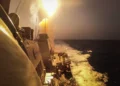
Bab el-Mandeb is a critical trade chokepoint
The Bab el-Mandeb Strait connects the Red Sea with the Gulf of Aden and is a key passage for vessels traveling between the Indian Ocean and the Suez Canal.
The route is particularly important for container shipping and energy transportation because vessels using it can reach European markets through the Suez Canal without making the much longer journey around Africa’s Cape of Good Hope.
About 12% of global trade has historically passed through the Red Sea and Bab el-Mandeb corridor, although traffic has fluctuated substantially during previous periods of Houthi attacks.
The waterway’s importance has increased further during the current Middle East conflict because disruptions around the Strait of Hormuz have forced some Gulf energy exporters to consider alternative routes.
Shipping companies face another security calculation
The Houthi threat creates a difficult calculation for shipping operators. Even when vessels are not directly attacked, threats against specific categories of ships can lead companies to alter routes, delay voyages or seek additional insurance coverage.
Recent AP reporting has documented a decline in shipping activity following the Houthi threat against Saudi-linked vessels.
Some vessels can avoid the Bab el-Mandeb by traveling around the southern tip of Africa. That alternative, however, adds substantial distance and fuel costs and can lengthen delivery times.
For energy companies, the consequences can be particularly significant because the Red Sea provides an important route for moving oil and other commodities between producers in the Middle East and customers in Europe and beyond.
Hormuz disruption increases the stakes
The threat to Bab el-Mandeb comes as the Strait of Hormuz remains another major point of uncertainty for international shipping.
Iran and Oman have been negotiating an agreement aimed at reopening the strategically important waterway, while the United States has linked any easing of its blockade of Iranian ports to arrangements concerning freedom of navigation through the strait.
The two waterways serve different geographic functions, but simultaneous disruption would increase pressure on international shipping networks.
Hormuz is particularly important for global oil and liquefied natural gas shipments, while Bab el-Mandeb provides a critical connection between the Red Sea, the Gulf of Aden and the Suez Canal.
A prolonged disruption at both chokepoints could therefore increase shipping distances, insurance costs and energy-market volatility.
Escalation could widen Yemen’s conflict
The latest maritime threats also risk drawing Yemen’s already fragile conflict more deeply into the broader confrontation involving Iran, the United States and regional powers.
The Houthis control large areas of northern and western Yemen, including the capital, Sanaa. Saudi Arabia intervened militarily in Yemen in 2015 in support of the internationally recognized government after the Houthis seized Sanaa in 2014.
The conflict has since produced one of the world’s most severe humanitarian crises, while diplomatic efforts have periodically reduced the intensity of fighting.
The renewed attacks threaten to undermine that relative calm and create additional pressure on Saudi Arabia and other regional actors.
Iran’s role adds to regional concerns
The Houthis are backed by Iran, although the precise degree of Iranian operational control over the group’s decisions remains disputed.
Their renewed attacks have nevertheless created another potential pressure point for Tehran and its regional rivals. By threatening a major maritime chokepoint, the Houthis can affect international shipping even without directly confronting the United States or other major military powers.
Yemen analysts cited in AP reporting have warned that the escalation could serve Iran’s broader regional strategy by creating additional pressure on U.S. and allied forces.
Global shipping faces another potential disruption
The immediate question for shipping markets is whether the Houthi threats remain focused on Saudi-linked vessels or expand to a wider range of commercial shipping.
Previous Houthi attacks demonstrated how threats against merchant vessels can cause shipping companies to reroute even when only a portion of vessels are directly targeted.
For now, the situation remains fluid. Continued attacks, further restrictions on shipping or a broader expansion of the conflict could reduce traffic through Bab el-Mandeb and increase reliance on longer routes around Africa.
That would add another potential source of disruption to global trade at a time when shipping and energy markets are already dealing with uncertainty surrounding the Strait of Hormuz.
The developments therefore extend beyond Yemen and Saudi Arabia. Any sustained deterioration in security around Bab el-Mandeb could affect shipping costs, delivery times and energy flows across markets connected to the Red Sea and Suez Canal.
This report is based on reporting by The Associated Press.