Journos News - Breaking News, World News, Top Stories, Todays Headlines and Flash Reports
Friday, September 11, 2026
  • Login
  • Home
  • World
    • Africa
    • Americas
    • Asia
    • Europe
    • Middle East
    • Oceania
  • Politics
  • Business
  • Technology
  • Health
  • Science
  • Sports
  • Entertainment
  • Culture
No Result
View All Result
  • Home
  • World
    • Africa
    • Americas
    • Asia
    • Europe
    • Middle East
    • Oceania
  • Politics
  • Business
  • Technology
  • Health
  • Science
  • Sports
  • Entertainment
  • Culture
No Result
View All Result
Journos News - Breaking News, World News, Top Stories, Todays Headlines and Flash Reports
No Result
View All Result
Home World News Africa

DR Congos Bundibugyo Ebola Outbreak Becomes Countries Largest as Cases Surge Across Five Provinces

WHO warns expanding transmission and cross-border movement are increasing regional public health risks.

The Daily Desk by The Daily Desk
August 6, 2026
in Africa, World News
0
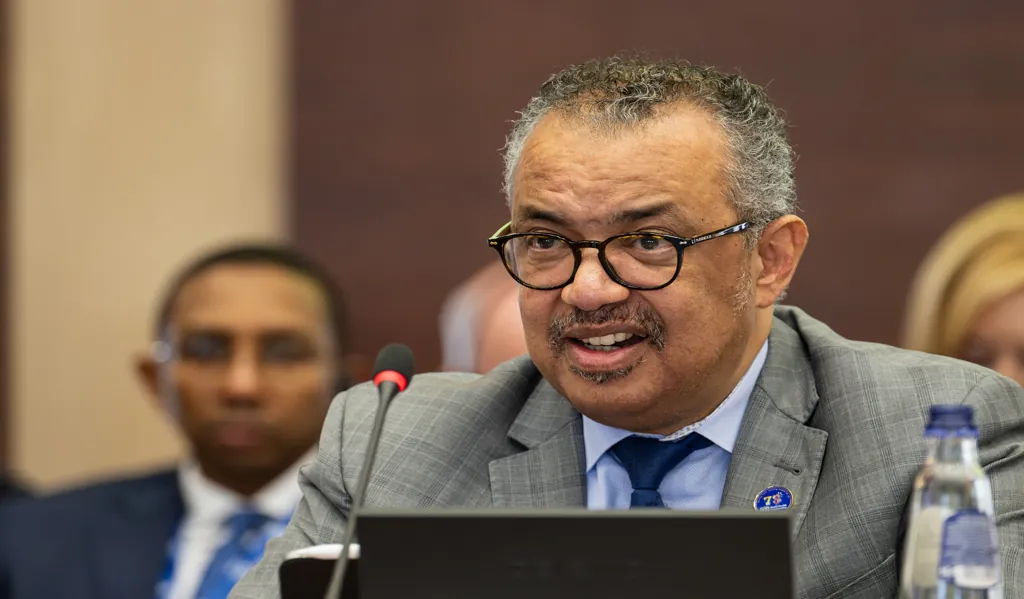
Dr. Tedros Adhanom Ghebreyesus, Director-General of the World Health Organization, attends the European Union–African High-Level Event on Health in Brussels, Belgium.

Dr. Tedros Adhanom Ghebreyesus, Director-General of the World Health Organization (WHO), attends the European Union–African High-Level Event on Health at Egmont Palace in Brussels, Belgium, on March 20, 2024. — Photo © Belgian Presidency of the Council of the European Union / Julien Nizet, sourced from Wikimedia Commons (CC BY 2.0).

The Democratic Republic of the Congo’s outbreak of Ebola disease caused by the Bundibugyo virus has become the country’s largest Ebola epidemic on record, with sustained transmission, expanding geographic spread and rising fatalities prompting renewed concern among international health authorities.

The World Health Organization (WHO) said the outbreak, first detected in Ituri Province, has spread over the past two months into five provinces—Ituri, North Kivu, South Kivu, Haut-Uélé and Tshopo—and now affects 49 health zones. Continued transmission, combined with armed conflict, population displacement and frequent cross-border movement, is complicating containment efforts and increasing the risk of regional spread.

As of July 30, 2026, health authorities had confirmed 3,605 cases and 1,587 deaths, representing a crude case fatality ratio of about 44%. During epidemiological week 30 alone, officials recorded 567 new confirmed cases and 296 deaths, the highest weekly totals since the outbreak began.

Outbreak Sets New National Record

According to WHO, the current epidemic has surpassed the Democratic Republic of the Congo’s previous largest Ebola outbreak, which occurred between 2018 and 2020 and recorded 3,317 confirmed cases.

Across all affected countries, 3,626 confirmed Bundibugyo virus disease cases have now been reported.

The Democratic Republic of the Congo accounts for 3,605 confirmed cases, including two patients later treated in Germany. Uganda reported 20 confirmed cases, while France recorded one imported infection involving a healthcare worker deployed to support the response.

A total of 1,589 deaths have been reported across all affected countries, including two in Uganda.

Health authorities have also recorded 654 recoveries, including 651 in the Democratic Republic of the Congo, 18 in Uganda, two in Germany and one in France.

■ Related News

Hotel employees participate in Ebola training in Conakry, Guinea, as part of public health preparedness activities.

Congo Ebola Outbreak Kills 317 in One Week as Health Crisis Accelerates

August 26, 2026
MSF staff member helps a CDC doctor secure his face mask before entering an Ebola treatment unit in Liberia.

Congo says quarantined river boat passengers test negative for Ebola

August 10, 2026
Army medic checks patients' temperatures during Ebola treatment training at a simulated treatment center near York, England.

US citizen tests positive for Ebola as Congo outbreak continues to spread

August 10, 2026
Personal protective equipment is arranged for medical staff during an Ebola response training exercise at an Army health clinic.

Congo Quarantines Nearly 200 River Passengers After Suspected Ebola Death Near Kinshasa

August 7, 2026

Ituri Province Remains the Epicenter

WHO said Ituri Province continues to bear the overwhelming burden of the outbreak.

The province has recorded 3,176 confirmed cases, accounting for approximately 88% of all infections, and 1,311 deaths, representing about 83% of reported fatalities.

Among the most affected health zones are:

  • Bunia
  • Rwampara
  • Mongbwalu
  • Nizi
  • Lita
  • Nyankunde

Of the 49 affected health zones, 33 continued reporting confirmed infections during the previous seven days.

During that period, authorities documented 641 confirmed cases and 282 deaths, indicating sustained community transmission.

Health Workers Continue to Face Elevated Risks

Healthcare workers remain among those infected during the outbreak.

As of July 30, WHO reported:

  • 151 confirmed infections among healthcare workers
  • 44 deaths
  • 68 recoveries

WHO said the figures highlight continuing challenges in infection prevention and control within healthcare facilities as well as ongoing exposure risks in surrounding communities.

Public health authorities have identified 17,863 contacts for monitoring, with 13,455 remaining under active follow-up.

Conflict and Displacement Hamper Containment

WHO said the outbreak is unfolding amid armed conflict, population displacement and limited access to healthcare, clean water and other essential services.

Attacks on healthcare facilities and insecurity have disrupted surveillance activities, restricted the movement of response teams and increased the likelihood of undetected transmission.

The agency said community-led response efforts supported by local leaders remain essential to improving outbreak control.

Response Efforts Continue

WHO said Congolese health authorities and international partners continue implementing a broad response that includes:

  • Emergency coordination
  • Disease surveillance
  • Laboratory testing
  • Infection prevention and control
  • Clinical care
  • Community engagement
  • Logistics support
  • Operational research
  • Maintenance of essential health services

The response also forms part of a six-month regional preparedness framework designed to strengthen coordination across affected and neighboring countries.

WHO said further expansion of response activities will be necessary to outpace the epidemic.

Regional Preparedness Remains High

Outside the Democratic Republic of the Congo, neighboring countries continue strengthening surveillance and preparedness.

France confirmed that its imported Bundibugyo virus disease patient recovered and was discharged on July 4 after two consecutive negative PCR tests. Health authorities reported no secondary transmission.

Uganda officially declared its outbreak over on July 28 after completing 42 consecutive days without a locally transmitted confirmed case.

Despite that milestone, WHO warned Uganda remains vulnerable to additional imported infections while transmission continues in eastern Democratic Republic of the Congo.

WHO Maintains Very High Risk Assessment

WHO continues to classify the outbreak risk within the Democratic Republic of the Congo as very high because of sustained transmission and the expanding geographic footprint of the epidemic.

The agency rates the risk for Uganda as high, citing ongoing cross-border epidemiological links and previous Ebola activity along the eastern Democratic Republic of the Congo-western Uganda corridor.

Countries bordering affected areas are also considered at high risk because of trade, mining-related population movement and varying levels of preparedness.

WHO continues to assess the overall risk for the rest of Africa and globally as low.

An updated rapid risk assessment is expected before the International Health Regulations (IHR) Emergency Committee meets on Aug. 18.

WHO Advises Against Travel Restrictions

Despite the scale of the outbreak, WHO continues to advise against travel or trade restrictions affecting the Democratic Republic of the Congo.

Instead, the agency continues to emphasize:

  • Early case detection
  • Rapid laboratory confirmation
  • Patient isolation
  • Supportive clinical care
  • Contact tracing
  • Safe and dignified burials
  • Community engagement
  • Cross-border coordination

WHO noted that Bundibugyo virus disease is caused by the Bundibugyo virus, one of the Ebola virus species, with fruit bats believed to be the natural reservoir. Human infections are thought to begin through contact with infected wildlife before spreading through direct contact with infected bodily fluids or contaminated materials.

The agency also said there are currently no approved vaccines or specific treatments for Bundibugyo virus disease, although several vaccine and therapeutic candidates remain under scientific evaluation.

This report is based on reporting by the World Health Organization (WHO).

Tags: #Africa#BundibugyoVirus#DemocraticRepublicoftheCongo#DiseaseOutbreak#DRC#Ebola#EbolaOutbreak#Ituri#PublicHealth#WHO
The Daily Desk

The Daily Desk

The Daily Desk is the editorial byline of Journos News, representing reporting produced by the newsroom across world news, politics, business, technology, disasters, and other areas of public interest. Stories published under this byline are independently researched, verified, and edited in accordance with Journos News’ editorial standards, with an emphasis on accuracy, transparent sourcing, attribution, context, and editorial independence.

Related Posts

People cool off in the fountain at Berlin's Lustgarten during a summer heatwave in Germany.

Europe Heat Wave Triggers Highest Alerts Across Italy as Extreme Temperatures Grip Continent

August 7, 2026
A nurse wearing protective gloves administers a vaccine injection into an adult patient's upper arm during an immunization appointment.

Experimental Vaccines Show Early Promise in Preventing Colon Cancer for People With Lynch Syndrome

August 6, 2026
Fresh iceberg lettuce displayed for sale at a grocery store during the CDC investigation into a multistate Cyclospora outbreak linked to recalled lettuce.

CDC Links Multistate Cyclospora Outbreak to Recalled Iceberg Lettuce from Taylor Farms de Mexico

August 6, 2026
Colorized scanning electron micrograph showing Ebola virus particles budding from an infected African green monkey kidney cell at 20,000× magnification.

Ebola Deaths Surpass 1,700 in Eastern Congo as Outbreak Outpaces Containment Efforts

August 5, 2026
Close-up photograph of pink heather flowers blooming on dense green shrubs, highlighting delicate blossoms and evergreen foliage.

Ebola Outbreak Drives Rise in Maternal Deaths as Pregnant Women Avoid Hospitals in Eastern Congo

August 4, 2026
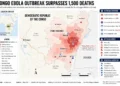
Disease outbreak map showing Ebola transmission zones, affected health areas, treatment centers, and response activities in Ituri Province, Democratic Republic of the Congo.

Congo Ebola Death Toll Surpasses 1,500 as Outbreak Outpaces Response Efforts

July 31, 2026
Dr. Anthony Fauci speaks during a White House coronavirus briefing in the James S. Brady Press Briefing Room in Washington, D.C.

Fauci Invokes Fifth Amendment During Contentious Senate COVID-19 Hearing

July 30, 2026
Anthony Fauci speaks during an Alliance for Health Reform briefing on the Zika virus in Washington, D.C., addressing public health policy and infectious diseases.

Fauci Invokes Fifth Amendment at Republican-Led Senate COVID-19 Hearing

July 29, 2026
Load More
Next Post
High-resolution image of the Sun's photosphere captured by the NSF Daniel K. Inouye Solar Telescope, revealing fine magnetic structures and plasma patterns linked to Kelvin-Helmholtz instability.

NSF Inouye Solar Telescope Reveals Hidden Solar Instability Linked to Explosive Space Weather

Fresh iceberg lettuce displayed for sale at a grocery store during the CDC investigation into a multistate Cyclospora outbreak linked to recalled lettuce.

CDC Links Multistate Cyclospora Outbreak to Recalled Iceberg Lettuce from Taylor Farms de Mexico

JournosNews logo

Journos News delivers globally neutral, fact-based journalism that meets international media standards — clear, credible, and made for a connected world.

  • Categories
  • World News
  • Politics
  • Business & Markets
  • Technology
  • Health
  • Science
  • Sports
  • Arts & Culture
  • Resources
  • Editorial Standards
  • Submit a Story
  • Advertise with Us
  • Syndication & Partnerships
  • Site Map
  • Press & Media Kit
  • Editorial Team
  • Careers

Join thousands of readers receiving the latest updates, tips, and exclusive insights straight to their inbox. Never miss an important story again.

  • About Us
  • Editorial & Trust Center
  • Contact Us
  • Privacy Policy
  • Terms of Use & Copyright Notice

© JournosNews.com All rights reserved.

Welcome Back!

Login to your account below

Forgotten Password?

Retrieve your password

Please enter your username or email address to reset your password.

Log In
JournosNews

Independent Journalism.
Verified Facts.

You're about to read a professionally edited article from JournosNews.com.

Every article is produced in accordance with our editorial standards, emphasizing factual accuracy, transparent attribution, fairness, editorial independence, and meaningful context.

Editorial Standards
No Result
View All Result
  • Home
  • World
    • Africa
    • Americas
    • Asia
    • Europe
    • Middle East
    • Oceania
  • Politics
  • Business
  • Technology
  • Health
  • Science
  • Sports
  • Entertainment
  • Culture

© JournosNews.com All rights reserved.

This website uses cookies. By continuing to use this website you are giving consent to cookies being used. Visit our Privacy and Cookie Policy.