CAIRO, Egypt – Iran and Oman have made progress in negotiations aimed at reopening the Strait of Hormuz, raising hopes that commercial shipping could soon resume through one of the world’s most important energy corridors. While officials say discussions are moving forward, key disagreements over sanctions, maritime control and security arrangements have yet to be resolved.
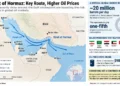
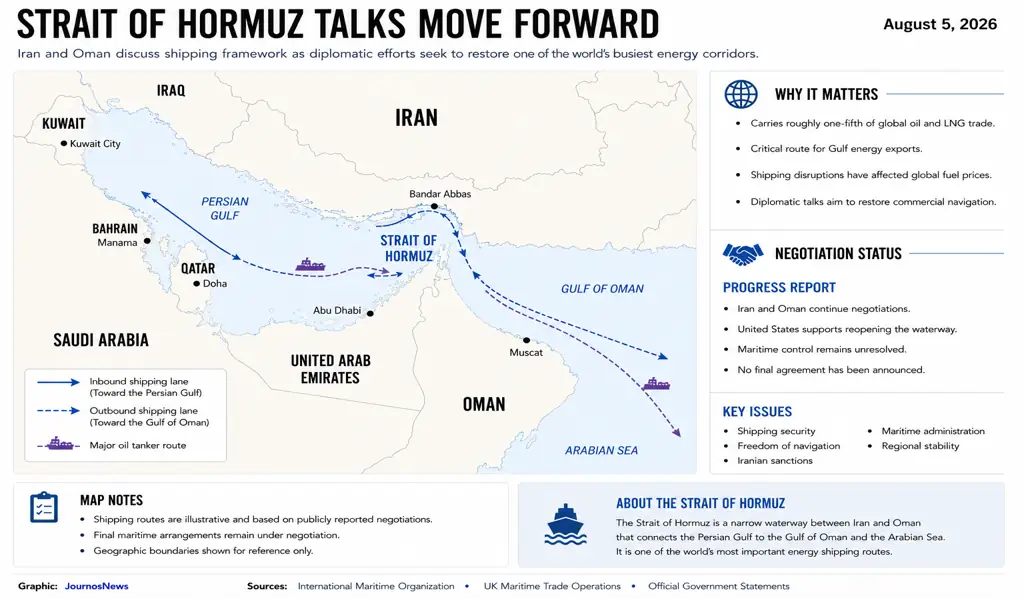
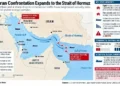
According to regional officials familiar with the negotiations, the proposed framework would establish separate shipping lanes for vessels entering and leaving the Persian Gulf. Under the plan, inbound traffic would use a route administered by Iran, while outbound vessels would travel through a lane overseen by Oman. The proposal also includes maritime service fees intended to support security and environmental protection.
The officials, who spoke on condition of anonymity because they were not authorized to discuss the negotiations publicly, cautioned that talks remain ongoing and that the final agreement could differ from the current proposal. They added that Iran continues to link any reopening of the waterway to the lifting of U.S. restrictions on Iranian ports, a demand that remains a major obstacle.

Maritime Control Remains a Key Sticking Point
Any agreement that gives Iran a formal role in managing traffic through the Strait of Hormuz would represent a significant diplomatic achievement for Tehran. However, U.S. officials continue to oppose any arrangement that grants exclusive authority over one of the world’s busiest maritime routes.
A U.S. official familiar with the negotiations disputed reports suggesting Iran would approve vessel movements or collect transit fees under a temporary agreement. Speaking anonymously, the official said Washington supports restoring unrestricted international navigation without any country exercising exclusive control over the shipping lanes.
Iran and U.S. Offer Different Assessments
Iranian Foreign Ministry spokesperson Esmail Baghaei said discussions with Oman are focused on creating secure shipping routes that protect both countries’ sovereignty while addressing regional security concerns.
He said details of any agreement would be announced after negotiations conclude, according to Iran’s state-run IRNA news agency.
U.S. Secretary of State Marco Rubio also acknowledged that negotiations have advanced but emphasized that no final agreement has been reached. He said Washington hopes the remaining issues can be resolved while reiterating the U.S. position that freedom of navigation must remain protected.
■ Related News

Treasury Secretary Scott Bessent expressed similar optimism, saying an agreement could be reached within days if negotiations continue to progress.
Trump Pushes Diplomatic Solution
President Donald Trump has continued to promote diplomacy while warning that military options remain available if negotiations fail.
Speaking Monday, Trump rejected any proposal that would require commercial vessels to pay Iran for passage through the strait.
“I’m not going to let them charge,” Trump told reporters. “Anybody’s going to charge, we’ll charge.”
Trump also described the negotiations as Iran’s “last chance” to avoid additional U.S. military action and said reopening the Strait of Hormuz would create an opportunity to address Iran’s nuclear program through broader diplomatic talks.
Iran, however, maintains that it is negotiating only with Oman and not directly with the United States.
Shipping Security Remains Fragile
The Strait of Hormuz normally carries about one-fifth of the world’s traded oil and natural gas, making its security critical to global energy markets.
Although diplomatic efforts have reduced some concerns, commercial shipping continues to face security risks.
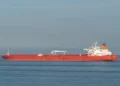
The United Kingdom Maritime Trade Operations Center reported that an unidentified projectile struck a cargo vessel transiting the strait near Oman’s coast. British maritime security firm Ambrey said the ship sustained damage but provided no further details.
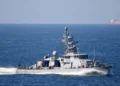
The incident followed weeks of attacks on commercial vessels operating near shipping routes monitored by the U.S. military, underscoring the fragile security environment despite ongoing diplomatic negotiations.
If an agreement is reached, it could help restore commercial shipping, ease pressure on global energy markets and reduce one of the most significant sources of instability in the Gulf region.
This report is based on reporting by The Associated Press.