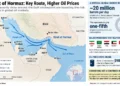
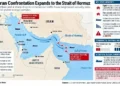
Trump said he halted plans for a new round of U.S. military strikes to give diplomacy another opportunity. He described the renewed talks as Iran’s “last chance” to reach an agreement addressing Tehran’s nuclear program and restoring commercial shipping through the Strait of Hormuz.
Iran, however, denied that direct negotiations with Washington are taking place. Officials said current diplomatic contacts are focused on discussions with neighboring Oman.
Washington and Tehran Disagree on Negotiations
Speaking Monday, Trump said the United States and Iran were engaged in discussions despite Tehran’s public denials.

“Whether Iran wants to admit it or not, we are, in fact, talking,” Trump said. He later criticized Iran’s leadership on his Truth Social platform for rejecting that characterization.
Iranian Foreign Ministry spokesperson Esmail Baghaei said the country’s current diplomatic engagement is with Oman, not the United States. He said the discussions focus on establishing a temporary maritime route through the Strait of Hormuz rather than broader political negotiations.
According to shipping analytics firm Kpler, nine commercial vessels transited the strait on Sunday, with most using an Iranian-controlled navigation channel.
The latest diplomatic exchanges follow Trump’s announcement that he canceled planned U.S. military strikes after consultations with Saudi Arabia, Qatar and the United Arab Emirates, whose leaders urged continued diplomacy.
Iran Expands Regional Diplomatic Contacts
While uncertainty over U.S.-Iran talks continued, Iranian officials pursued separate diplomatic meetings across the region.
■ Related News


Foreign Minister Abbas Araghchi traveled to the Iraqi city of Najaf on Monday to attend Arbaeen commemorations, according to his office.
Meanwhile, Industry, Mines and Trade Minister Mohammad Atabak began a two-day visit to Pakistan. Officials are expected to discuss expanding the use of Pakistani ports for Iranian cargo during the ongoing U.S. naval blockade.
Syria and Iraqi Kurdistan Discuss Security
Regional security remained another focus of diplomatic activity.
Syrian interim President Ahmad al-Sharaa met in Damascus with Nechirvan Barzani, president of Iraq’s Kurdistan Region, to discuss border security and regional stability.
The meeting came as Iranian-backed militia groups continued launching drone attacks against U.S. interests in Iraq, including locations in the Kurdish region.
Syrian authorities also said they recently intercepted a shipment of weapons allegedly destined for Hezbollah across the Iraqi border. Hezbollah denied the accusation.
Iran Executes Two Men Convicted of Espionage
Iran’s judiciary announced Monday that two men convicted of spying for Israel had been executed.
State-run Mizan news agency identified them as Omid Behzad and Pouria Safvat. Authorities accused the pair of supplying military coordinates, photographs and intelligence allegedly used in attacks on Iranian targets during last year’s conflict and the current war.
Officials did not disclose where the executions took place.
The executions followed last week’s public hanging of two men convicted of killing four police officers during anti-government protests earlier this year.
Fighting Continues in Gaza
Military operations continued in Gaza despite renewed diplomatic efforts.
Nikolay Mladenov, the official overseeing Gaza’s postwar transition for the Board of Peace, met Israeli Prime Minister Benjamin Netanyahu on Monday to discuss halting military operations and advancing plans to remove weapons from the territory, according to the U.S.-backed organization.
Later in the day, an Israeli airstrike struck a vehicle in Gaza City, killing two men, according to Shifa Hospital.
Hospitals across Gaza also reported that Israeli strikes over the weekend killed at least 17 people, including children.
The Israeli military said it targeted militants during the operations and confirmed Monday’s strike, adding that further details would be released later.
The latest developments follow a recent U.S.-brokered framework outlining Hamas’ disarmament as part of broader efforts to end the war.
Humanitarian Conditions Worsen
Aid organizations warned that extreme summer temperatures are worsening conditions for hundreds of thousands of displaced Palestinians living in temporary shelters across Gaza.
Relief agencies said overcrowded camps, limited access to clean water, electricity and sanitation, and prolonged heat are increasing the risk of dehydration, heat-related illnesses and disease outbreaks.
“There is no breeze, nothing,” said displaced Rafah resident Aida Abu Hadeesha. “Our kids are suffering.”
Reporting Credit: This report is based on reporting by The Associated Press.