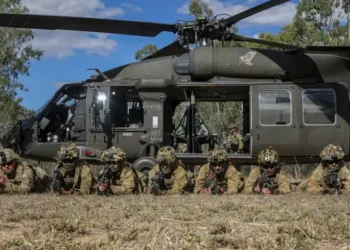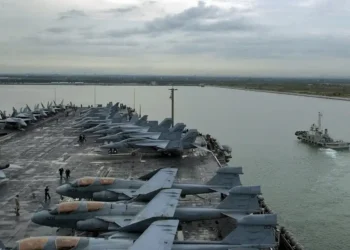
TAIPEI, Taiwan – Taiwan began a five-day military exercise on Monday aimed at strengthening the island’s ability to respond quickly to a potential Chinese military attack, as tensions across the Taiwan Strait remain elevated.
The drills, known as the Immediate Combat Readiness Exercises, are designed to test how rapidly Taiwan’s armed forces can deploy and react to emerging threats, particularly during periods of increased Chinese military activity around the island.
The Ministry of Defense said the exercises would emphasize realistic combat conditions through live-fire training and on-site operations.

Tanks and Armored Vehicles Deployed
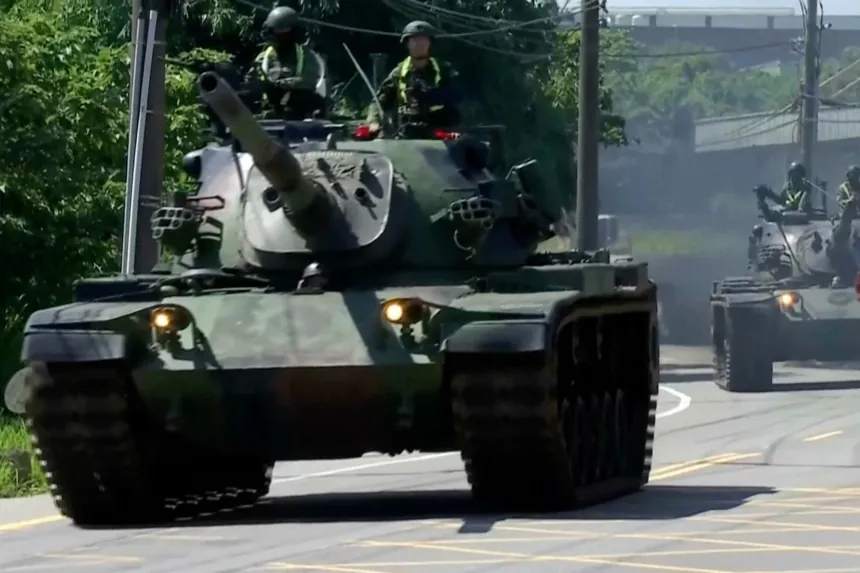
In the northern city of Taoyuan, home to Taiwan’s largest international airport, tanks and armored vehicles were seen moving along city streets and major highways as part of the exercise.
Photos and videos released from the drills showed units from the Army’s 269th Infantry Brigade conducting combat readiness patrols throughout the area.
The military activity forms part of broader efforts to improve coordination and response times in the event of a security crisis.
Focus on Grey-Zone Threats
Taiwanese officials said the exercises are intended to address the growing challenge posed by China’s so-called grey-zone tactics.
These activities can include naval patrols, drone operations and other forms of military pressure that fall short of open conflict but are designed to increase pressure on Taiwan.


According to Taiwan’s defense authorities, the drills will test how military units respond to sudden escalations and rapidly changing security conditions.
The Ministry of Defense announced the exercise program on Sunday, describing it as a realistic training operation focused on maintaining combat readiness.
Simulating Early Stages of a Conflict
Taiwan’s semi-official Central News Agency reported that the exercises are intended to simulate the period immediately before an opposing force launches naval operations.
The report said additional unannounced drills could be conducted in the future, including exercises designed to mirror real-time responses to Chinese military maneuvers near Taiwan.
Officials have increasingly emphasized flexibility and rapid reaction capabilities as part of Taiwan’s defense planning.
Chinese Military Activity Continues
The military exercise coincides with continued Chinese operations around Taiwan.
Taiwan’s defense ministry said China’s People’s Liberation Army sent 23 aircraft toward the island between Sunday and Monday morning. The activity was accompanied by seven Chinese navy vessels and five other government ships.
China regularly deploys aircraft, drones and naval vessels near Taiwan, with such operations occurring almost daily.
Cross-Strait Tensions Remain High
Taiwan frequently conducts combat readiness exercises as it seeks to strengthen its defense capabilities amid growing military pressure from Beijing.
China claims the self-governed island as part of its territory and has not ruled out the use of force to bring Taiwan under its control.
Earlier this month, Taiwan conducted a military exercise that included firing rockets in China’s direction for the first time, reflecting the island’s continued focus on preparing for potential security threats.
The latest drills highlight Taiwan’s ongoing efforts to improve military preparedness as cross-strait tensions remain a central security concern in the Asia-Pacific region.
Tags: Taiwan, China, Taiwan Military, People’s Liberation Army, Taiwan Strait, Military Exercise, Combat Readiness, Asia Security, Taoyuan, Defense Ministry, Cross-Strait Relations, Grey-Zone Warfare