TOKYO, Japan – Japan will accelerate the development of combat drones and other advanced military technologies as it reshapes its defense strategy to address evolving security challenges, according to the government’s latest defense white paper.
The 598-page document, approved by Japan’s Cabinet on Tuesday, identifies China’s expanding military activity as the country’s most significant strategic challenge. It also highlights lessons from the wars in Ukraine and the Middle East, where drones and artificial intelligence have become increasingly important on the battlefield.
The report comes as Japan continues expanding defense spending, strengthening military capabilities and investing in long-range strike systems to improve deterrence across the Indo-Pacific.

Combat Drones Become a Defense Priority
Japan’s defense strategy places growing emphasis on unmanned systems as military planners adapt to changing forms of warfare.
The white paper says domestically developed combat drones will play a key role in coastal defense and will operate alongside long-range missile systems.
Defense Minister Shinjiro Koizumi said earlier this month that rapid development is essential to keeping pace with emerging threats.
Japan’s Acquisition, Technology and Logistics Agency has selected four companies from 38 applicants to develop prototype combat drones. The Japan Maritime Self-Defense Force plans to begin testing the aircraft in early August before selecting a final design.
Private companies are also expanding investment in the sector. Toshiba recently announced a partnership with startup Pro Drone to jointly develop military drone technology.
■ Related News




Officials believe unmanned systems could help offset Japan’s shrinking military workforce as the country’s population continues to age and decline.
China Remains Japan’s Main Security Concern
The defense paper again identifies China as Japan’s primary security challenge.
Tokyo cited the growing frequency of Chinese naval operations, expanding military capabilities and continued modernization of China’s missile and nuclear forces.
Japan has strengthened military deployments across its southwestern islands and introduced long-range cruise missiles amid concerns that a conflict involving Taiwan could directly affect Japan’s security.
The report also points to China’s expanding defense budget and what it describes as limited transparency regarding military spending.
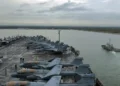
Among the incidents highlighted is an episode in December in which Chinese military aircraft allegedly locked targeting radar onto Japanese aircraft during carrier operations near southwestern Japan.
The white paper also notes that two Chinese aircraft carriers operated near Iwo Jima in June, marking their first deployment in the area and reinforcing Japanese concerns about China’s expanding military reach into the western Pacific.
Russia and North Korea Add to Regional Risks
The report also highlights growing military cooperation between China and Russia, including joint bomber patrols and naval exercises near Japan.
Meanwhile, North Korea’s advancing missile program remains a major concern.
The white paper warns that Pyongyang continues developing increasingly sophisticated missile technology, including hypersonic weapons, while expanding military cooperation with Russia during the war in Ukraine.
Japanese officials say those developments are increasing security risks throughout Northeast Asia.
Government Expands Domestic Defense Industry
Alongside military modernization, Japan is seeking to strengthen its domestic defense industry.
The government is increasing support for defense research, technology startups and dual-use technologies with both civilian and military applications.
Although many Japanese companies have historically avoided weapons production because of the country’s post-World War II pacifist policies, officials say more technology firms are entering the defense sector.
The white paper also says Japan’s decision to ease restrictions on weapons exports should strengthen domestic manufacturing while expanding security cooperation with international partners.
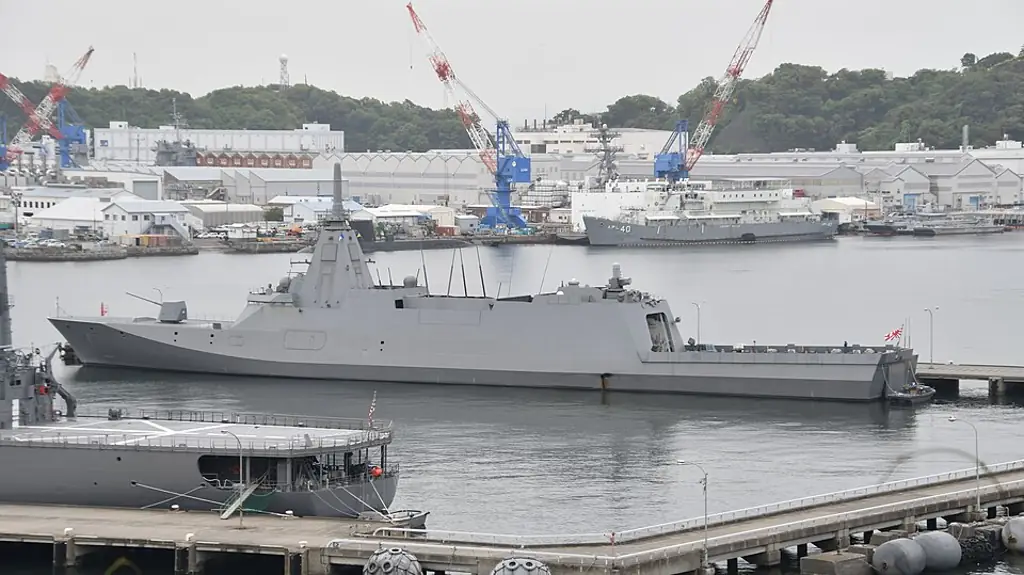
Recent agreements include plans to jointly develop upgraded Mogami-class frigates for Australia. Japan is also discussing similar cooperation with New Zealand and has agreed to transfer retired destroyers to the Philippines.
The latest defense strategy reflects Japan’s broader effort to modernize its armed forces while responding to an increasingly complex regional security environment.
This report is based on reporting by The Associated Press.