BOGOTA, Colombia – An European Union election observation mission has defended the integrity of Colombia’s presidential vote count, saying it found no evidence of irregularities despite ongoing challenges to the results by President Gustavo Petro and his political allies.
The mission’s comments came as Colombia’s electoral authorities continue a recount following Sunday’s presidential runoff election, which preliminary results show conservative candidate Abelardo de la Espriella leading by a narrow margin.
With nearly all votes counted, de la Espriella holds an advantage of about one percentage point, equivalent to roughly 251,000 votes.

EU Mission Finds No Evidence of Irregularities
The European Union deployed approximately 150 observers to monitor Colombia’s presidential election, including both the first-round vote in May and Sunday’s runoff.
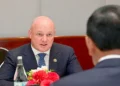
Speaking after presenting the mission’s preliminary findings, chief observer Esteban González Pons said monitors had not detected problems in the vote-counting process.
“We have not observed any irregularities,” González Pons said. He added that Colombian electoral procedures appeared to have been followed in accordance with national legislation.
The mission is also monitoring the ongoing recount process and plans to release its final assessment in September.
Petro and Cepeda Continue to Challenge Results
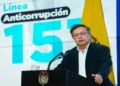
President Gustavo Petro and progressive candidate Iván Cepeda have questioned the election outcome after the runoff failed to produce a victory for Petro’s preferred successor.
■ Related News




Cepeda announced on election night that his campaign would seek challenges involving more than 30,000 voting stations and would not recognize the results until the recount process is completed.
Petro had also alleged fraud following the first-round election after Cepeda failed to secure an outright victory.
Electoral authorities are expected to conclude the recount later this week.
Record Voter Turnout Marks Election
More than 26 million Colombians participated in the runoff election, setting a new turnout record.
Among those votes, more than 426,000 voters selected a ballot option allowing them to reject both candidates, while approximately 29,000 voters submitted blank ballots.
The election attracted intense public attention amid concerns about Colombia’s security situation and fears that violence could worsen after years of relative improvement.
Throughout the campaign, both candidates offered sharply different approaches to tackling criminal violence and preventing a return to the kidnappings, bombings, forced displacement and other forms of conflict that affected Colombia for decades.
The winner of the election is scheduled to take office on Aug. 7 for a four-year term.
Campaign Marked by Accusations and Tensions
The weeks leading up to the runoff were marked by escalating political tensions and mutual accusations between rival campaigns.
Candidates exchanged allegations involving fraud, voter intimidation and vote-buying, while Petro publicly questioned the software used to tabulate election results.
González Pons expressed surprise that many of the concerns raised publicly came from the country’s president rather than from the candidates themselves.
“It surprises us, and continues to surprise us, that the President of the Republic is denouncing irregularities that the candidates haven’t denounced,” he told reporters.
Legal Challenges Continue
Marta Bolívar, legal representative for the political movement aligned with Petro and Cepeda, told The Associated Press that the group’s objections extend beyond vote counting and include broader concerns about the electoral process.
According to Bolívar, the movement also sought an international recount of votes cast by Colombians living abroad.
That request was denied by electoral authorities.
Bolívar argued that the decision was unconstitutional and said responsibility for conducting such a recount rests with Colombia’s National Electoral Council.
De la Espriella Moves Toward Transition
While the recount process continues, de la Espriella has begun preparing for a possible transition to government.
On Tuesday, he announced that he is assembling a Cabinet and outlined plans to align Colombia with the so-called “Shield of the Americas,” an initiative promoted by U.S. President Donald Trump that aims to strengthen regional efforts against criminal organizations across Latin America.
The move signaled growing confidence within his campaign that the election result will ultimately stand.
For now, however, attention remains focused on the recount process and whether ongoing legal challenges will alter the final outcome of one of Colombia’s most closely watched presidential elections in recent years.
Tags: Colombia, Gustavo Petro, Iván Cepeda, Abelardo de la Espriella, European Union, Presidential Election, Election Recount, Democracy, Latin America, Electoral Process, Bogotá, Politics