Journos News - Breaking News, World News, Top Stories, Todays Headlines and Flash Reports
Tuesday, September 1, 2026
  • Login
  • Home
  • World
    • Africa
    • Americas
    • Asia
    • Europe
    • Middle East
    • Oceania
  • Politics
  • Business
  • Technology
  • Health
  • Science
  • Sports
  • Entertainment
  • Culture
No Result
View All Result
  • Home
  • World
    • Africa
    • Americas
    • Asia
    • Europe
    • Middle East
    • Oceania
  • Politics
  • Business
  • Technology
  • Health
  • Science
  • Sports
  • Entertainment
  • Culture
No Result
View All Result
Journos News - Breaking News, World News, Top Stories, Todays Headlines and Flash Reports
No Result
View All Result
Home World News Middle East

Trump’s Iran Ceasefire Pivot Exposes Diplomatic Fallout Across a Fragile Regional Truce

A rapid shift from coercive threats to mediated restraint has opened a narrow diplomatic corridor, but conflicting interpretations from Washington, Tehran, and Jerusalem now threaten its durability.

The Daily Desk by The Daily Desk
June 20, 2026
in Middle East, World News
0
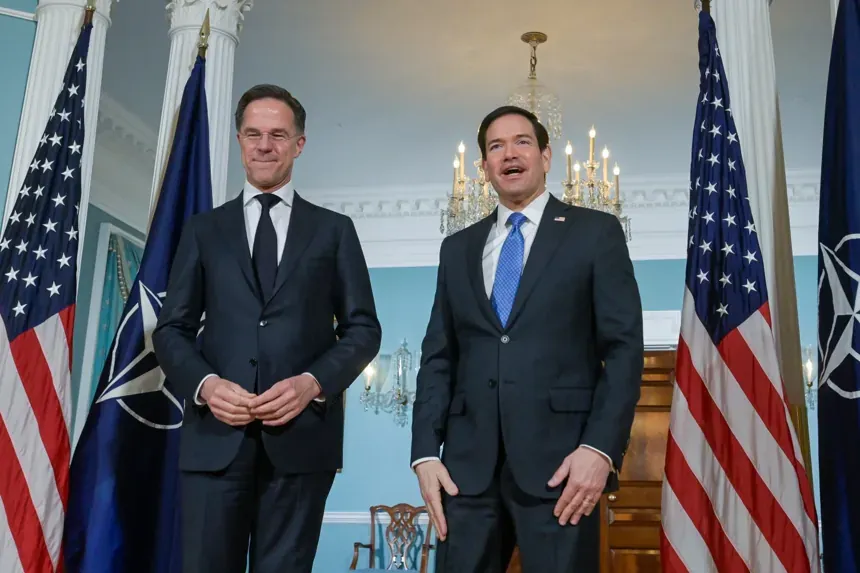
Trump’s ceasefire reversal with Iran reshapes regional diplomacy stakes - AP Photo/Rod Lamkey, Jr.

Diplomatic disputes emerge hours after Washington and Tehran’s temporary truce. - AP Photo/Rod Lamkey, Jr.

The abrupt Trump Iran ceasefire reversal has recast the six-week confrontation not as a decisive military outcome, but as a test of diplomatic credibility under pressure. After publicly threatening Iran with devastating strikes tied to the Strait of Hormuz, President Donald Trump pivoted within hours toward a 14-day ceasefire framework, underscoring how military leverage gave way to urgent geopolitical risk management.

According to a report by The Associated Press, the ceasefire emerged through intensive backchannel diplomacy led by Pakistan, with quiet involvement from China as regional and global stakeholders sought to prevent further disruption to one of the world’s most strategically vital maritime corridors. The speed of the shift highlighted less a military conclusion than the rising cost of diplomatic isolation had the conflict expanded.

The White House framed the pause as evidence that its war aims had already been met, with Trump asserting that military objectives had been exceeded and that a pathway toward longer-term peace was already taking shape. Yet within less than a day, divergent interpretations of the truce’s scope exposed the first signs of diplomatic strain.

What emerged instead was not clarity, but a widening credibility gap between the parties expected to sustain the ceasefire.

Ceasefire Terms Fracture Under Immediate Regional Pressure

The first stress point appeared over Lebanon. Iranian officials maintained that the ceasefire framework required an end to Israeli military operations there, while Israeli Prime Minister Benjamin Netanyahu and Trump publicly rejected that interpretation, insisting the arrangement applied only to the U.S.-Iran track.

That contradiction immediately raised the risk that the truce could become a temporary tactical pause rather than the foundation of a broader de-escalation process.

The disagreement is strategically significant because ceasefires in multi-front regional conflicts rarely survive when parallel theaters remain active. By leaving Lebanon unresolved, negotiators may have reduced immediate maritime risk while preserving a separate escalation channel capable of reigniting the broader confrontation.

Vice President JD Vance sought to minimize the tension, arguing that early implementation problems were expected. His remarks suggested Washington is prioritizing diplomatic momentum over textual precision in the short term.

■ Related News

Mourners attend Ayatollah Ali Khamenei's funeral procession in Tehran, Iran. - AP Photo/Altaf Qadri

Iran Confronts Deep Political Divisions as Ayatollah Ali Khamenei Is Laid to Rest

July 10, 2026
Pope Leo XIV greets residents from Castel Gandolfo during summer retreat - AP Photo/Alessandra Tarantino

Pope Leo XIV Begins Summer Retreat After Assertive First Half of 2026 on Global and Church Issues

July 7, 2026
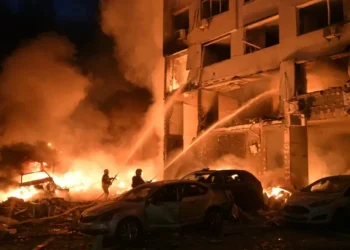
Emergency responders search damaged apartment buildings after a Russian missile attack in Kyiv. - AP Photo/Danylo Antoniuk

Russian Missile and Drone Barrage on Kyiv Kills at Least 11 as Ukraine Highlights Air Defense Shortages

July 6, 2026
Philippine Senate prepares for Vice President Sara Duterte impeachment proceedings in Manila - AP Photo/Basilio Sepe, File

Philippine Senate Opens Impeachment Trial of Vice President Sara Duterte Amid Deep Political Rift

July 6, 2026

Strategic Stakes Shift to the Strait of Hormuz

The real diplomatic test now centers on the Strait of Hormuz, through which roughly one-fifth of global oil shipments transit. Washington’s insistence on the immediate reopening of the waterway has transformed maritime access into the central benchmark of ceasefire compliance.

This makes the agreement less about battlefield disengagement and more about restoring global energy confidence.

The proposed mechanism allowing Iran and Oman to levy transit fees introduces an additional layer of diplomatic sensitivity. While regional officials described the arrangement as a reconstruction-linked revenue measure, the White House signaled resistance to any long-term restrictions or toll structures that could normalize Iranian leverage over shipping.

That divergence matters because maritime commerce, not territorial control, now appears to be the practical center of negotiations.

Military Leverage Gives Way to Diplomatic Cost Calculus

Behind the policy shift lies a deeper strategic recognition: controlling Hormuz militarily may have been operationally feasible, but politically unsustainable.

Defense analysts cited in the original reporting warned that securing the maritime corridor over time could have required a prolonged territorial suppression mission along Iran’s southern coastline, potentially involving tens of thousands of U.S. troops. Such a commitment would have contradicted Trump’s long-standing political promise to avoid another open-ended Middle East deployment.

The diplomatic reversal therefore reflects institutional risk management as much as statecraft.

Rather than testing whether Iran could be coerced into unconditional compliance, Washington appears to have recalibrated around the costs of sustaining escalation beyond the initial campaign phase. The lesson is less about restraint by preference and more about the structural limits of translating short-term military dominance into durable regional order.

Pakistan Mediation Elevates a New Diplomatic Axis

The selection of Islamabad as the venue for follow-up negotiations is itself geopolitically consequential. Pakistan’s emergence as the primary intermediary introduces a new regional diplomatic axis at a moment when traditional Gulf-led channels appeared insufficient to secure immediate movement.

Vance is expected to lead the U.S. delegation, joined by special envoy Steve Witkoff and Jared Kushner, signaling that the White House wants political loyalty and negotiating flexibility concentrated in a small, high-trust team.

This structure suggests the administration is treating the next phase not as routine diplomacy, but as a leader-driven crisis negotiation where message discipline is critical.

China’s reported quiet role further complicates the diplomatic picture. Beijing’s stake in uninterrupted energy flows gives it a strong incentive to preserve maritime stability, meaning the ceasefire now sits at the intersection of U.S.-Iran tensions and wider great-power economic competition.

Diplomacy Now Faces a Narrow Window of Credibility

The ceasefire’s survival will depend less on public declarations than on whether all sides can align operational expectations around Hormuz, Lebanon, and the sequencing of broader regional de-escalation.

The immediate diplomatic fallout from conflicting interpretations has already revealed how fragile the arrangement remains.

If the Pakistan talks produce a verifiable framework on shipping access and conflict containment, the 14-day pause may evolve into a durable strategic reset. If not, the current truce risks becoming a brief interruption before renewed confrontation spreads across multiple fronts.

For now, the central consequence of Trump’s reversal is clear: military pressure created urgency, but diplomacy now carries the burden of preventing a wider regional security breakdown.

Tags: #DiplomaticFallout#GlobalOilRisk#HormuzCrisis#IsraelIran#LebanonConflict#MiddleEastSecurity#PakistanMediation#RegionalTension#SecurityDesk#TrumpIranCeasefire#USIranTalks#WorldNews
The Daily Desk

The Daily Desk

The Daily Desk is a contributor at JournosNews.com covering politics, media, governance, and the evolving dynamics of public discourse. Stories published under this byline are produced in accordance with JournosNews' editorial standards, with an emphasis on verified reporting, accuracy, context, and impartiality.

Related Posts

Two climbers atop the Empire State Building antenna in New York City - WABC-TV via AP

Couple Arrested After Climbing Empire State Building Antenna During Apparent Proposal

July 2, 2026
Diplomatic activity continues as U.S. and Iranian delegations head to Qatar. - AP Photo/Anjum Naveed

U.S., Iran Pause Military Strikes but Differ on Whether Direct Talks Are Planned

June 29, 2026
Rescue workers search collapsed hotel after deadly earthquakes in Venezuela. - AP Photo/Delacroix

More Than 100 Venezuelan Deportees Remain Missing After Earthquakes Strike Hours Following U.S. Flight

June 29, 2026
Guo Wengui appears in federal court before sentencing in New York. - AP Photo/Andy Wong, File

Chinese Businessman Guo Wengui Sentenced to 30 Years in U.S. Prison for Billion-Dollar Fraud

June 29, 2026
Paris mortuary overwhelmed during France's record-breaking summer heat wave - AP Photo/Christophe Ena, File

Heat Wave Death Toll Strains Paris Mortuaries as France Faces Mounting Human Cost

June 29, 2026
Keir Starmer announces Labour Party leadership resignation - Peter Macdiarmid/Pool Photo via AP

Keir Starmer steps down as Labour leader amid UK political transition pressure

June 22, 2026
Oil tankers transit the Strait of Hormuz after blockade easing - AP Photo/Jacquelyn Martin

US Lifts Iran Blockade as Supreme Leader Endorses Direct Talks With Washington

June 19, 2026
Diplomacy talks between Iran and United States officials - Pakistan Prime Minister Office via AP

What Iran and the United States Stand to Gain From a Reported Deal — And Why It Matters Now

June 18, 2026
Load More
Next Post
Lawmakers examine suspicious Polymarket bets tied to Iran ceasefire - AP Photo/Amanda Andrade-Rhoades, File

Congressional Scrutiny Intensifies Over Polymarket’s Geopolitical Trading Controls

Prediction market platforms face scrutiny after Iran war bets - AP Photo/Vahid Salemi

Prediction Markets Face Regulatory Test as Iran War Bets Renew Oversight Debate

JournosNews logo

Journos News delivers globally neutral, fact-based journalism that meets international media standards — clear, credible, and made for a connected world.

  • Categories
  • World News
  • Politics
  • Business & Markets
  • Technology
  • Health
  • Science
  • Sports
  • Arts & Culture
  • Resources
  • Editorial Standards
  • Submit a Story
  • Advertise with Us
  • Syndication & Partnerships
  • Site Map
  • Press & Media Kit
  • Editorial Team
  • Careers

Join thousands of readers receiving the latest updates, tips, and exclusive insights straight to their inbox. Never miss an important story again.

  • About Us
  • Editorial & Trust Center
  • Contact Us
  • Privacy Policy
  • Terms of Use & Copyright Notice

© JournosNews.com All rights reserved.

Welcome Back!

Login to your account below

Forgotten Password?

Retrieve your password

Please enter your username or email address to reset your password.

Log In
JournosNews

Independent Journalism.
Verified Facts.

You're about to read a professionally edited article from JournosNews.com.

Every article is produced in accordance with our editorial standards, emphasizing factual accuracy, transparent attribution, fairness, editorial independence, and meaningful context.

Editorial Standards
No Result
View All Result
  • Home
  • World
    • Africa
    • Americas
    • Asia
    • Europe
    • Middle East
    • Oceania
  • Politics
  • Business
  • Technology
  • Health
  • Science
  • Sports
  • Entertainment
  • Culture

© JournosNews.com All rights reserved.

This website uses cookies. By continuing to use this website you are giving consent to cookies being used. Visit our Privacy and Cookie Policy.