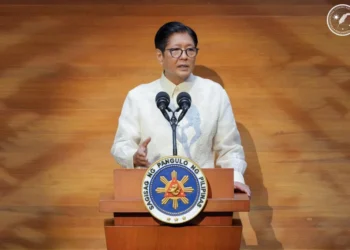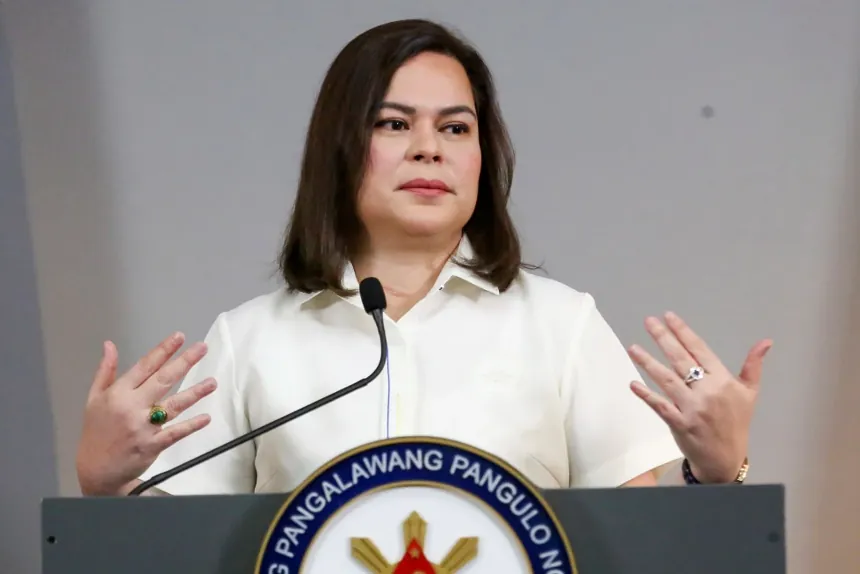
MANILA, Philippines – The Philippine Senate is set to convene Monday as an impeachment court to begin the trial of Vice President Sara Duterte, marking a pivotal moment in the country’s escalating political confrontation and a case that could significantly influence the country’s future leadership.
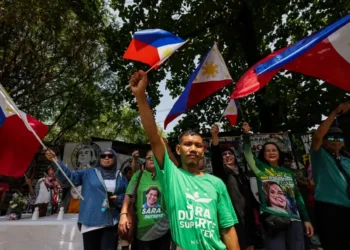
Security was tightened around the Senate in Manila as authorities deployed more than 6,000 police officers, including anti-riot units, to manage expected demonstrations by both supporters and opponents of Duterte. According to a pretrial schedule obtained by The Associated Press, Duterte or members of her legal team may attend the opening session of proceedings, which are expected to span 92 days.
If found guilty, Duterte could be permanently barred from holding public office, ending her widely declared ambition to run for president in the 2028 national elections when President Ferdinand Marcos Jr.’s six-year term concludes. The vice president has denied the allegations against her.

Impeachment centers on wealth and alleged threats
The impeachment case stems from accusations approved by the House of Representatives last month, where lawmakers overwhelmingly voted to impeach Duterte over allegations that include unexplained wealth, misuse of confidential government funds and publicly threatening President Marcos, First Lady Liza Araneta-Marcos and a former House speaker.
The allegations include claims that Duterte publicly stated the president, his wife and a close political ally should be assassinated if she herself were killed amid intensifying political disputes. Duterte has broadly rejected the accusations but has declined to publicly address each allegation in detail before the trial.
A conviction requires the support of at least 16 senators, representing two-thirds of the 24-member Senate.
Alliance between Marcos and Duterte collapses
The impeachment proceedings unfold after the dramatic collapse of the political alliance that propelled Marcos and Duterte to victory in the 2022 elections.
Their partnership united two of the Philippines’ most influential political families but deteriorated amid growing political disagreements and competing ambitions. Relations have worsened considerably as both camps increasingly accuse each other of abusing state institutions for political advantage.
■ Related News

Duterte’s supporters have alleged that President Marcos and his allies orchestrated the impeachment process to eliminate one of the strongest potential challengers in the 2028 presidential race. Marcos has not publicly characterized the proceedings in those terms.
Rodrigo Duterte’s ICC case adds pressure
The political tensions have been further intensified by the legal troubles facing Duterte’s father, former President Rodrigo Duterte.
He was arrested last year under an order issued by the International Criminal Court (ICC) and transferred to The Hague, where he remains in detention. He is scheduled to stand trial on Nov. 30 over allegations of crimes against humanity linked to his administration’s anti-drug campaign.
The ICC case concerns the deadly anti-narcotics operations carried out during Rodrigo Duterte’s presidency, which left thousands of mostly poor suspects dead. Human rights organizations and several Western governments criticized the campaign, while Rodrigo Duterte has denied authorizing extrajudicial killings despite repeatedly issuing public warnings that suspected criminals could be killed.
Sara Duterte has blamed President Marcos for allowing her father’s arrest and transfer to the ICC.
Foreign policy differences deepen political divide
Beyond domestic politics, the dispute between the Marcos and Duterte camps reflects sharply different foreign policy approaches.
President Marcos has strengthened defense cooperation with the United States, the Philippines’ longstanding treaty ally, while expanding military coordination amid increasingly tense confrontations with China in the disputed South China Sea.
During his presidency, Rodrigo Duterte pursued closer ties with China and Russia while frequently criticizing Washington and threatening to reduce security cooperation with the United States.
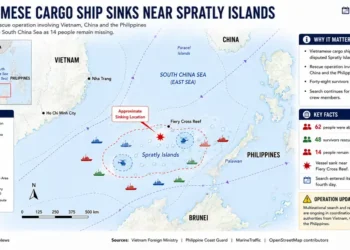
Sara Duterte has also faced criticism from political opponents for not publicly condemning repeated confrontations between Chinese and Philippine vessels, including incidents involving powerful water cannons directed at Philippine coast guard ships, military vessels and fishermen operating in contested waters.
Senate composition faces additional scrutiny
The impeachment trial also begins as several senators aligned with the Duterte political camp face separate legal challenges.
Sen. Jinggoy Estrada was arrested and detained last month after being charged with plunder in connection with an alleged flood-control project bribery scheme. He has denied the allegations.
Another senator considered supportive of Duterte, Rodante Marcoleta, could also face arrest over a separate plunder case involving alleged undeclared campaign donations. Marcoleta has denied any wrongdoing.
Meanwhile, Sen. Ronald dela Rosa, who served as national police chief during Rodrigo Duterte’s anti-drug campaign, has gone into hiding after the ICC reportedly issued a warrant for his arrest as a co-perpetrator in the killings under investigation.
The impeachment proceedings are expected to remain one of the Philippines’ most consequential political events in the months ahead, with the Senate’s eventual verdict likely to influence not only Duterte’s political future but also the country’s leadership contest leading into the 2028 presidential election.
Article Topics: Philippines | Sara Duterte | Impeachment Trial | Ferdinand Marcos Jr. | Philippine Senate | Rodrigo Duterte | International Criminal Court | South China Sea
This report is based on reporting by The Associated Press.